
|
James Buchanan (1791-1868) 1860 Messages on Utah (Washington, D.C: 1860) |
 |
J. H. Carleton's 1859 Report | Cradlebaugh's 1863 Speech | Children of the Massacre
(this web page is still under construction)
|
UTAH TERRITORY. M E S S A G E 36th CONGRESS, 1st Session. SENATE. C Ex. Doc. No. 42. MESSAGE THE PRESIDENT OF THE UNITED STATES, COMMUNICATING, In compliance with a resolution of the Senate, information in relation to the massacre at Mountain Meadows, and other massacres in Utah Territory. MAY 4, 1860. Read and ordered to lie on the table. MAY 18, 1860. Ordered to be printed. To the Senate: In compliance with the resolution of the Senate, adopted March 19, 1860, calling for the correspondence, &c., in relation to the Mountain Meadow and other massacres in Utah Territory, I have the honor to transmit the report, with accompanying documents, of the Secretary of The Interior, who was instructed to collect the information. JAMES BUCHANAN. EXECUTIVE MANSION, May 1, 1860. DEPARTMENT OF THE INTERIOR, April zz, 1860. SIR: I have the honor to acknowledge the receipt, by reference from you, of the resolution of the Senate calling for all correspondence, &c. in relation to the massacre at Mountain Meadows, and other massacres in Utah Territory, and to transmit herewith the following papers, viz: copies of correspondence, &c., on file in the War Department, (A,) with a copy of the letter of the Secretary of War, transmitting the same to this department; copies of all papers on file in the Indian Office, (B,) with a copy of the report of the Commissioner of Indian Affairs transmitting the same; and copies of the correspondence between this department and A. Wilson, Esq., United States district attorney for UTAH, (C.) These documents are believed to contain all the information in the possession of the governmental! relation to the massacre at Mountain Meadows. The information in relation to subsequent massacres in Utah Territory 2 MASSACRE AT MOUNTAIN MEADOWS. will be found in the correspondence (D) accompanying the report of the Commissioner of Indian Affairs. With great respect, your obedient servant. J. THOMPSON, Secretary. THE PRESIDENT. WAR DEPARTMENT, April 13, 1860. SIR: In compliance with the request contained in your letter of the 22d ultimo, communicating a copy of the resolution adopted by the Senate on the 19th, calling upon THE PRESIDENT for information touching the massacre at Mountain Meadows, in August, 1857, I have the honor to transmit, herewith, copies of the papers named in the accompanying schedule, embracing all the particulars in possession of this department, relating to the subject. Very respectfully, your obedient servant, JOHN B. FLOYD, Secretary of War. Hon. J. THOMPSON, Secretary of THE INTERIOR. A. List of papers accompanying letter from the Secretary of War to the Secretary of the Interior of April 13, 1860, relative to the Mountain Meadow Massacre. 1. Hon. A. B. Greenwood to Mr. Floyd, March 6, 1858. 2. Mr. Floyd to Hon. A. B. Greenwood, March 11, 1858. 3. General Johnston to General Scott, April 27, 1859. b. To Dr. Forney, September 2, 1858. c. From same, September 10, 1858. d. Orders, April 15, 1859. 4. Captain Campbell to General Johnston, April 30, 1859. 5. Dr. Forney to same, May 1, 1859. 6. Mr. Floyd to same, May 6, 1859. 7. Dr. Forney to same, June 15, 1859. 8. General Johnston to Dr. Forney, June 16, 1859. 9. Same to Colonel Crosman, June 20, 1859. 10. Dr. Forney to General Johnston, June 20, 1859. 11. General Johnston to the Adjutant General, June 27, 1859. 12. Same to same, July 13, 1859. b. From same, July 6. c. Dr. Brewer to same, May 6. 13. Same to same, August 17, 1859. b. Dr. Forney to same, August 2. MASSACRE AT MOUNTAIN MEADOWS. 3 d. To Mr. Cumming, August 5. e. Orders, August 5. f. To Major Lynde, August 6. g. To Lieutenant Gay, August 6. h. From same, August 15. i. Orders, August 14. j. To Commander of the Bear River Expedition, August 15, 14. Same to General Scott, November 2, 1859. b. From Lieutenant Gay, August 17. c. From Major Lynde, August 20. d. To same, August 26. e. From same, August 26. f. From same, September 10. g. From Dr. Forney, September 22. h. From Major Lynde, October 24. 1. Mr. Greenwood to Mr. Floyd.
WASHINGTON, D. C., March, 6, 1858.
SIR: I have just received the
published proceedings of a public
meeting held in Carroll county, Arkansas, in relation to the massacre of their friends and relations on the
Plains, last summer, by the Mormons and Indians, near Cedar City, in Utah Territory.
You will perceive by the proceedings, which I send you herewith, that it is alleged that these barbarous wretches have now in their custody some fifteen children, whose lives were spared, according to their information; and they earnestly invoke the aid of the government to enable them to recover the children alleged to be in their custody. They also call upon the delegation in Congress to bring the matter before the proper authorities here, and obtain whatever suggestions they may see proper to make, that will enable these distressed people to reclaim the survivors of the massacre. Thinking the Department of War to be the proper one to correspond with, I have thought proper to address you, hoping you will be able to communicate something that will to some extent relieve the friends of those who have been so brutally murdered. They also ask that an appropriation be made to defray the expenses which it may be necessary to incur in order to reclaim and bring home to their relatives the children that have been spared. I should be pleased to receive any communication that you may think proper to make; and should you deem it advisable to recommend an appropriation, I shall take great pleasure in referring your recommendation to the proper committee. I have the honor to be, very respectfully, your obedient servant,
A. B. GREENWOOD.
Hon. JOHN B. FLOYD, Secretary of War, Washington City, D. C. 4 MASSACRE AT MOUNTAIN MEADOWS. 2. Mr. Floyd to A. B. Greenwood.
WAR DEPARTMENT,
"SIR: I have received your letter of the 6th instant, inclosing the published proceedings of a
public meeting held in Carrollton, Arkansas, the 1st ultimo, relative to the massacre of a party of emigrants
from Arkansas, by Mormons and Indians, in the month of July last.
Washington, March 11, 1858. This department has, at present, no information respecting the massacre alluded to, or the probable fate of the survivors; but the news paper slip accompanying your communication will be transmitted at the earliest practicable moment to Colonel Johnston, commanding the troops in Utah, with instructions to adopt such measures for the recovery of the children said to be still in captivity, as in his judgment may appear to be best calculated to attain this most desirable object; and should his efforts be successful, to send the persons rescued, at a suitable time, and under proper protection, to Fort Leavenworth, Kansas, whence they can be readily returned to their friends in Arkansas. It is recommended that a small appropriation be asked for, to defray any incidental expenses that may attend the execution of the orders which will be given Colonel Johnston, and which cannot well be charged to the ordinary appropriations for the military service. Very respectfully, your obedient servant,
JOHN B. FLOYD,
Hon. A. B. GREENWOOD,Secretary of War. House of Representatives. 3. General Johnston to General Scott.
HEADQUARTERS DEPARTMENT OF UTAH,
COLONEL: I have the honor to report that Captain R. P. Campbell marched for Santa Clara on the 21st
instant, in command of one company of dragoons and two of infantry, with orders and instructions which have been
forwarded to you. One company of his command will return to this place with Major Prince, paymaster United
States army, who is en route to this department with a large amount of public money for the payment of
troops, to whom the government is in arrears six or eight months.
Camp Floyd, Utah Territory, April 27, 1859. The motive for dispatching this force to the neighborhood of Santa Clara is to give protection to the numerous travelers who will pass over the southern route during the spring, and merchants' trains, and also to make inquiries respecting murders, which were said to have been perpetrated by Indians last fall. Should it be ascertained what Indians committed the murders, I will order a severe chastisement to be inflicted. MASSACRE AT MOUNTAIN MEADOWS. 5 Captain Campbell will, however, make no hostile movement against the Indians for past occurrences, unless something transpires while he is on the route which shall make immediate action necessary. In the course of the debate in the Senate, which is reported in the Globe of the 9th of March, on an amendment of the army appropriation bill, offered by Mr. Sebastian, for "defraying the expense of ransom, recovery, and restoration to their homes of the children surviving the massacre by the Indians of the emigrant train from Arkansas, in the fall of 1857, $10,000," Mr. Johnson, of Arkansas says: "I have understood that instructions were sent out from the War Department and The Interior Department for an investigation and an inquiry, but I must say that I have not been satisfied that proper, earnest investigation has been made into this horrible transaction, which the case merited at the hands of the government." With regard to what has been ordered in this matter, there seems to be a misapprehension. The only communication received by me on that subject was written on the 5th of May, and received on the 7th of August, of which the inclosed is a copy. I was then of the opinion that those children were in the possession of the Mormons who live in the district of country where the massacre was perpetrated, and I was apprised that Dr. Forney, Indian superintendent of this Territory, had gone to visit the Indians of that district about the time of the reception of the letter from the Adjutant General. I presumed that the recovery of the children, whether in the hands of the Indians or Mormons, could be best accomplished through the agency of the superintendent, and, accordingly, sent the Adjutant General's letter to him, for his action. Inclosed I send his letter acknowledging the receipt of of the Adjutant General's letter, and a statement that he "had found ten of the children." (He does not say that he received them from the Indians, and I presume he did not.) He has now seventeen, who are supposed to be all who survived the horrible slaughter of men, women, and children at the Mountain Meadows. My action was limited to such measures, by my instructions, as would lead to the recovery of the children, and I found, when I turned them over to him, that measures were already successfully in progress, through the superintendent, who was finally successful, and there was nothing further that I could properly do. The implication (in the belief of many) of the inhabitants, or a considerable portion of them, of that district in the committal of that atrocious crime, was not a subject for investigation or inquiry on my part. The judiciary have the subject before them, which will, I do not doubt, result in discovering the perpetrators. With great respect, your obedient servant,
A. S. JOHNSTON,
Lieut. Colonel L. THOMAS, Colonel Second Cavalry and Bvt. Brig. General U. S. A., Commanding. Assistant Adjutant General, Headquarters of the Army, New York city. 6 MASSACRE AT MOUNTAIN MEADOWS. 3 a.
ADJUTANT GENERAL'S OFFICE,
SIR: I have the honor herewith to transmit a newspaper slip, giving the proceedings of a public
meeting held in Carroll county, Arkansas, some time ago, in relation to the massacre of a party of emigrants
from Arkansas, by Mormons and Indians, in the month of July last.
Washington, May 5, 1858. The Secretary of War considers that, in the progress of the military operations in Utah, it may be in your power to gain information respecting the children supposed to be still in captivity, and, perhaps, adopt some measures which may eventually lead to their recovery from the Indians. He desires, therefore, that you will improve every opportunity which may offer giving any promise of the realization of an end so much to be wished for; and should the efforts you may institute be successful, the persons rescued might be sent, under proper protection, to Fort Leavenworth, from which point they could readily return to their friends in Arkansas. I am, sir, very respectfully, your obedient servant,
S. COOPER,
The COMMANDING OFFICER,Adjutant General. Department of Utah. 3 b.
HEADQUARTERS DEPARTMENT OF UTAH,
SIR: The inclosed letter from the Adjutant General of the army, conveying the wishes of the
Secretary of War that "all proper means may be taken to ascertain the fate of the Arkansas emigrants massacred
last year by a party of Mormons and Indians in this Territory" &c., was received during your absence from the
city in the direction of the scene of this massacre.
Camp Floyd, U. T., September 2, 1858. The commanding general has learned that you have interested your self in recovering some of the surviving children of this party, and as this matter is one for the action of your branch of the public service, he respectfully transfers these papers to you that proper measures may be taken to carry out the wishes of the government. I am, sir, very respectfully, your obedient servant,
F. J. PORTER,
Dr. J. FORNEY, Supt. Indian Affairs,Assistant Adjutant General. Great Salt Lake City, U. T. MASSACRE AT MOUNTAIN MEADOWS. 7 3 c.
OFFICE OF SUPERINTENDENT
INDIAN AFFAIRS UTAH TERRITORY,
SIR: Your polite note, inclosing a letter from the Adjutant General in regard to the massacre
of Arkansas emigrants near Cedar City, in this Territory, was duly received, and in reply I would say that
I have found ten of the children, who are now in my possession, and am using every endeavor to ascertain
the whereabouts of the others, with prospects of success.
Great Salt Lake City, September 10, 1858. I remain yours, respectfully,
J. FORNEY,
F. J. PORTER,Supt. Indian Affairs Utah Territory. Assistant Adjutant General. 3d.
HEADQUARTERS DEPARTMENT OF UTAH,
[Special Orders No. 26.]
Camp Floyd, Utah Territory, April 15, 1859. One company of dragoons and two companies of infantry from Camp Floyd, under the command of Captain R. P. Campbell, second dragoons, will leave for Santa Clara on the 21st instant, and be governed by special instructions from these Headquarters. A medical officer will be assigned to the command. The command will be rationed for fifty days. The quartermaster's department will furnish the necessary transportation. By order of Brevet Brigadier General A. S. Jofnston:
F. J. PORTER,
Assistant Adjutant General. 4. Captain Campbell to General Johnston.
CAMP NEAR BEAVER CITY, UTAH
TERRITORY,
MAJOR: I have the honor to inform you that I arrived at this place yesterday, where the
express overtook me. The officers and men of my command are all well, only the minor ailments incidental
to a march, and the horses and mules are improving in condition.
April 30, 1859. There has nothing of the slightest importance happened since the command left Camp Floyd, there was a slight fall of snow, the fourth day after leaving Camp Floyd; the command left the service that morning. 8 MASSACRE AT MOUNTAIN MEADOWS. I shall leave here to-morrow morning with as much forage as I started with. I am remaining in camp to-day, both on account of a storm that began this morning and it being the day for muster. I met Dr. Forney at Meadow creek, he came into my camp with the Indian Konosh on a visit; he was camped at the Indian farm on Corn creek, where Konosh lives, some miles off the road. The doctor had with him fifteen or sixteen of the children of the emigrants who were murdered at the Mountain Meadows. These children say that they have never been with the Indians. I did not see the children, but the judge saw them, and talked with them. A good deal of information can be derived from them in relation to the massacre, as some of them are old enough to remember the affair very well. The express arrived here at 10 o'clock on the night of 29th proximo. I am, sir, very respectfully, your obedient servant,
REUBEN P. CAMPBELL,
Captain Second Dragoons, Com'g Santa Clara Expedition. Major J. F. PORTER, Assistant Adjutant General, U. S. A., Camp Floyd, Utah Territory. 5. Dr. Forney to General Johnston.
SPANISH FORK, INDIAN RESERVATION,
DEAR GENERAL: Thank God that I am this near home from my southern trip. I had
a very laborious and difficult trip, at the same time, however, interesting, and my inquiries of the causes
and final consummation of the awful Mountain Meadow affair, may lead to extraordinary developments.
May 1, 1859. I succeeded in getting sixteen children, all, it is said, that remain of the butchering affair. I have the children with me, they seem contented and happy, poorly clad, however. I will get them fixed up as soon as possible. All the children are intellectual and good looking, not one mean looking child among them, they average from three and a half to nine years old. Most of them know their family names, and a few recollect the place of their former homes, others have some recollection of it. What is more important than all, is, that at least four of the oldest of the children know, WITHOUT DOUBT KNOW, enough of the material facts of the Mountain Meadow affair, to relieve this world of the white hell-hounds, who have disgraced humanity by being mainly instrumental in the murdering at least one hundred and fifteen men, women, and children, under circumstances and manner without a parallel in human history for atrocity. I gave Judge Cradlebaugh, a few days ago, the names of such persons who, I have reason to believe, participated in the affair, and when brought to trial can furnish the evidence to convict them. Some of these men are by this time arrested, I think. MASSACRE AT MOUNTAIN MEADOWS. 9 With proper caution all the men can be arrested. I send Mr. Rodgers back with the judge, with a business letter to some of the church dignitaries. I met the military command ten miles south of Fillmore, all seemed in good spirits. The country south of Cedar City is poor, but little grass and no grain. The Indians south, at this time, are quiet and peaceable. To the Mountain Meadows there is good grass, that far the command should go, for reasons you will learn by and by. Excuse this hasty and imperfect letter. Very respectfully and truly yours,
J. FORNEY.
General A. S. JOHNSTON,Commander of Utah Department, Utah Territory. 6. Mr. Floyd to General Johnston.
WAR DEPARTMENT,
SIR: The change which seems to have taken place in the condition of things in Utah Territory
since the date of your former instructions renders some modification of those instructions necessary.
Washington, May 6, 1859. Peace being now restored to the Territory, the judicial administration of the laws will require no help from the army under your command. If the service of the United States troops should be needed under any circumstances, it could only be to assist the executive authority in executing the sentence of law or the judicial decrees of the court, and that necessity could only arise when the services of a civil posse were found to be insufficient. You will therefore only order the troops under your command to assist as & posse comitatus in the execution of the laws, upon the written application of the governor of the Territory, and not otherwise. The fidelity with which you have obeyed the instructions of this department heretofore given you, is the fullest guarantee that you will, with the same zeal and efficiency, con form to these. I am, general, very respectfully, your obedient servant,
JOHN B. FLOYD,
Brevet Brigadier General A. S. JOHNSTON,
Secretary of War. Comi'g Department of Utah, Camp Floyd, Utah Territory. 7. Dr. Forney to General Johnston.
SUPERINTENDENT'S OFFICE, UTAH,
DEAR SIR: I informed you sometime ago that I had then sixteen children in my
possession, all (it was then supposed) that were remaining
Great Salt Lake City, June 15, 1859. 10 MASSACRE AT MOUNTAIN MEADOWS. of the terrible massacre in Mountain Meadows valley, in September, 1857. Since my hasty letter to you from Spanish Fort, another child has been recovered, and is now also in my possession. I have collected these children in pursuance to instructions from the Indian department, and in compliance with those instructions, they must soon be en route for Leavenworth. Messrs. Russell, Majors, and Waddell offered the Indian department, free of charge, two large wagons, twelve yoke oxen, and the necessary gear, to transport the children to Leavenworth in company with one of their returning caravans. These unfortunate fatherless, motherless, and penniless children certainly demand more than an ordinary degree of sympathy. I have secured the services of four females to accompany them to Leaven worth. I will also provide suitable clothing, blankets, and such appliances as will be deemed necessary. I am also directed to furnish them with provisions, and I presume cooking utensils, fuel, &c. My instructions from the office of Indian affairs plainly indicate the desire that I should send these children by the means of transportation offered by Messrs. Russell, Majors, and Waddell; but I am induced to believe that, was the department advised of the objections so obvious to this mode of transportation, I feel satisfied that my instructions would have been materially modified or changed, and therefore, after mature reflection and consultation with several gentlemen, I am induced to assume the responsibility of changing the direction of this matter, provided I can obtain two or three ambulances, one baggage- wagon, a suitable number of mules, and a proper military escort from the officer in command of this department. I therefore respectfully request that you will advise me whether this arrangement can be made without subjecting the service to any important inconvenience. As the caravan with which it is proposed to send the children leaves in a few days, an early reply is respectfully requested. I have the honor to remain, very respectfully, your obedient servant,
J. FORNEY,
General A. S. JOHNSTON,
Superintendent Indian Affairs Utah Territory. Com'g Department Utah, Camp Floyd, Utah Territory. 8. General Johnston to Dr. Forney.
HEADQUARTERS DEPARTMENT OF UTAH,
SIR: General Johnston desires me to inform you that he will provide the escort
and transportation needed for the children surviving the massacre in the Mountain Meadow valley, asked for
in your letter of the 15th instant, and will also take great pleasure in aiding you to the full scope of his
authority here, and on the road, in your humane
Camp Floyd, U. T., June 16, 1859. MASSACRE AT MOUNTAIN MEADOWS. 11 efforts to transmit in comfort and safety those children to Leavenworth. The party will be escorted by a company of dragoons as far as Fort Kearny, whence their safety will be secured by the commander of that post. The party will be sent for and placed under charge of the escort the day before it marches, which will be towards the end of next week, and by the Timpanogos route, if sufficiently repaired. A day's notice will be given you of the transportation being sent to the city. I am, sir, very respectfully, your obedient servant,
F. J. PORTER,
Dr. J. FORNEY,
Assistant Adjutant General. Superintendent of Indian Affairs, Great Salt Lake City, U. T. 9. General Johnston to Colonel Crosman.
HEADQUARTERS DEPARTMENT OF UTAH,
COLONEL: The commanding general directs that three light spring wagons, and one baggage wagon,
be prepared to transport to Fort Leavenworth the children retained from massacre at the Mountain Meadows, in
this Territory, and also one spring wagon for the three children of the late Daniel Foster, of Connecticut, and
the person in charge of them.
Camp Floyd; U. T., June 20, 1859. The spring wagons will be provided with seats, and arranged for the comfort of the children. The spring wagons for the first-named party will be needed about the middle of this week to bring the children to this camp, preparatory to placing them under charge of the escort, which will probably leave about Saturday next. I am, colonel, your obedient servant,
F. J. PORTER,
Lieut. Col. GEORGE H. CROSMAN,Assistant Adjutant General. Deputy Quartermaster General, Camp Floyd, U. T. 10. Dr. Forney to General Johnston.
GREAT SALT LAKE CITY,
DEAR SIR: I received your letter, in answer to mine to General Johnston, in
relation to the transportation to Fort Leavenworth of the seventeen children, and also your two letters on the
same subject.
June 20, 1859. I can hardly find language to express my thankfulness, to General Johnston and yourself, for the favorable consideration of my request. Have the kindness, my dear sir, to say to General Johnston that I 12 MASSACRE AT MOUNTAIN MEADOWS. appreciate his kindness, and return to him, in behalf of the unfortunate children, sincere thanks for the generosity in aiding me to convey those little ones in comfort and safety to Leavenworth, instead of in two ox-wagons and in company of sundry ox-drivers. I will he at Camp Floyd to-morrow evening. I am, very respectfully, your obedient servant,
J. FORNEY.
Major F. J. PORTER,
Superintendent Indian Affairs, U. T. Assistant Adjutant General, Camp Floyd, U. T. 11. General Johnston to the Adjutant General.
HEADQUARTERS DEPARTMENT OF UTAH,
Camp Floyd, U. T., June 27, 1859.
COLONEL: I have the honor to report the departure from this place, yesterday, of companies
A and C, second dragoons, under the command of Captain Anderson, second dragoons, and to-day of light company C,
third artillery, with the field battery, under the command of Brevet Major Reynolds, for the places of their
destination, respectively, as announced in general orders from the HEADQUARTERS of the army.
At the request of Dr. Forney, superintendent of Indian affairs, who informed me that the transportation provided by the DEPARTMENT OF THE INTERIOR was unsuitable for the purpose, I have ordered spring wagons to be furnished for the conveyance to Fort Leavenworth of the seventeen children whose lives were spared at the Mountain Meadow massacre. I have directed that they shall be provided with subsistence. Major Whiting, who will be allowed to avail himself of his certificate of disability, on his arrival at Fort Leavenworth, has been instructed to see that good care is taken of all the children, and that they are provided with every thing needful on the route. These children also accompany the dragoons, and their commander is charged with their safety as far as Fort Kearny, whence they will be provided with a sufficient escort to Fort Leavenworth. With great respect, your obedient servant,
A. S. JOHNSTON,
Colonel S. COOPER,
Colonel 2d Cavalry, and Bvt. Brig. Gen'l U. S. A., Com'g. Adjutant General U. S. A., Washington city, D. C. 11 a. HEADQUARTERS DEPARTMENT OF UTAH, Camp Floyd, U. T., June 23, 1859. [Special Orders No. 50.] I. In pursuance of General Orders No. 2, of the 16th ultimo, from the HEADQUARTERS of the army, light company C, third artillery, and companies A, G, and F, second dragoons, will be relieved from duty MASSACRE AT MOUNTAIN MEADOWS. 13 in this department, and will proceed to their respective posts in the de partment of Oregon, and the DEPARTMENT OF the West. ********* III. Company F, second dragoons, is assigned to Fort Laramie, companies A and C to Fort Kearny. zzz -^v Companies A and C will march from Camp Floyd on the 26th instant; company F, at Fort Bridger, will march one day after the other companies pass that post, and will keep that interval between them. Subsistence (y of the meat ration bacon) for ten days will be provided at Camp Floyd, and twenty -two days at Fort Bridger; the additional beeves being taken from the drove at that post. To this command is intrusted the safety of the orphan children retained from the massacre in the Mountain Meadow valley in this Territory, and also the reclaimed children of Mrs. Verguson, widow of the late Daniel Foster, of Connecticut. To these infant wards of our country the command will render every proper assistance asked for by the person specially charged with attending to their comfort. On arriving at Fort Laramie the most efficient company of the two assigned to Fort Kearny, will, if not restricted by modifying orders, proceed to execute the duty specified in section 6, paragraph 1, of General Orders No. 2, from the HEADQUARTERS of the army. The other company, escorting the parties intrusted to the two, will continue to Fort Kearny, where a new escort to Fort Leavenworth will be provided. IV. At the request of the superintendent of Indian affairs for the territory of UTAH, Brevet Major Daniel P. Whiting, seventh infantry, will supervise the care of these parties of children now being restored by the government to their friends and relations, and will Carry out on the road, and at Leavenworth, the wishes of the superintendent. The Foster children under the immediate charge of Ordnance Sergeant Black will be delivered to the depot quartermaster at Fort Leaven worth, who, before their arrival, will receive from the Secretary of War instructions in regard to forwarding them to their mother. ******* By order of Brevet Brigadier General A. S. JOHNSTON: F. J. PORTER, Assistant Adjutant General. 12. General JOHNSTON to the Adjutant General. HEADQUARTERS DEPARTMENT OF UTAH, Camp Floyd, U. T., July 13, 1859. SIR: I have the honor to inclose, for the information of the honor able Secretary of War, the report of Captain Campbell's expedition to the southern district of this Territory. With great respect, your obedient servant, A. S. JOHNSTON, Col. Second Cavalry, and Bvt. Brig. Gen, U. S. A., Comd'g. Col. S. COOPER, Adjutant General U. S. A., WASHINGTON city. 14 MASSACRE AT MOUNTAIN MEADOWS. 12 a. HEADQUARTERS DEPARTMENT OF UTAH, Camp Floyd, U. T., April 17, 1859. SIR: The COMMANDING general designated you to command an expedition to a southern portion of this department, and has assigned to you, in Special Orders No. 26, one company of dragoons and two of infantry. The COMMANDING general orders that you proceed to Santa Clara, and remain in that portion of the country as long as the interests of the government and the objects of the expedition require. The objects of the expedition are, the protection of travelers on the road to California; to inquire into depredations which are reported in the accompanying letter as having been committed by Indians in the vicinity of Santa Clara; and to furnish a company to escort to this camp Paymaster Prince, in charge of public funds. The COMMANDING general directs you to report the result of your examination into past depredations by Indians, that if necessary additional force may be sent to you; and without his orders, not to use your force to chastise Indians except for depredations arid murders committed while you are in their vicinity, and which need prompt punishment. The paymaster's escort (which will return to California) will be relieved by a company of your command, or by your whole command if the exchange takes place at Santa Clara, and there is no object to be accomplished by remaining longer in that vicinity. The new escort will return by easy marches to this camp. Should you think it advisable to remain on the road for a longer time than you are provisioned, you will report the fact, and make timely requisition for supplies, which will be sent to you. You are desired to take from Cedar City forage for the return to California of the paymaster's escort, and also to furnish them subsistence if needed. The latter will be replaced from this camp. A guide and interpreter will be directed to report to you. I am. sir, very respectfully, your obedient servant, F. J. PORTER, Assistant Adjutant General. Captain R. P. CAMPBELL, Second Dragoons, Com'g Santa Clara Expedition. 12 b. FORT BRIDGER, July 6, 1859. MAJOR: I have the honor to inform you that, in pursuance of instructions received from the adjutant general's office of this department, dated April IT, 1859, I left Camp Floyd, Utah Territory, on the 21st of April, 1859, to proceed to Santa Clara, in order to protect travelers MASSACRE AT MOUNTAIN MEADOWS. 15 on the road to California, and to inquire into certain depredations said to have been committed by the Indians in that vicinity. My command consisted of one company of dragoons and two companies of infantry. Nothing of interest occurred until my arrival at the Mountain Meadows, which are situated about one hundred and fifty miles south of Camp Floyd, and on the southern rim of the basin. Here I found human skulls, bones, and hair, scattered about, and scraps of clothing of men, women, and children. I saw one girl's dress, apparently that of a child ten or twelve years of age. These were the remains of a party of peaceful inhabitants of the United States, consisting of men, women, and children, and numbering about one hundred and fifty, who were removing with their effects from the State of Arkansas to the State of California. These emigrants were here met by the Mormons (assisted by such of the wretched Indians of the neighborhood as they could force or persuade to join them), and massacred, with the exception of such infant children that the Mormons thought too young to remember or tell of the affair. The Mormons had their faces painted so as to disguise themselves as Indians. The Mormons were led on by John D. Lee, then a high dignitary in the self-styled Church of Jesus Christ of Latter Day Saints, and Isaac Haight, now a dignitary in the same. This affair began by a surprise. The emigrants were encamped near a spring, from which there is a ravine. Along this ravine the Mormons and Indians crept to the spring during the night. When the emigrants arose in the morning they were fired upon, and some twelve or fifteen of them killed. The emigrants then seized their arms and defended themselves so bravely that, after four days, the Mormons and Indians had not succeeded in exterminating them. This horrid affair was finished by an act of treachery. John D. Lee, having washed the paint from his face, came to the emigrants and told them that if they would surrender themselves, and give their property to the Indians, that the Mormons would conduct them safely back to Cedar City. The emigrants then surrendered, with their wives and children. They were taken about a mile and a half from the spring, where they, their wives, and their children, (with the exception of some infants,) were ruthlessly killed. The infants were taken to Cedar City, where they were either sold or given away to such of the Mormons as desired them. It is a notorious fact that these infants never have been with the Indians. The property of the emigrants was taken to Cedar City, where it was put up at public auction and sold. These facts were derived from the children who did remember and could tell of the matter, from Indians, and from the Mormons them selves. This affair occurred in the month of September, in 1857. On leaving the Mountain Meadows, I proceeded on with my command to the river Santa Clara, where I arrived on the 8th of May, 1859. I sent for Jackson, the chief of the tribe said to be most hostile to the Americans. He acknowledged that he had committed some outrages on the people of the United States. He made the most humble protestations of future good conduct, in which I put some reliance, if he is 16 MASSACRE AT MOUNTAIN MEADOWS. not encouraged to commit overt acts by the Mormons. These Indians are a miserable set of root-diggers, and nothing is to be apprehended from them but by the smallest and most careless party. The COMMANDING general having concluded that the objects of the expedition were accomplished, I returned to Camp Floyd, Utah Territory, agreeably to his instructions. I am sir, very respectfully, your obedient servant, K. P. CAMPBELL, Copt. Second Dragoons, Com' g Santa Clara Expedition. Major F. J. PORTER, Assistant Adjutant General U. S. Army., Camp Floyd, Utah Territory. 12 c. CAMP AT MOUNTAIN MEADOWS, Utah Territory, May 6, 1859. CAPTAIN: I have the honor to report, that this morning, accompanied by the detachment of men furnished by your orders, I proceeded to inter the remains of the men, women, and children of the Arkansas emigrant train, massacred by the Mormons at the Mountain Meadows, Utah Territory, in the month of September, 1857. At the scene of the first attack, in the immediate vicinity of our present camp, marked by a small defensive trench made by the emigrants, a number of human skulls and bones and hair were found scattered about, bearing the appearance of never having been buried; also remnants of bedding and wearing apparel. On examining the trenches or excavations, which appear to have been within the corral, and within which it was supposed some written account of the massacre might have been concealed, some few human bones, human hair, and what seemed to be the feathers of bedding, only were discerned. Proceeding twenty-five hundred yards in a direction N. 15 W., I reached a ravine fifty yards distant from the road, bordered by a few bushes of scrub oak, in which I found portions of the skeletons of many bodies skulls, bones, and matted hair most of which, on examination, I concluded to be those of men. Three hundred and fifty yards further on, and in the same direction, another assembly of human remains were found, which, by all appearance, had been left to decay upon the surface. Skulls and bones, most of which I believed to be those of women, some also of children, probably ranging from six to twelve years of age. Here, too, were found masses of women's hair, children's bonnets, such as are generally used upon the plains, and pieces of lace, muslin, calicoes, and other material, part of women's and children's apparel. I have buried thirteen skulls, and many more scattered fragments. Some of the remains above referred to were found upon the surface of the ground, with a little earth partially covering them, and at the MASSACRE AT MOUNTAIN MEADOWS. 17 place where the men were massacred; some lightly buried, but the majority were scattered about upon the plain. Many of the skulls bore marks of violence, being pierced with bullet holes, or shattered by heavy blows, or cleft with some sharp-edged instrument. The bones were bleached and worn by long exposure to the elements, and bore the impress of the teeth of wolves or other wild animals. The skulls found upon the ground near the spring, or position of first attack, and adjoining our camp, were eight in number. These r with the other remains there found, were buried, under my supervision, at the base of the hill, upon the hill-side of the valley. At the rate 2,500 yards distant from the spring, the relative positions and general appearance of the remains seemed to indicate that the men were there taken by surprise and massacred. Some of the skulls showed that fire-arms had been discharged close to the head. I have buried eighteen skulls and parts of many more skeletons, found scattered over the space of a mile towards the lines, in which direction they were no doubt dragged by the wolves. No names were found upon any article of apparel, or any peculiarity in the remains, with the exception of one bone, the upper jaw, in which the teeth were very closely crowded, and which contained one front tooth more than is generally found. Under my direction, the above-mentioned remains were all properly buried, the respective locality being marked with mounds of stone. I have the honor to be, captain, very respectfully, your obedient servant, CHARLES BREWER, Assistant Surgeon United States Army. Captain R. P. CAMPBELL, Second Dragoons, COMMANDING Paymaster s Escort. 13. General JOHNSTON to the Adjutant General. HEADQUARTERS DEPARTMENT OF UTAH, Camp Floyd, U. T., August 17, 1859. COLONEL: I have the honor to transmit, for the information of the General-in-Chief, a letter from the governor of the Territory, inclosing one from the Superintendent of Indian Affairs, relating to the murder and robbing of an emigrant party by Indians, probably Bannack and Shoshonees, and my reply, which will show my action thereon; and also Lieutenant Gay's report of a successful attack made by him upon the depredating band of Indians. I beg leave to observe, in relation to the tenor of my reply to Governor Cumming, that recent orders of the honorable Secretary of War, a copy of which is transmitted herewith, places this Territory on the footing of a State, or any other Territory, as to the means of obtaining the cooperation and aid of the federal troops in cases contemplated by the act of 3d of March, 1807, except when, in the opinion of the governor of this Territory, their assistance may be necessary for the 18 MASSACRE AT MOUNTAIN MEADOWS. enforcement of the sentences and decrees of the courts. This, you will perceive, is a specific grant of power to the governor, and my authority to furnish troops on his requisition is strictly limited to the class of cases mentioned above. It is therefore that I have informed him I will refuse a compliance with any requisition from him for troops intended to be employed for any purpose not specifically authorized "by my orders. I presume it will not he argued that under any circumstances he could he authorized to call for troops for military purposes, for the performance of duties which are strictly enjoined upon the commander of the department, and more especially as the offense to be punished occurred beyond the limits of this Territory, in Oregon. With great respect, your obedient servant, S. JOHNSTON, Col. Second Cavalry, and Brevet Brig. Gen., U. & A. The ADJUTANT GENERAL, HEADQUARTERS of the Army, New York city. 13 a. EXECUTIVE OFFICE, UTAH, Great Salt Lake City, August 3, 1859. SIR: I have the honor to inclose herewith a note addressed to me by J. FORNEY, Esq., superintendent of Indian affairs, covering a letter addressed to him by Samuel Smith, of Box Elder, detailing a statement of the killing of certain emigrants, on the northern route to California, in the vicinity of the Goose Creek mountains. The superintendent leaves here to-day for Box Elder. Verbal information, communicated by the bearer of the note from Smith, induces the belief that a larger number of persons have been slain than is indicated by the written communication. I therefore respectfully request that you will detach a suitable command, with instructions to communicate with Superintendent FORNEY, at Brigham City, with a view of arresting the murderers and furnishing protection upon the road. Your compliance with this request will oblige, very respectfully, your obedient servant, A. CUMMING, Governor of Utah Territory. General A. S. JOHNSTON. 13 b. SUPERINTENDENT'S OFFICE, UTAH, Great Salt Lake City, August 2, 1859. SIR: Inclosed is a copy of a letter just received. The bearer of the letter gives additional information, which, with the letter, leaves scarcely a doubt but that an emigrant train has been attacked, and a portion or all murdered by Indians supposed to be from the State of MASSACRE AT MOUNTAIN MEADOWS. 19 Oregon. It is said the murder was committed near the Goose Creek mountains. A small military force should be sent north. I will go north to-morrow. I remain, very respectfully, your obedient servant, J. FORNEY, Superintendent Indian Affairs for UTAH. His Excellency A. CUMMING, Governor of UTAH. 13 c. BRIGHAM CITY, Box ELDER COUNTY, U. T, August 1, 1859. DEAR SIR: Agreeable to your request, that I should inform you whenever any movements of the Indians took place of any importance in this part of your superintendency, I wish to say to you that some Indians came in yesterday from the north, with reports that some whites had been murdered some two hundred miles north of this, on the California road. The reports were so vague and contradictory that at first I did not consider it worthy of credence. But having afterwards learned that some Indians had in their possession some horses, mules, oxen, and other property unusual for them to traffic in, trying to trade the same to citizens in the suburbs of this city, I thought best to institute an inquiry in reference to the matter. I fear the report is too true, though there is much contradiction in regard to the circumstances and extent of the murder. One report is, that two Indians entered a camp of emigrants to do some trading, and were killed by said emigrants. The Indians then gathered their forces, and revenged their death by killing five men and two children belonging to said camp. Other reports make the number of the whites killed more, and state other causes for the massacre. I send this by Mr. Nichols Bishop, of this settlement, who will give you further particulars. I send by him a daguerreotype, which has been obtained from the Indians by one of our citizens, and given to me to send down to you. It is stated by the Indians to belong to some of the murdered party. Yours, with much respect, &c., SAMUEL SMITH. Dr. Forney, Superintendent Indian Affairs. 13 d. HEADQUARTERS DEPARTMENT OF UTAH, Camp Floyd, U. T., August 5, 1859. SIR: Your letter of the 3d instant, requesting that a detachment of troops may be sent on the northern California route, for the apprehension 20 MASSACRE AT MOUNTAIN MEADOWS. of Indians said to have murdered a party of emigrants , and for the protection of travelers on that route, has been received, and I will, in consequence of the information contained in your letter, but not in compliance with your requisition, dispatch a force, as I would do should the like information come from any source entitled to credit, to arrest those who may be found on inquiry to have been engaged in the murder, and to punish any others who may attempt to rob or murder on the route. In view of the very specific orders of the Secretary of War, of recent date, limiting my authority to comply with your requisitions for the aid of the United States troops to cases which in a single contingency may occur, I feel it a duty to refuse a compliance with your requisitions for troops in any other case whatever than those specified. Should any extraordinary exigency occur, such as is contemplated by the law approved 3d March, 1807, for the use of the military force, the mode is there pointed out by which the aid of such force can be obtained, which of course is well known to you. I have the honor to transmit an extract from my orders mentioned above. With great respect, your obedient servant, S. JOHNSTON, Col. Second Cavalry, and Brevet Brig. Gen., U. S. A. His Excellency A. CUMMING, Governor of UTAH. 13 e. [Extract.] HEADQUARTERS DEPARTMENT OF UTAH, Camp Floyd, U. T., August 5, 1859. Special Orders No. 65.] 1. A company of dragoons will march from Camp Floyd on the 8th instant, for the northern road to California, for the purpose of giving protection to emigration thereon, and attending to other duties, which will be assigned it in special instructions from the COMMANDING general. A subaltern from one of the infantry regiments will be assigned to the command, also a medical officer. The company will be rationed for forty days, and will take charge of fifteen days' provisions for the troops of the Humboldt expedition under Major Lynde, seventh infantry; two sevenths of the meat ration will be bacon. The necessary transportation and supplies will be provided from the depot. ******** By order of Brevet Brigadier General A. S. JOHNSTON: F. J. PORTER, Assistant Adjutant General. MASSACRE AT MOUNTAIN MEADOWS. 21 13 f. HEADQUARTERS DEPARTMENT OF UTAH, Camp Floyd, U. T., August 6, 1859. MAJOR: The COMMANDING general directs that on your return march you occupy some point or points near the crossing of Bear river, most suitable for you to keep the road under observation, and at the same time recruit your animals, and remain in that vicinity till you have only sufficient provisions to last you to this camp. He wishes you from those points to send, always under an officer, parties to patrol several days at a time the country most occupied, or likely to be occupied, by Indians. To enable you to perform this duty the amount of grain ordered to be collected at Bear river, of which I notified you in my letter of the 3d instant, has been increased, and fifteen days' pro visions sent to you under charge of Lieutenant zzzKyan. I inclose a letter reporting a rumored massacre by Indians of an emigrant party on the California road, the circumstances of which you will inquire into, and, if the report be true, make every effort to arrest or punish the murderers. In selecting camp ground on your return to this post, the command ing general wishes you to avoid, if possible, in every case camping in the immediate vicinity of any of the settlements, and to prevent members of the command lingering in or frequenting them. I am, major, very respectfully, your obedient servant, F. J. PORTER, Assistant Adjutant General. Major ISAAC LYNDE, Seventh Infantry, COMMANDING Humboldt Expedition. HEADQUARTERS DEPARTMENT OF UTAH, Camp Floyd, U. T., August 6, 1859. SIR: I am desired by the COMMANDING general to furnish you the accompanying letter, reporting a rumor of Indians on the northern road to California having murdered a party of emigrants, and to instruct you in his name as follows: You will proceed, as rapidly as the condition of your animals and regard for their future efficient service will permit, to Bear river, where you will inquire into the truth of this reported massacre, and the circumstances attending it, and arrest all you may find to have been engaged in the murder. Your command and Major Lynde's are to remain on the California road; the latter near the crossing of Bear river, and yours west of it, as long as your provisions will hold out and permit you to return to this camp by the time they are consumed. You will, therefore, after making at Bear river all necessary inquiries, continue to the reported 22 MASSACRE AT MOUNTAIN MEADOWS. scene of the massacre, giving protection to emigrants, arresting marauders, and recovering and restoring stolen property. It is desirable to avoid bringing on unnecessarily hostilities with Indians; but if they should resist your demands for the restoration of property or the delivery of depredators, you will take both by force; and if met by any hostile demonstrations, or any depredations are committed while you are in that country, and it be possible to reach the offenders, or those engaged in committing the reported massacre, you will inflict upon them exemplary and decided punishment. In selecting your camping places, while passing through the settlements, going and returning, the COMMANDING general wishes you to avoid, if possible, in every case halting and camping in the vicinity of any of the towns, and to prevent members of your command lingering in or frequenting them. You are desired to avail yourself of all proper occasions to communicate to these HEADQUARTERS, and report all matters of interest. I am, sir, very respectfully, your obedient servant, F. J. PORTER, Assistant Adjutant General. Second Lieutenant E. GAY, Second Dragoons, COMMANDING Detachment. 13 h. Box ELDER, U. T., August 15, 1859. SIR: I have the honor to report that, having arrived yesterday within six miles of this place, I went into camp, and two hours after wards had reliable information that a large body of Indians were encamped somewhere in the canon leading from this valley to Cache valley. I was informed, at the same time, that within five or six days past they had stolen a number of animals from this and the adjoining settlements, and that they were the same party who had murdered and robbed an emigrant train on Sublett's Cut-off. I immediately resolved to attack them. At ten o'clock, p. m. , I broke up camp and moved quietly to this village. Here I left my wagons with a guard, and proceeded with a command of forty-two men, taking with me four pack-mules, with four days' rations, in order to be pre pared, if necessary, to pursue them in the mountains. By two, a. m., I had everything prepared for the march, and having procured a guide who professed to know the Indian encampment, entered the canon. After a rapid march of two hours the encampment was indicated by a number of ponies grazing, and in a moment afterwards by the Indians jumping up from their beds under the bushes and running up the mountain sides, which were here covered with undergrowth. I immediately formed my men and charged upon the main body of them. In this charge several of the enemy were killed and wounded. They then scattered and took position behind rocks, &c. Here they were charged and driven up precipices beyond the reach of men on horses. I then dismounted my men and kept up a fire at least an hour and a half, MASSACRE AT MOUNTAIN MEADOWS. 23 which for an hour was briskly returned by the enemy; but he gradually ceased to fire. The precipitous nature of the ground rendering it utterly impossible to pursue him, I drove off his horses and returned to this place. The attack commenced just before the dawn, and continued until after sunrise. I am satisfied that the encampment was selected with a view to defense; and for this purpose they probably could not have found a more advantageous place in the whole Wasatch range of mountains. (It is known as Devil's Gate canon.) As soon as the Indians were discovered, my Mormon guide " slid" quietly from his horse, and was seen no more until my return, near this town, I overhauled him. He was unable to give any satisfactory reason for his desertion. I have since learned that he came into town during the action and reported "that we would never get out of that place." The horse he rode was one I had furnished him, and, strange to say, was found with an Indian on his back. The latter was shot, and the horse taken. If my guide had desired to lead me into a fatal ambuscade, he could not have taken me to a spot better adapted for the purpose. The guide and many others estimated the Indian force at from 150 to 200 warriors; the number killed was about twenty, as near as we can calculate. I had no men killed, but four severely, though probably not mortally, and two slightly wounded. Nine of my horses were wounded. The number of horses taken was twenty, nearly half being American horses. It is a source of great satisfaction to me to know that one of the horses captured proved to be one which the Indians had taken from the train on Sublett's Cut-off, at the time of the massacre of July. Probably more belonging to the same train would have been captured, had not the Indian animals stampeded during the action, which could not be prevented, owing to the small guard that could be spared from the company for the purpose of securing property. I am much indebted to Lieutenant Ryan for his services on this occasion, which were performed with a masterly intrepidity and coolness during the whole action. Assistant Surgeon J. Moore receives the heartfelt thanks of myself, as well as the soldiers under my command, for his immediate and kind attentions to the wounded, and his continual personal attendance since. The company behaved nobly on this occasion. I have the honor to refer the general COMMANDING to the list of wounded accompanying this report. It is rumored to-day that 200 Bannack Indians arrived in Cache valley yesterday. These, with the number of Indians already there, will make probably about 500. A large emigration is near a point on Bear river, twenty miles from this (Cache) valley. I shall wait here long enough to care for my wounded and recruit my horses, when I shall proceed to Bear river, in order to prevent the Indians from interfering with emigration. Very respectfully, your obedient servant, E. GAY, Second Lieut. , Comp'y G, Second Dragoons, Com'g. Major F. J. PORTER, Assistant Adjutant General, DEPARTMENT OF UTAH. 24 MASSACRE AT MOUNTAIN MEADOWS. Box ELDER, U. T., August 13,. 1859. Company G, Second Dragoons. List of men wounded in action with Indians, in Devil's canon, near Box Elder, Utah Territory, on August 13, 1859: First Sergeant Thomas J. Durnin, severely. Corporal K. F. Cordua, severely. Bugler Henry Wintertower, severely. Private Jacob Eggersteat, slightly. Private Samuel Smith, severely. Private Michael Tiernay, severely. E. GAY, Second Lieut. Second Dragoons, COMMANDING Company. 13 i. HEADQUARTERS DEPARTMENT OF UTAH, Camp Floyd, U. T., August 14, 1859. [Special Orders, No. 71.] 1. A company of dragoons will be despatched from Camp Floyd to the vicinity of the California crossing of Bear river, where it will unite with the command under Lieutenant Gay, second dragoons, and establish a depot to operate from. Two companies of infantry will, as soon as practicable, follow the company of dragoons to the same point. These commands will be rationed for twenty days. These companies will be employed, under the direction of the senior officer present, in protecting emigration and punishing depredators. 2. The commander of the Humboldt expedition will, on arrival at the depot, or vicinity, take command, and, with his present command, continue to carry out the objects of the expedition as conveyed in special instructions. 3. Subsistence, to last to the 20th October, for Major Lynde's present command, Lieutenant Gay's company, and the companies mentioned in this order, will be sent to the depot in the contractor's trains. 4. The appropriate staff departments will provide the necessary supplies and transportation. As government transportation at command is very limited, transportation for the companies will be restricted to absolute wants. The contractor's train will carry additional articles if needed. 5. After permitting the quartermaster's animals now with him to recruit for a few days, Major Lynde will send to the depot all transportation not required to bring all his command to this camp at the time their supplies are expended. By order of Brevet Brigadier General A. S. JOHNSTON. F. J. PORTER, Assistant Adjutant General. MASSACRE AT MOUNTAIN MEADOWS. 25 13 j. HEADQUARTERS DEPARTMENT OF UTAH, Camp Floyd, U. T., August 15, 1859. SIR: In addition to previous instructions, somewhat modified by Special Orders No. zzz71, accompanying, the COMMANDING general orders you as follows: 1. That while in the Indian country the troops be kept well in hand, and small detachments be not lightly risked. 2. To be cautious in attacking parties, lest they should prove to be unoffending Indians; but to punish, if they merit it, to the full extent of your power, all offenders who may array themselves against peace and the traveling community. 3. If the Indians sue for peace, demand the surrender of the parties engaged in late marauding, and the outrages on Bear river last spring, and the restoration of all property in their possession belonging to others than themselves. 4. Insist that travelers through their country shall not be molested, and impress upon the Indians that all offenses against travelers and the settlements will be punished even to the extermination of their tribes if necessary. I am, sir, very respectfully, your obedient servant, F. J. PORTER, Assistant Adjutant General. OFFICER COMMANDING BEAR RIVER EXPEDITION, Cache Valley, Utah Territory. 14. General JOHNSTON to General Scott. HEADQUARTERS DEPARTMENT OF UTAH, Camp Floyd, U. T., November 2, 1859. COLONEL: I have the honor to transmit Major Lynde's report of his march from this post to near the sink of the Humboldt river, whither he had been ordered to escort a party of emigrants from this Territory, and to give protection to the emigrants generally on the route. It also embraces a report of his operations, with additional force, in the region between Bear and Snake rivers, in WASHINGTON Territory. The troops under his command, consisting of three companies of dragoons and three of infantry, were kept actively employed during a part of August, September, and October, in scouting on the emigrant route, and, I do not doubt, vigilantly and faithfully exerted themselves to punish depredators. I have ascertained that three parties were robbed, and ten or twelve of their members, comprising men, women, and children, murdered. One of these parties was plundered before, and two subsequent to the arrival of the troops. The perpetrators of the robbery of the first party were severely chastised by a detachment of dragoons, under the command of Lieutenant Gay. The troops failed to discover the robbers 26 MASSACRE AT MOUNTAIN MEADOWS. of the last two parties that were attacked. They are supposed to he- vagabonds from the Shoshonee or Snake and Bannack Indians, whose chiefs deny any complicity with these predatory hands. There is abundant evidence to prove that these robber bands are accompanied by white men, and probably instigated and led by them. On that account I am inclined to believe the disclaimer of the Indians referred to, of having any knowledge of the robberies or any share in the plunder. It is more than probable that these bands are composed of vicious tools in the hands of worse white men. Notwithstanding the number of persons engaged in depredating upon the emigrants is insignificant, yet, from the facilities afforded in an open, mountainous country of watching the movements of the troops employed for their protection, frequent opportunities are afforded for making attacks with out risking an encounter with any portion of the troops, and, after having perpetrated a robbery, by scattering in retreat, successfully elude both search and pursuit. The facility for committing these depredations lies in the circumstances mentioned, and in the straggling, unarmed, and helpless condition of the emigrants, (if provided with arms they are frequently too lazy and reckless to carry them,) which renders them an easy prey to a contemptible enemy. There are some who are always ready for an emergency; but these form the exception. It is, therefore, in my opinion, impracticable to protect travelers, with their flocks and herds scattered over so extensive a route, by moving columns, and it indicates the necessity of having fixed points on these routes, from which troops may act during the season of travel. I would, therefore, respectfully suggest a method by which protection can be assured to the thousands of emigrants, and their tens of thou sands of horses, cattle, and sheep, which annually make the great overland journey to the States of California and Oregon, and WASHINGTON Territory. I purpose to effect this object by establishing temporarily, that is, during the summer and fall months, a force of infantry and cavalry on the Port Neuf, (near the junction of the Soda springs and Lander's road,) and another detachment similarly composed, on Goose creek, near the Goose Creek mountains, with orders to scout the country bordering the emigrant roads south of Snake river, and to furnish at Beaver creek, on Lander's road, an escort every five days, commencing the 25th of June, for parties who may desire protection. This escort will be taken from the detachment on the Port Neuf, and relieved at Raft river by another from Goose creek, which will accompany the emigrants to the Humboldt, beyond which, if circumstances require, they can be conducted to a point of safety. To give protection to the emigration which may branch off at Raft river for Oregon, I design only to patrol as far as the Salmon Falls of Snake river the road to Oregon, as it will be impracticable to send frequent escorts, on account of the scarcity of grass arid water, and to relieve the settlers in the northern part of this Territory from the demands and importunities of the Indians, who rely upon them to supply their wants and to provide a market for their spoils taken from the emigrants. I shall place a force in the vicinity of the crossing of Bear river. I purpose also to employ a portion of the garrison at Fort Bridger on the emigrant road from Green river to Beaver creek. MASSACRE AT MOUNTAIN MEADOWS. 27 Should any party of emigrants not wish to encounter the delay con sequent upon such an arrangement, it is earnestly recommended that they should so organize themselves for protection say in parties of at least fifty armed men as to be secure against any attack. To carry out these views, the cooperation of the DEPARTMENT OF THE INTERIOR will be required. It will be necessary for the department to appoint agents for the Shoshonee and Bannack tribes before the commencement of the emigrating season. (I understand they have no agents at present.) These agents should reside with, watch over, and advise their respective tribes, and be instructed to warn the Indians to keep away from the roads or their vicinity; and that, if met by the troops, they will be attacked, as it will be impossible to discriminate between the friendly and hostile Indians on the routes. There can only be the presumption of guilt, if they go there. It will not be possible to detect the offenders, if those tribes are allowed to resort to the roads during the season of emigration. This restriction is absolutely necessary, to avoid involving the government in a general war with the mountain tribes. The agents should be instructed also to forbid any traders from going on or establishing themselves on any part of the route west of the South Pass, as it is wholly through Indian country, and many of these men are supposed to be instigators, if not participants, in the robberies perpetrated on the route. To give effect to this, notice should be pub lished in the local newspapers. The DEPARTMENT OF UTAH ought to be extended to include the portion of WASHINGTON Territory south of the forty-fourth parallel of latitude, to bring those tribes under the control of the commander of the DEPARTMENT OF UTAH , and to prevent, under existing orders, embarrassing complications. I beg leave also to suggest, in furtherance of the execution of this plan, that the commander of the DEPARTMENT OF Oregon should be instructed to place, for the summer, a force at or near Fort Boise, to patrol, as far as practicable, towards Salmon falls, in cooperation with the force of this department, for the protection of that part of the emigration which will diverge towards Oregon from the main route near Fort Hall. I also inclose copies of letters from Mr. F. W. Lander, superintendent of the South Pass wagon road expedition, and Dr. J. FORNEY, superintendent of Indian affairs for this Territory, relating to the Indian disturbances of the past summer. With great respect, your obedient servant, A. S. JOHNSTON, Colonel Second Cavalry and But. Brig. Gen., U. S. Army. Lieut. Col. LORENZO THOMAS, Asst. Adj. Gen., HEADQUARTERS of the Army, New York City, N. Y. 28 MASSACRE AT MOUNTAIN MEADOWS. 14 a. CAMP ON WEST BRANCH OF RAFT RIVER, 15 miles from City Bock, August 16, 1859. SIR: I have the honor to transmit to you the following important information regarding a transaction of which you have already probably received some intelligence. An Indian lad, named No-e-no-kook, in English, "The Boy that Runs Fast," about fourteen years of age, belonging to Pocatara's band of Western Snakes, came into my camp to-day, accompanied by two other Indians of the same tribe, and informed me of the massacre of a, small party of emigrants, about twenty miles east of the junction of the Fort Hall and Hedspeth roads, on the west branch of Raft river. The attacking party consisted of about thirty warriors, of the Salt Lake or Southern Snake Indians, under the direction of a chief named Jag-e-ah, or, in English, "The Man who Carries the Arrows." This chief was the leader in the massacre. Two other principal men were present one named Sow-wich, which, translated, means, nearer than anything else, "The Steam from a Cow's Belly;" and another, called Ah-gutch, or "The Salmon." There were other Indians present, whose names are Jah-win-poah, or "The Water Goes in the Path;" Jag-en-up, or "The Mist after the Rain;" and Wah-rne-tuh-mah, which hardly bears translation. Four white men were killed, one man and one woman wounded. After the massacre, the Indian party divided, a portion crossing the mountain towards the Humboldt, but the larger number and the two chiefs going back with the stolen property towards Salt Lake City. They are now said to be either at Hush valley, a favorite haunt of theirs, in the Mormon settlements, or nearer the city. The boy brought to camp a blanket taken from the emigrants during the massacre, and which was given him by one of the murderers. He is much frightened, having been present during my treaty last season with Pocatara's band. His idea was to come in and give up the blanket and all he knew of the matter. He assures me that none of Pocatara's band were engaged in the affair, which I have little reason to doubt, as they have several times passed small parties of unarmed men, having valuable mules and horses in their possession, through their country since the treaty of last year. I find it impossible to induce the boy to accompany the bearer, Thomas Lavitto, my interpreter, to the city. He is more afraid of the Indians than the white men. I do not like to use force, as it might prevent another disclosure of crime by destroying the trust of the Indians of this vicinity in the propriety of making such facts known. I send, therefore, the blanket and the uncle of the boy, who is in possession of the facts, and can point out the Indians designated. Mr. Lavitto is also perfectly conversant with all the facts in this case as related by the boy. The boy met some of the murderers near Rush valley on their re turn from the fight, and they then told him they had stolen thirty cattle and a number of mules. Three lodges of this same tribe, or MASSACRE AT MOUNTAIN MEADOWS. 29 Pay-e-ah's band of Mormon Snakes, have been on the new road via Salt Kiver valley the present season on their way to Buffalo with the party of Ti-wan-doah or "Old Snag." They stole five horses from emigrants, two of which were recovered. "Snag" can point out the Indians who stole these horses, and should be made to do so on their return home. Jen-too and other leading Indians of the Snake and Pannah tribes desire these difficulties ended, and will give all the aid in their power to accomplish such a result. This can hardly take place, however, until some of the worst of the Indians are punished. The Pannahs are now quiet. I have met about forty lodges. The Kamass Prairie and Fort Boise Pannahs have refused to come into the payment, being afraid of the troops, but have sent back three horses stolen from the whites. I recommend to your notice Thomas Lavitto, who has accompanied me amongst the Indians when it was impossible for me to obtain another interpreter., and when my party had been deserted by every other mountaineer from apprehensions of Indian troubles. Lavitto rides express to bring the intelligence I transmit, and, from the nature of it, will encounter much risk, not only now, but hereafter. It is my opinion that these marauding bands are stimulated by inhabitants of Utah Territory to steal cattle, horses, and mules for their (the whites) benefit; all my observations of the last and present season favor this supposition, and I have no doubt that the stolen property of this last massacre will be found in such hands as to fully justify the observation. I have the honor to request that this letter may be laid before Governor Cumming, and General JOHNSTON, of the UTAH army, and that a copy of it be transmitted to the honorable Secretary of THE INTERIOR. Very respectfully, your obedient servant, F. W. LANDER, Superintendent, &c. Mr. FORNEY, Superintendent of Indian Affairs, Salt Lake City, Utah Territory. 14 b. CAMP ON BEAR RIVER, Utah Territory, August zzzIT, 1859. MAJOR: I have the honor to report that I encamped at this place on the evening of the 15th. Soon after camping I ascertained that an Indian was at the ferry inquiring which road I intended to take. A soldier, sent to the ferry to procure a guide, brought the Indian into camp after dark. After considerable talk with him I felt certain that the Indians (who were engaged in the massacre of July) were encamped in Malad valley, and that he was the principal chief of the party. Instead of going to Cache valley as I had intended, I sent, on the morning of the 16th, a non-commissioned officer and eight men to the" hill overlooking the valley with directions to examine it well with a glass. 30 MASSACRE AT MOUNTAIN MEADOWS. The party returned that evening and reported that nothing could be seen of Indians although they had examined as directed and gone several miles further into the valley. Some traders passed my camp about dark and stated that fifteen lodges of Indians were encamped about twenty miles from this place on a creek running into Malad river. I left camp with forty men the next morning, the 17th, at one o'clock, and proceeded to the position indicated, arriving at dawn of day. The Indians had moved from that position, and we continued on five miles further up the valley, when rounding a spur of the mountain we discovered the Indians about a mile and a half from us, to our right, well up the mountain slope, with their animals all packed and on the move through a gorge or canon. The position being inaccessible to horsemen, I thought to entice them down into better ground, and retired about a quarter of a mile. This movement brought down twenty-five warriors on their horses to within about six hundred yards of us, where they commenced firing and yelling. I continued on, leading my horses, to a level spot about one hundred yards further, and halted, with the expectation that they might be drawn further on, when I could overtake them before they could get into the mountains. To give them still greater confidence, I had the horses unbridled and grazed. This was unavailing how ever, and I sent forward twenty dismounted men as skirmishers, who drove them back into the hills. These men were then directed to withdraw, in order if possible to get them within range of our arms. It was impossible, however, they keeping six hundred or seven hundred yards from us. The firing on both sides was kept up about three quarters of an hour without any damage on either side, with the exception of an Indian and Indian horse wounded by chance shots. The Indians finally withdrew into the mountains, and having no provisions, I considered a chase to be useless. * I grazed my animals on an old wheat field, and returned to this camp, arriving at one o'clock, p. m., to-day, making a march of fifty miles in twelve hours. The Indians must* have known of my coming a long time before my arrival, which can only be attributed to their friends among the whites in this part of the Territory. The Indian who came into my camp proves to be "Pocatillo." I have him in irons. He is said by traders and others to be about the worst Indian in this country, and I am satisfied that he, with an Indian called zzz "Sam Pitch," were leading Indians in the massacre. As soon as my horses are rested (say to-morrow night) I shall take provisions with pack mules, and with the arrangements I have made hope to be successful in surprising these Indians. I am, sir, respectfully, your obedient servant, E. GAY, Second Lieut. Second Dragoons, COMMANDING. Major F. J. PORTER, Assistant Adjt. Gen. DEPARTMENT OF UTAH. MASSACRE AT MOUNTAIN MEADOWS. 31 14 c. HEADQUARTERS BEAR RIVER EXPEDITION, Camp near the Ford of Bear River, August 20, 1859. SIR: I have the honor to report that I arrived at this place yesterday, and assumed command of the Bear river expedition to-day. The horses and mules of the Humboldt expedition are in as good condition as when we left Camp Floyd, and we have had hut two mules died and four taken by deserters since we left Bear river. I shall send the surplus teams to Camp Floyd in a few days. As I consider the protection of the emigration of the first importance, I shall send a company of infantry and a company of dragoons to the northern roads leading near Fort Hall, to protect those roads until the emigration is mostly past. The emigration by that route is very great, and the last known of the hostile Indians they were going in that direction. I shall employ the remainder of the force under my command in scouting in this vicinity. I met Mr. Shepherd's train which was attacked by the Indians, and obtained his statement of this affair. They were attacked in Hedspeth's cut-off, in the day time, while in a canon, and were fired upon from the rocks and bushes on each side of the canon while halted to attend to a sick horse. Four men were immediately killed and one mortally wounded, who had died before I saw them. They were entirely unprepared for the attack, and such of the survivors as could get off fled to a train in the rear. One woman was shamefully abused -and beaten and her leg broken, and a small child was thrown into the air and suffered to fall upon the ground, by which its leg was broken. The woman and child were recovering when I saw them. The train was robbed of about thirty-five horses and mules, and all property they could carry off, two gold watches, one silver watch, and about one thousand dollars in money. The report in circulation that two Indians were killed by the emigrants is utterly false. The Indians upon the Humboldt river and on the roads that we have traveled appeared perfectly friendly. The mail from Great Salt Lake City to Box Elder and Brigham City is not to be trusted, as many letters sent to persons of this command by that mail have not been received. Very respectfully, your obedient servant, I. LYNDE, Major Seventh Infantry. Major F. J. PORTER, Ass't Adjt. Gen., HEADQUARTERS Dept. of UTAH, Camp Floyd, U. T. 14 d. HEADQUARTERS DEPARTMENT OF UTAH, Camp Floyd, U. T., August 26, 1859. * MAJOR: I have the honor to acknowledge the receipt of your communication of the 20th instant, with the accompanying papers. 32 MASSACRE AT MOUNTAIN MEADOWS. Inclosed you will find a communication from Mr. Lander, giving important information regarding some of the Indians connected with the late massacre of emigrants. The general directs that the most prompt and vigorous measures be taken to apprehend these individuals and punish any bands that are known to have been in any way connected with the late hostilities. As the emigration will probably cease in about two weeks, it will be apparent to you that the utmost expedition consistent with success is desirable. Should the Indians mentioned by Mr. Lander be apprehended they will be put in irons and held by you until further orders. Lieutenant Gay's report was received yesterday. I am, major, very respectfully, your obedient servant, LAWRENCE WILLIAMS, Aid-de-Camp. Major ISAAC LYNDE, * COMMANDING Bear River Expedition. 14 e. HEADQUARTERS BEAR RIVER EXPEDITION, Camp on Bear River, U. T., August 26, 1859. SIR: I have the honor to report that Captain Neil, fifth infantry, with his command, joined me yesterday. We have heard nothing of the hostile Indians since we came here; they have gone to the mountains. I think it very desirable to communicate with those who were not engaged in the massacre, as I think they may be induced to deliver up the murderers; but it will be a difficult matter to do, as they are very much afraid of the military. Lieutenant Gay confined "Pocatillo," a chief of a small band, and he is still in confinement here, but I am satisfied he was not engaged in the murders. I think I shall release him on his promise to bring in some of the old men of the nation to have a talk. I think there is great danger in attacking them of meeting those who are not implicated in the murders. At present the feeling of hostility against the whites is confined to a very small portion of the tribes; but, if such a mistake should occur, it would bring the whole Snake nation, if not others, upon us. Captain Wallen came here last night, and applied for transportation for his supplies to his camp, as the oxen of his train have become so foot-sore that they can go no further. I shall supply him with wagons, which will be gone from this camp ten or twelve days; when they return I shall send them to Camp Floyd. I send some nineteen teams to Camp Floyd to-day. Captain McLaws, seventh infantry, with his company, and company G, second dragoons, left this camp for the northern California roads on the 22d instant, rationed for twenty days. Very respectfully, your obedient servant, LYNDE, Major Seventh Infantry, COMMANDING. Major F. J. PORTER, Assistant Adjutant General, HEADQUARTERS DEPARTMENT OF UTAH, Camp Floyd, U. T., August 27, 1859. MASSACRE AT MOUNTAIN MEADOWS. 33 The Indians attacked a train on "Hedspeth's cut-off" on the 20th instant, killing one man and wounding three others; one of the wounded men, with a leg and arm broken, is near here. The train was burned and some fifty cattle driven off. I. L. HEADQUARTERS BEAR RIVER EXPEDITION, Camp on Bear River, U. T., September 10, 1859. SIR: I have the honor to report that I have directed the remainder of the surplus teams to be sent to Camp Floyd, and they will leave this camp to-morrow. Lieutenant Livingston, second dragoons, on his return from Captain Wallen's camp, found on Raft river a party of emigrants, consisting of six men, two women, and three children, whose train had been attacked by Indians about twenty-five miles west of Fort Hall, on Lander's road. Lieutenant Livingston sent a small party back to the place where the train was attacked, and found five men "killed," and that one woman and two children were missing. These persons are now here, and are perfectly destitute. I send them down by the train, and recommend them to the kindness of the COMMANDING general and the officers at the post. Every effort has been made by this command to reach these Indians, but without success. Captain McLaws and two companies were within twenty-five miles of the place of this attack, and at the same time, yet in a scout of twenty days he did not see an Indian. I am convinced that there are no Indians in this vicinity, and I have determined that I will leave a guard here, and with the remainder of this command proceed to Fort Hall, and by sending out a number of parties in different directions at the same time, make another effort to reach these rascals. I am convinced it is of no use to follow them, unless a number of parties act in concert; they keep their spies on the mountains and can thus avoid the troops. I shall be prepared to be absent from this camp for thirty days if I find it necessary. The Indian that I had in confinement here escaped from the guard the night after I wrote last. I have not been able to communicate with the Indians at all. He told my interpreter that if I released him he would not come back. I am, major, very respectfully, your obedient servant, LYNDE, Major Seventh Infantry. Major F. J. PORTER, Assistant Adjutant General, U. S. A., Camp Floyd, U. T. 34 MASSACRE AT MOUNTAIN MEADOWS. 14 g. SUPERINTENDENT'S OFFICE, UTAH, Great Salt Lake City, September 22, 1859. SIR: Your letter of the 24th instant, asking for certain information In relation to recent depredations by Indians on the northern California road, is received. The Indians who attacked the first emigrant party on Sublett's cut off, were evidently Bannack and Shoshonees, the former belonging to Oregon, and the latter to the three bands of Shoshonees, usually roaming from Willow creek and Box Elder county through the northern part of the Territory. I was informed that from fifteen to twenty of each composed said party. A portion, or probably all the Shoshonees, returned to Box Elder some days subsequent to the depredation with some of the property supposed to belong to said emigrant party, such as mules, cattle, watches, bed-quilts, &c. The settlers purchased none of the property from the Indians, although offered at very low prices. All the Indians in and about Box Elder left a day or two previous to my arrival there; they went north through Cache valley. I received the above information in Box Elder. A few days since two persons made deposition on oath, and left it with me, stating that they belonged to a train which was attacked by Indians on Sublett's cut-off, and that one man was killed and one badly wounded, and two others slightly; these men are now at Camp Floyd. I am not in possession of any facts of depredations on "Lander's road." I sent for ' ' Little Soldier," a friendly Indian, and really among if not the most reliable of all the Shoshonee chiefs, immediately after my return from Kuby valley. " Little Soldier" assures me that all the got)d Indians, comprising the band in the northern part of the Territory, have really left there. Some have gone to chief Washakee's camp, and some to other parts, in pursuance of my advice. He also assures me that the chiefs of those northern bands have discarded all the bad Indians who assisted in the depredations, and themselves also left the country. "Little Soldier" further says, that none but the bad Indians are now on those northern roads. I will get all the information about those northern Indians that it is in my power to do, and will communicate to you any facts that may aid in the apprehension of those bad Indians. I remain, very respectfully, your obedient servant, J. FORNEY, Superintendent of Indian Affairs, U. T. Major F. J. PORTER, Asst. Adjt. General, DEPARTMENT OF UTAH, Camp Floyd, U. T. MASSACRE AT MOUNTAIN MEADOWS. 35 14 h. CAMP FLOYD, UTAH TERRITORY, October 24, 1859. SIR: Having performed the duties assigned to me by Special Orders No. 142, from the HEADQUARTERS of this post, dated May 30, 1859, and instructions from the HEADQUARTERS of this department, dated June 5, 1859; also Special Order No. 71, dated August 14, 1859, and instructions dated August 15, 1859, both from the HEADQUARTERS of this department, I have the honor to submit the following report: I left this camp on the 12th of June, 1859, with D company, seventh infantry, and B company, second dragoons, with rations for ninety days, for the purpose of protecting emigration on the northern route to California. Eight wagons, with ox teams, left the vicinity of this camp under my protection, which caused my progress to be slow at first. These emigrants avowed themselves to be seceders from the Mormon faith, and stated that they had reason to fear molestation from the Mormons, and for that reason they sought the protection of the troops. I reached Brigham City, the extreme northern settlement on Great Salt Lake, on the 18th of June. The distance from Camp Floyd to this point is one hundred and thirteen miles. That part of the valley of Great Salt Lake, north of Great Salt Lake City, is much better than south of that city, the crops looking much better, and vegetation being at least three weeks earlier than in Cedar valley. Being informed at Brigham City that Bear river was so high that it could not be forded, I proceeded to the ferry on Bear river, which is about ten miles below the usual fording place. On reaching that point I found the river very high and difficult to cross, on account of the miry nature of the banks. I crossed my train by the ferry-boat, but, in doing so, had four mules drowned by the breaking of the ferry boat. To this point I found very little grass for the horses and mules, as nearly all the land producing grass is fenced in by the inhabit ants. From this point to the City of Rocks, a distance of about one hundred miles, the road passes over a hilly country, with plenty of grass and good water, with but little fuel except sage. Here the great emigrant roads passing north of UTAH join the northern route from Great Salt Lake to California. We have met a few small parties traveling from California to the States east. At about twelve miles from this point reached the foot of Goose Creek mountains. The ascent to the summit of the mountain on the east side is very gradual, but the descent on the western side is abrupt, and the hills very steep. At the foot of these mountains on the west side is Goose creek, a beautiful stream of clear, good water, with a valley about half a mile wide, covered with a fine growth of grass. The road followed the creek for about eighteen miles, when it leaves that valley, and passing through Rock Spring valley and Thousand Spring valley, it crosses the headwaters of the Humboldt river, passing over an abrupt divide at the head of Thousand Spring valley. -- From Goose creek to the headwaters of the Humboldt river, a distance of 36 MASSACRE AT MOUNTAIN MEADOWS. about eighty miles, the grass is scarce, yet, by driving stock from one to three miles from the road, a sufficient quantity can be obtained. Water tolerably good, and in sufficient quantities. On reaching the head of Humboldt river, I found the stream was so high that I could not travel by the usually traveled road, which passes down the north side of the stream and near its banks. I had to take the road on the south side, which runs along the base of a chain of mountains, which I found very rough and hilly; but the road was tolerably good as far as the south fork of the Humboldt river, a distance of about seventy miles. The valley of the Humboldt river to this point is from twelve to fifteen miles wide, and much of it covered with excellent grass; and the sides of the mountains, for considerable distance from their bases, are covered with a fine growth of bunch grass. The road crosses a great number of small streams of the purest water, which come from the snow-capped mountains and which run into the Humboldt river. At this point the mountains close in upon the river, and the road passes over a mountainous country, and does not again touch the valley of the Humboldt for a distance of about fifty miles, near Gravelly Ford. This distance is over some of the worst hills and worst road I ever saw. Reached Gravelly Ford on the 12th of July. At this point, the road by which the mail from Great Salt Lake City to California is carried, intersects the road that I have been traveling, and here I found a mail station. Here the musquitoes and flies became very trouble some to the men and animals, and the water very much impregnated with alkali. Left Gravelly Ford on the 14th of July, and at 22| miles distance encamped at the second mail station on the river. At this point the medical officer of the expedition reported that a private of the second dragoons was so sick that it would endanger his life to move him, and that it was very uncertain how long it would be necessary for him to rest. I therefore took fifty men (twenty-five from each company) and three officers, leaving the remainder of the command under Captain L. McLaws, seventh infantry. I proceeded down the river a distance of ninety-six miles. The greater part of this distance, the valley, which does not average more than three-fourths of a mile in width, was covered with water, and deep sloughs, running parallel to the river, render it impossible to reach the main stream, except at long intervals. The water in these sloughs was so much impregnated with alkali as to render it dangerous for the animals to drink it, and the musquitoes and flies worse than I ever saw them before. The persons at the mail station reported that no Indians were in the valley, and I had seen none since leaving Gravelly Ford, except a few individuals employed about the mail stations. Believing that it was useless for me to proceed further, I determined to return. The distance from Camp Floyd to this point is 584 miles. From this point to the sink of the Humboldt is about eighty miles, as near as I could judge from the best information I could obtain. I arrived at this point on the 19th of July, and commenced my return march the next day. The valley of the Humboldt, below Gravelly ford, is narrow, and all vegetation is confined to that immediate valley. The hills and mountains are perfectly barren. There is no timber in the MASSACRE AT MOUNTAIN MEADOWS. 37 whole valley, or on the mountains in sight of the valley of the Humboldt. Near the point where I crossed the south fork there is some cedar that would do for fuel, and in two or three other places there is a little dwarf cedar. The hanks of the stream are fringed with willow nearly its whole length. I rejoined Captain McLaws nine miles east of Gravelly Ford, on the north side of the river, where he had moved for a better camp on the 26th of July, and on the 29th started from that point to return by the north side of the river, as the water had fallen sufficiently to enable me to travel on that side. Sixty-five miles above Gravelly Ford, at the north fork of Humboldt, I saw fifteen Shoshonee Indians, and talked with them. They professed to be friendly to the whites, and the emigrants on the road were not troubled by them. All the Indians in this part of the country are miserably poor, nearly naked, and subsisting on squirrels and rats that they dig from the ground, they beg from the emigrants the cattle that die of disease and eat them. We are now meeting great numbers of emigrants going west, and many of them are very destitute. I relieved many of them by issuing provisions to them. I reached the head of the Humboldt on the 3d of August, and found that the distance from Gravelly Ford to this point was much less by the north side than by the south side, and the road excellent all the -way, with the finest grass and plenty of willow for fuel, and the water very good. In the Thousand Spring valley I met Mr. Shepherd's train of emigrants, who had been attacked by Indians, or men painted and dressed as Indians, on Hedspeth's cut-off, and three men killed, and one man, one woman, and one child wounded; the wounded man afterwards died. Their wagons were burned, and their stock and other property carried off. These people state that they recognized at least three white men, painted and dressed as Indians, in the attacking party, and that those white men appeared to be the leading men of the party. During the season of emigration many persons located themselves along the different roads with a few goods for the avowed purpose of trading with the emigrants, but, in fact, I believe, for the purpose of inciting the Indians to plunder the trains, and assisting them in these outrages. They are then enabled to purchase for a trifle the Indian's share of the spoil. This practice, I think, should be stopped. On the 19th of August I reached the ford of Bear river, where I found orders to establish a depot at or near that point, from which to operate against the Indians for the protection of emigration. Here I found Second Lieutenant E, Gay, second dragoons, in command of G company, second dragoons. On the same day, First Lieutenant G. A. Gordon, with company E, second dragoons, joined, at the ford of Bear river. On the 20th of August I assumed command of the "Bear River expedition," and attached the "Humboldt expedition" to that expedition, and established the depot about one mile from the ford of Bear river. On the 21st I detached two companies, (D, seventh infantry, and G, second dragoons,) under the command of Captain L. McLaws, seventh infantry, in the direction of Fort Hall, Oregon Territory, to patrol the different emigrant roads in that direction. After Captain McLaws 38 MASSACRE AT MOUNTAIN MEADOWS. left, a trader came to my camp with the information that another train had been attacked by Indians, and one man filled and one man wounded. The wounded man was brought to my camp, with one leg and one arm broken by gun-shots. On the 25th August, Captain T. H. Neill, fifth infantry, with company C, fifth infantry, and company B, tenth infantry, joined my command at the depot near Bear river. From this time scouts were kept constantly moving through Cache valley, in the canons in the vicinity, and on the different emigrant roads, and the country thoroughly examined as far as Bear River lake east, Fort Hall north, and Raft creek west, yet no traces of Indians could be discovered. Another train was attacked on Lander's road, about eighteen miles west of Fort Hall, and four men, one woman, and three children killed, and this when two companies of troops were within twenty-five miles of them. These depredations were committed by a small band of Snake Indians, that are known as the Box Elder Indians, who frequent the northern Mormon settlements and usually winter there. The country which they inhabit is so broken up by mountains with narrow valleys between them, with passes leading among them which no white man in the country knows anything of, that the Indians are enabled to evade the troops and to pounce upon any train on the road which is imprudent enough to travel without being prepared to defend themselves. Every train that has been attacked acknowledge that they were perfectly unprepared for defense. The Indians watch the trains from the hills, and if they see a train well armed and watchful, they do not molest them. I have seen many trains on the road during- the summer, who had plenty of arms; but they carried them in their wagons, and in many cases without being loaded. They would laugh at me when I told them of the necessity of always having their arms ready for instant use. The emigration has been extremely numerous during the past summer. I have met as many as 300 wagons per day, which would average four persons to a wagon, and with at least 7,000 head of stock. I could form no accurate estimate of the whole number. The only effectual means of protection for the emigration that I can suggest is, to establish two camps during the season of emigration and furnish escorts of one company or more, say twice a month. By establishing a camp of four companies at Goose creek, and one of four companies near Fort Hall, both of which points have the facilities of good fuel, water, and grass for such camps, an escort could be sent from the camp near Fort Hall, of one company, to leave the vicinity of the South Pass on the 1st and 15th of each month, to be met by a similar escort from the camp on Goose creek, near Raft creek, and to escort the trains to the Humboldt river. The Indians will not attack a train so escorted. Very respectfully, your obedient servant, I. LYNDE, Major Seventh Infantry. Major F. J. PORTER, Assistant Adjutant General, HEADQUARTERS DEPARTMENT OF UTAH, Camp Floyd, U. T. MASSACRE AT MOUNTAIN MEADOWS. 39 B.
DEPARTMENT OF THE INTERIOR,
Office of Indian Affairs, April 24, 1860.
SIR: In response to the resolution of the Senate of the 19th ultimo, calling upon
The President to " furnish all the correspondence and facts, with such information as maybe in the possession
of any branch or Department of the government, tending to exhibit the circumstances and particulars of the
"Mountain Meadow" massacre in August, 1857, or any subsequent massacre in Utah Territory, &c., which was
referred by you to this office, I have the honor herewith to send up copies of all papers touching said
matters on file here, and copies of all letters emanating from this office upon the subjects, which contain
all the information in possession of this branch of the government. Very respectfully, your obedient servant,
A. B. GREENWOOD,
Hon. J. THOMPSON,
Commissioner. Secretary of the Interior. List of papers from the office of the Commissioner of Indian Affairs, relating to the "Mountain Meadow" massacre in 1857. 1. Letter from Acting Commissioner C. E. Mix, bearing date of 20th February, 1858, to Hon. W. K. Sebastian. 2. Letter from W. C. Mitchell to Hon. W. K. Sebastian, dated December 31, 1857. 3. Letter from Acting Commissioner Charles E. Mix, dated March 4, 1858, to J. Forney, Superintendent of Indian Affairs, Utah Territory. 4. Letter from Acting Commissioner C. E. Mix, dated March 4, 1858, to Thomas J. Henley, Superintendent of Indian Affairs, California. 5. Letter from J. Forney, superintendent, &c., to C. E. Mix, Esq., dated June 22, 1858, Great Salt Lake City. 6. Letter from Acting Commissioner C. E. Mix, dated June 8, 1858, to Hon. W. K. Sebastian, United States Senate. 7. Letter from Acting Commissioner C. E. Mix, dated August 3, 1858, to Hon. W. K. Sebastian, Arkansas. 8. Letter from W. K. Sebastian to Commissioner C. E. Mix, dated August 12, 1858. 9. Letter from Commissioner C. E. Mix to Hon. W. K. Sebastian, dated September 1, 1858. 10. Letter from Hon. W. K. Sebastian to Commissioner C. E. Mix, dated September 11, 1858. 11. Letter from Hon. W. K. Sebastian to Commissioner Denver, dated January 21, 1859. 40 MASSACRE AT MOUNTAIN MEADOWS. 12. Letter from J. Forney to Commissioner Denver, dated January 28, 1859. 13. Letter from J. Forney to Commissioner Denver, dated January 28, 1859. 14. Letter from Hon. W. K. Sebastian to Commissioner Denver, February 23, 1859. 15. Letter from Commissioner Denver to Hon. W. K. Sebastian, February 24, 1859. 16. Letter from Commissioner Denver to Jacob Forney, superintendent, &c., March 3, 1859. 17. Letter, without signature, headed Great Salt Lake City, dated March 4, 1859, to Commissioner Denver. 18. Letter from J. W. Denver, commissioner, to Michael Delany, Esq., March 4, 1859. 19. Letter from J. Forney to Commissioner Denver, dated March 18, 1859. 20. Letter from Wm. H. Russell to Acting Commissioner C. E. Mix, March 19, 1859. 21. Letter from Wm. H. Russell to Dr. J. Hobbs, general agent, &c., March 19, 1859. 22. Letter from Acting Commissioner C. E. Mix to Michael Delany, Esq., March 19, 1859. 23. Letter from Acting Commissioner C. E. Mix to Jacob Forney, superintendent, &c., March 31, 1859. 24. Letter from Acting Commissioner C. E. Mix to his Excellency Governor A. Cumming, March 31, 1859. 25. Letter from Charles E. Mix, Esq., commissioner ad interim, to J. Forney, April 7, 1859. 26. Letter from J. Forney to Commissioner C. E. Mix, May 4, 1859. 27. Letter from J. Forney to Commissioner C. E. Mix, May 18, 1859. 28. Letter from J. Forney to Commissioner C. E. Mix, May 30,1859. 29. Letter from Commissioner A. B. Greenwood to J. Forney, June 7, 1859. 30. Letter from J. Forney to honorable Commissioner of Indian Affairs, June 16, 1859. 31. Letter from J. Forney to honorable Commissioner of Indian Affairs, June 24, 1859. 32. Two letters bearing date June 27, 1859 one from J. Forney, and one from Alexander Wilson to honorable Commissioner of Indian Affairs. 33. Letter from J. Forney to honorable Commissioner of Indian Affairs, June 29, 1859. 34. Letter from Commissioner A. B. Greenwood to J. Forney, July 2, 1859. 35. Letter from Wm. C. Mitchell to Commissioner A. B. Greenwood, July 5, 1859. 36. Letter from J. Forney to Commissioner A. B. Gteenwood, July 15, 1859, and a schedule of articles for the use of the children on journey to Leavenworth attached. Signed, Robert B. Jarvis, Indian agent. MASSACRE AT MOUNTAIN MEADOWS. 41 37. Letter from J. Forney to Commissioner A. B. Greenwood, July 22, 1859, with an agreement attached signed Ann Eliza Worley, and one signed Hester E. Nash, Sally Squire, and Mrs. E. Mure. 38. Letter from Commissioner A. B. Greenwood to Wm. C. Mitchell, July 23, 1859. 39. Letter from Commissioner A. B. Greenwood to Messrs. Smoot, Russell & Co., July 23, 1859. 40. Letter from Commissioner A. B. Greenwood to William C. Mitchell, July 25, 1859. 41. Letter from Commissioner A. B. Greenwood to A. M. Robinson, July 25, 1859. 42. Letter from J. Forney to Commissioner Greenwood, July 25, 1859. 43. Letter from Commissioner A. B. Greenwood to Major D. P. Whiting, United States army, July 27, 1859. 44. Letter from Commissioner A. B. Greenwood to William C. Mitchell, July 27, 1859. 45. Letter from J. Forney to Commissioner A. B. Greenwood, July 28, 1859. 46. Letter from J. Forney to Commissioner A. B. Greenwood, August 10, 1859. 47. Letter from J. Forney to Commissioner A. B. Greenwood, August, 1859. 48. Letter from Commissioner A. B. Greenwood to William C. Mitchell, August 15, 1859. 49. Letter from D. R. Eckels to Secretary of the Interior, accompanying the testimony of James Lynch, dated August 18, 1859. 50. Letter from Stewart Van Vliet to General T. S. Jesup, Quartermaster General, August 25, [1859]. 51. Letter from William C. Mitchell to Commissioner A. B. Greenwood, August 25, [1859]. 52. Letter from Commissioner A. B. Greenwood to J. Forney, September 1, 1859. 53. Letter from Commissioner A. B. Greenwood to J. Forney, September 7, 1859. 54. Letter from J. Forney to Commissioner A. B. Greenwood, September 22, 1859. 55. Extract from Superintendent Forney's annual report. [Fall, 1859]. 56. Letter from W. C. Mitchell to Commissioner Greenwood, October 4, 1859. 57 Letter from William C. Mitchell, October 4, 1859, to Commissioner Greenwood. 58. Letter from Acting Commissioner C. E. Mix to William C. Mitchell, October 6, 1859. 59. Letter from J. Forney to Commissioner A. B. Greenwood, November 2, 1850. 60. Telegraph from J. Forney to Commissioner A. B. Greenwood, November 30, 1859. 61. Telegraph from J. Forney to Commissioner A. B. Greenwood, December 2, 1859. 42 MASSACRE AT MOUNTAIN MEADOWS. 62. Letter from Garland Hurt to J. Forney, superintendent, &c., December 4, 1859. 63. Letter of Commissioner A. B. Greenwood to William C. Mitchell, December 7, 1859. 64. Telegraph from Commissioner A. B. Greenwood to Dr. J. Forney, December 10, [1859] 65. Letter of Commissioner A. B. Greenwood to William C. Mitchell, December 12, 1859. 66. Letter from Commissioner A. B. Greenwood to Major John Henry, December 13, 1859.
DEPARTMENT OF THE INTERIOR,
Office Indian Affairs, February 20, 1858.
SIR: In relation to the subject-matter of a letter written to you by William C. Mitchell, Esq.,
I have to state that instructions will be sent to the superintendent of Indian affairs of California to
dispatch a special messenger to San Bernardino, to make every inquiry and effort to get the children and
maintain them until the proper directions can be given by their friends. Similar directions will be sent to the
superintendent of Utah.
The letter of Mr. Mitchell is herewith returned. I have the honor to be, very respectfully, your obedient servant,
C. E. MIX,
Acting Commissioner.
Hon. WILLIAM K. SEBASTIAN,
United States Senate.
DUBUQUE, ARKANSAS,
December 31, 1857.
SIR: Two of my sons were in the train that was massacred, on their way to California, three
hundred miles beyond Salt Lake City, by the Indians and Mormons. There were one hundred and eighteen
unmercifully butchered; the women and children were all killed with the exception of fifteen infants one
of sons, Charles, was married and had one son, which I expect was saved, and at this time is at San Bernardino,
I believe in the limits of California. I could designate my grandson if I could see him. I expect you have
seen an account of the conduct of the Mormons, Osborne Hide [sic], a Mormon, took the children and conveyed
them to San Bernardino. Now, Sebastian, if government intends to have the matter investigated, confer with
the Senators and Representatives from California. From all accounts The President has not made a call sufficient
to subdue them; the four regiments together with what regulars can be spared is too small a force to whip the
Mormons and Indians, for rest assured that all the wild tribes will fight for Brigham Young. I am anxious to
be in the crowd I feel that I
MASSACRE AT MOUNTAIN MEADOWS. 43 must have satisfaction for the inhuman manner in which they have slain my children, together with two brothers-in-law and seventeen of their children. I see from the California paper, which zzz have kindly sent me, that there have been a great many meetings asking the President to chastise the guilty. The whole train was from North Arkansas. Please write me upon the reception of this, if you have leisure, and inform me if government will use its exertions to obtain the several children. As you are chairman of Indian Affairs, I have taken the liberty of writing to you. Please show these few lines to all of our delegation. I am, your friend, respectfully,
WM. C. MITCHELL.
Hon. WM. K. SEBASTIAN,Washington City, D. C.
DEPARTMENT OF THE INTERIOR,
Office Indian Affairs, March 4, 1858.
SIR: I herewith send you a copy of a letter, referred to this office by the honorable chairman
of the Committee on Indian Affairs of the Senate, from William C. Mitchell, Esq., giving an account of the
massacre of a train on its way to California, and three hundred miles beyond Salt Lake City, said to have been
perpetrated by Indians and Mormons. Mr. Mitchell also states that fifteen infants were spared and taken to San
Bernardino, by one Osborn Hide, a Mormon, among which number he hopes his grandson may be found.
I have written to the superintendent in California to send a special messenger to San Bernardino to make the necessary inquiry and effort to obtain the children, and have also to direct that you will instruct the several agents in the Territory of Utah to make all inquiry which may tend to discover these children, who may be in the possession and keeping of some of the Indians, and, if they can be discovered, to use every effort to get possession of them; if recovered, they must be maintained and taken care of until they can be turned over to their friends. If anything is heard respecting them, you will at once make report of it to this office. Very respectfully, your obedient servant,
CHARLES E. MIX,
JACOB FORNEY, Esq.,
Acting Commissioner. Superintendent of Indian Affairs, U. T. Care of the commandant of Fort Laramie. To be forwarded. 44 MASSACRE AT MOUNTAIN MEADOWS.
DEPARTMENT OF THE INTERIOR,
Office Indian Affairs, March 4, 1858.
SIR: I herewith send you a copy of a letter, referred to this office by the honorable chairman
of the Committee on Indian Affairs of the Senate, from William C. Mitchell, Esq., giving an account of the
massacre of a train on its way to California, and three hundred miles beyond Salt Lake City, said to have been
perpetrated by Indians and Mormons. Mr. Mitchell also states that fifteen infants were spared and. taken to
San Bernardino, by one Osborn Hide, a Mormon, among which number he supposes his grandson may be.
I have therefore to direct that you will immediately dispatch a special messenger to San Bernardino, one in whose discretion, integrity, and firmness you can place confidence, with instructions to make every inquiry which may lead to the discovery of the children, and to use every effort to get possession of them; and, if successful, they must be maintained and well taken care of until they can be turned over to their friends. You will make compensation to the person employed, and defray his expenses out of any money in your hands, having an eye to rigid economy, and make a report to this office whenever you may be apprised of anything touching the premises. Very respectfully, your obedient servant,
CHARLES E. MIX,
THOMAS J. HENLEY, Esq.,
Acting Commissioner. Superintendent, &c., San Francisco, California.
GREAT SALT LAKE CITY,
DEAR SIR: Your letter dated March 4, and mailed at Fort Laramie June 8, was
received yesterday, with a letter inclosed, signed D. C. Mitchell.
June 22, 1858. It affords me great pleasure to inform you, and the friends of the children in question through you, that I learned to-day where the children are. In my inquiries about the children I met a gentleman who lives at or near the place where the massacre took place. This gentleman, Mr. Hamblin, has one of the children, and informs me that all the children (fifteen) in question are in his immediate neighborhood, in the care of whites. These unfortunate children were for some days among Indians; with considerable effort they were all recovered, bought and otherwise, from Indians. I stated in my letter of last Saturday that I contemplated, as soon as other duties, and political affairs here, would permit, to visit the tribes in the southern portion of this Territory. I am assured that all these tribes live at and near the southern road to California. Within twenty days four Germans, inhabitants of this Territory, going south, were murdered about eighty miles from here by Indians, it is supposed. I have met since in this valley persons who have MASSACRE AT MOUNTAIN MEADOWS. 45 traveled over the southern route; they all inform me the Indians are troublesome. I am importuned hy many to visit the southern Indians. They are quite numerous, it is said. It is four hundred miles or more to the furthest Indian settlement on this route, and three hundred to where the children are. I will bring them here on my return. I can be ready to start on this southern trip in four weeks. I intend to undertake it without any special escort, with only the persons necessary to drive the several teams I may need, with a guide and interpreter. I will locate Agent Craig, for the present, at or near Fort Bridger, with directions to examine the several small valleys and streams running into Green river, with a prospective view of locating for agricultural purposes the Snake tribe, under chief Wash-A-Kee. Mr. Craig has not relieved Mr. Armstrong yet; this is in consequence of his obnoxiousness to these people, he (Craig) being afraid to visit Mr. Armstrong at Provo until I can go with him, which will be in a few days. Agent Hurt has not arrived from Fort Bridger, and, I am told, will not come unless with the army. These fears are imaginary; I have never been treated kinder than by these people. Dr. Hurt informed me, before I left Fort Bridger, that in consequence of bad health he was desirous of going home at the expiration of his commission, which is in August, I believe. His reappointment, if he should even desire it, is not, in my opinion, for the interest of the Indian department here, as will be manifest, after a full investigation of the condition of affairs of the Indian farms. I have now seen all the Indian officials in this Territory; talked more or less with all; also seen considerable of the Indians, and am forced to the conclusion that Indian affairs in this Territory are in such a mixed and conflicting condition, that the future policy can only be determined after visiting the tribes and ascertaining their condition and locality, and a further investigation of what is pretended to be the present policy if it is possible to get at what the present or former plan is pretended to be. I am forced to the conclusion that heretofore every Indian official had his own platform. No concert of action. This mixed and entangled state of affairs in Indian matters has proved manifestly detrimental to the true interest of the government and the Indians. Some attention has been given to a few tribes; these I have seen, without any visible improvement in any respect. I do not wish to advise the department in relation to the appointment of agents. You will, I sincerely hope, pardon me, for giving my honest opinion. I said to you, in some of my previous letters, that I was fully determined on visiting every tribe, if at all in my power, before next January; this I could have accomplished had it not been for the disturbance here. After ascertaining the locality, condition, and number, and character of the country, I will be better able to tell where and how many agents, or sub-agents, will be required. Whereever I see a necessity to have some one to attend to one or more tribes, permit me to appoint temporarily some good person living in the neighborhood of such tribe. I remain, truly and respectfully, yours, &c.,
J. FORNEY,
CHARLES E. MIX, Esq.
Superintendent of Indian Affairs. 46 MASSACRE AT MOUNTAIN MEADOWS.
DEPARTMENT OF THE INTERIOR, Office Indian Affairs,
June 8, 1858.
SIR: I have the honor to acknowledge the receipt of your letter of the 5th instant, requesting
that copies of the papers relating to certain surviving children of the party massacred during the past summer,
by the Indians or Mormons, may be furnished to the War Department, and to say, that your request shall be
complied with. Very respectfully, your obedient servant,
CHARLES E. MIX,
Hon. W. K. SEBASTIAN,Acting Commissioner. United States Senate.
DEPARTMENT OF THE INTERIOR, Office Indian Affairs,
August 3, 1858.
SIR: Referring to a letter from you of the 20th of last February, inclosing one from W. C. Mitchell,
Esq., of Dubuque, Arkansas, dated December 31, 1857, in relation to the massacre of the greater portion of a train
of emigrants on their way from Arkansas to California, in which he states the probability of the safety of fifteen
of the children, I have the honor to inform you that a letter has been received at this office from the
superintendent of Indian affairs, Utah Territory, giving information of the whereabouts of the survivors.
For the better information of yourself and Mr. Mitchell, I herewith transmit extracts from Superintendent Forney's letter upon the subject. I will heartily cooperate with you in carrying out any suggestions made by you, with regard to the future disposition of these children. Very respectfully, your obedient servant,
CHARLES E. MIX,
Hon. W. K. SEBASTIAN,Commissioner. Helena, Arkansas.
HELENA, ARKANSAS,
SIR: Yours of 3d instant, covering extracts from letter of superintendent of Indian affairs for
Utah, of date June 22, was received this day. I have dispatched them to Hon. W. C. Mitchell, Dubuque, Arkansas,
who feels a lively interest in these children, and who was grandfather to many of them. I have requested him to
furnish me, without delay, a list of the names and ages of the children, that they may be identified and restored.
As most, if not all, of them belong to families emigrating from Marion and adjoining counties in Arkansas, I
suggest that they be delivered at Fort Smith or Fort Leavenworth, points convenient to their friends in Arkansas,
and to which the troops returning from UTAH could furnish the escort. Let me ask
August 12, 1858. MASSACRE AT MOUNTAIN MEADOWS. 47 you to lose no time in making the necessary dispositions for this purpose, in order to its accomplishment before the approaching winter shall render it impracticable during the present year. Very respectfully,
W. K. SEBASTIAN.
CHARLES E. MIX,Commissioner Indian Affairs, Washington City.
DEPARTMENT OF THE INTERIOR, Office Indian Affairs,
September 1, 1858.
SIR: I have the honor to acknowledge the receipt of your letter of the 12th ultimo, in reference
to the children rescued from the massacre on the plains, and reported by Superintendent Forney to be in Utah
Territory.
I have delayed action in the matter, hoping daily to receive the list of names referred to in your letter, so that there may be no mistake as to the identity of the parties. Very respectfully, your obedient servant,
CHARLES E. MIX,
Hon. W. K. SEBASTIAN,Commissioner. Helena, Arkansas.
HELENA,
SIR: Yours of September 1, respecting the list of the children lost and recovered from the
Indians, is at hand. I have just received from Colonel William C. Mitchell, Dubuque, Arkansas, a letter, in which
he says: "My little grandson is three months old this month. My two brothers-in-law, L. D. and Jesse Dunlap, each
had two little daughters, under six years old. George Baker (or Boker) had two daughters, under six. Mr. Jones
had one or two; Alexander Fancher had."
September 11, 1858. These are the names of families all of whom were from the vicinity or adjoining counties to that (Marion) in which Colonel Mitchell resides, and have relatives living there. He prefers, as a matter of convenience, that they should be delivered at Fort Smith, zzz(s&y care of Colonel Rector, superintendent.) Respectfully,
W. K. SEBASTIAN.
Hon. C. E. MIX,
Commissioner Indian Affairs.
48 MASSACRE AT MOUNTAIN MEADOWS.
UNITED STATES SENATE,
January 21, 1859.
SIR: I herewith return you the original correspondence respecting the children of the emigrants
massacred upon the plains, lately discovered by the superintendent of Indian affairs for Utah Territory. Among
the letters, I respectfully call your attention to my letter of September 11, 1858, on file, which gives all
the information which I have as to the names of the children. I suppose the information is amply sufficient to
identify the children. It must be remembered that all that train was from Marion county and adjoining counties.
They can be brought to Fort Smith, in Arkansas, when they can be identified and reclaimed.
Respectfully,
W. K. SEBASTIAN.
Hon. J. W. DENVER,
Commissioner of Indian Affairs.
EXECUTIVE OFFICE, UTAH,
Great Salt Lake City, January 28, 1859.
SIR: A few weeks after my arrival in this city I received a letter from the Hon. C. E. Mix,
requesting me to make inquiry about and recover certain children, which belonged to the Arkansas emigrants,
and supposed to be living among whites and Indians. Ten of these children I recovered within a month after the
reception of the letter, and seven more since; in all, seventeen. This is, I think, all that were saved from the
terrible massacre at or near Mountain Meadows, in September, 1857. I had these children placed in the care of
a respectable family at Santa Clara, 300 miles south of this, and am paying their board, and have furnished
them clothing. Several of them know their family names. They are from four to seven years old.
You will learn, in another letter of this date, of my purpose to start south in a few days. It is my intention, on my return from visiting the southern Indians, to bring the said children to this city or neighborhood, and confidently depend on your kindness for permission, next April or May, to take them to Washington, or wherever directed. Very respectfully, your obedient servant,
J. FORNEY,
Hon. JAMES DENVER,Superintendent Indian Affairs. Commissioner, &c.
EXECUTIVE OFFICE, UTAH,
Great Salt Lake City, January 28, 1859.
SIR: For reasons that will appear in the progress of this letter, I respectfully ask for leave
of absence from the Territory for several months, after the first of next April or May.
MASSACRE AT MOUNTAIN MEADOWS. 49 With the leave of absence I desire permission to take certain children (of which I speak in another letter) to Washington or elsewhere, in compliance with directions from the department. For moral and social considerations, it is, in my opinion, important that these children should he removed to their friends without delay. Another reason for desiring to go east this spring is, that within the next two months I will have seen the tribes not already seen, and would then be pleased to have an interview with you. The last and very important reason for desiring leave of absence for a few months is, that in September, 1857, I left my family very suddenly, and am, of course, anxious to see them. I also left some important private business in an unsettled condition, on account of being obliged to leave immediately after my appointment. My friend Governor Cumming permits me to say to you that my official business will receive his special attention during my absence. Should a contingency arise, not at present anticipated, to call the governor away, I would of course not leave. Should I be so fortunate as to get my official business satisfactorily arranged, so as to justify me to absent myself two and a half or three months without detriment to the public service, and with the consent and permission of the department, I will endeavor to leave on or be fore the first of May, especially as the Indians are less troublesome in summer than at any other part of the year. I respectfully request your early attention to the subject of this letter. Very respectfully, your obedient servant,
J. FORNEY,
Hon. J. W. DENVER,
Commissioner Indian Affairs, Washington, D. C.
Superintendent Indian Affairs.
UNITED STATES SENATE,
February 23, 1859.
SIR: I have the honor to call your attention to the subject of the amount of money necessary
to defray the expense of bringing home the children who were rescued from the massacre of the emigrant train
from Arkansas in the fall of 1857 by the Mormons or Indians, and re quest that you make an estimate of the
probable cost of the same and transmit it to me at your earliest convenience. Respectfully, your obedient
servant,
W. K. SEBASTIAN,
Hon. J. W. DENVER,
Commissioner Indian Affairs, Washington City, D. C.
Chairman Committee Indian Affairs. By L. B. DUNN, Clerk. 50 MASSACRE AT MOUNTAIN MEADOWS.
DEPARTMENT OF THE INTERIOR,
Office Indian Affairs, February 24, 1859.
SIR: I have the honor to acknowledge the receipt of your letter of the 23d instant, requesting
me to furnish an estimate of the amount necessary to defray the expenses of the children (being seventeen in
number, from the last information) who were rescued from the Indians after the massacre of the emigrant train
from Arkansas in the fall of 1857 to their homes in Arkansas.
In reply I have to state that, after making all the necessary inquiries in relation to the matter, that it will take at least ten thousand dollars to carry out effectually your wishes with regard to the children. Very respectfully, your obedient servant,
J. W. DENVER,
Hon. W. K. SEBASTIAN,Commissioner. United States Senate.
DEPARTMENT OF THE INTERIOR,
Office Indian Affairs, March 3, 1859.
SIR: I have to acknowledge the receipt of your letter of the 28th of January, stating that you
had succeeded in recovering the children, who survived, to the number of seventeen, the massacre of the emigrant
train from Arkansas in 1857", whom you would take to Salt Lake, and ask permission to bring them on in April or
May next; to which I would reply that arrangements have been made for Mr. Michael Delany of this office who will
on the 5th of this month proceed by the way of San Francisco and Placerville in California to Salt Lake, to take
charge, of the children and convey them to Fort Smith in Arkansas, to be delivered there by Superintendent Rector
to their friends and relatives.
You will therefore turn the children over to Mr. Delany upon his application for them, and render him such aid and advice in facilitating his mission as may be in your power. And as this arrangement will obviate the necessity of your coming on, it is advisable that you should not leave the Territory as you have requested permission to do. Very respectfully, your obedient servant,
J. W. DENVER,
JACOB FORNEY, Esq., Commissioner. Superintendent, &c., Great Salt Lake City, Utah Territory.
SUPERINTENDENT'S OFFICE, UTAH,
Great Salt Lake City, March 4, 1859.
SIR: In my application several weeks ago, for permission to leave the Territory a few months,
I stated that I would of course not leave unless his excellency Governor Cumming remained. The governor
MASSACRE AT MOUNTAIN MEADOWS. 51 informed me within a few days, that he would not leave here this sea son, and authorizes me to say to you, that he will cheerfully direct my official business during my absence. I consequently, earnestly renew my application for permission to leave the Territory for several months. I expect to return from my southern trip by the middle of April, with the seventeen children, and am anxious to leave soon after, with them for Washington, or wherever directed by the department. Very respectfully, your obedient servant,
[J. FORNEY,]
Hon J. W. DENVER,
Commissioner of Indian Affairs, Washington, D. C.
Superintendent Indian Affairs.
DEPARTMENT OF THE INTERIOR,
Office Indian Affairs, March 4, 1859.
SIR: In a bill making appropriations for the army, the sum of $10,000 has been appropriated to
defray the expenses of the recovery and restoration of the children who survived the massacre of an emi grant
train from the State of Arkansas, in the year 1857; and under standing from Jacob Forney, superintendent of
Indian Affairs in the Territory of UTAH, that he has succeeded in recovering all of the children
who survived, to the number of seventeen, whom he has by this time taken to Salt Lake City or its vicinity,
and being desirous that these unfortunate little beings may be restored to their relatives and friends at the
earliest period possible, I have, from the special confidence which I repose in your energy, zeal, activity,
and humanity, selected you to carry these views into effect, and you are hereby de tailed for that purpose.
You will, therefore, if you are disposed to accept the trust, make all arrangements to start upon your mission at once. It being, I may say, almost impracticable to reach Salt Lake by the overland route in time to return at the season most congenial to the comfort of your little charges, you will proceed hence first to San Francisco, in California; thence by Placerville, in that State, to Salt Lake. Upon reaching the last-mentioned point, you will confer with Mr. Forney, and upon showing him these instructions, he will give you such advice and assistance as may be in his power, inform you where the children are stationed, and place them in your charge, to be taken to Fort Smith, in Arkansas. For the purpose of conveying them to that point across the plains, you are authorized and empowered to purchase suitable and commodious vehicles and teams, and to hire drivers. In these arrangements, and in all what you may do in the premises, you will have an eye to the strictest economy, not losing sight, however, of the wants and comforts of persons of such very tender years, as some of them are represented to be. Upon reaching Fort Smith, you will turn them over to the care of Elias Rector, superintendent of the southern superintendency, who will be instructed to adopt measures for their restoration to their 52 MASSACRE AT MOUNTAIN MEADOWS. friends; and then make sale of the vehicles and teams upon the most advantageous terms, either publicly or privately, as in your judgment may seem most advisable. To the mode of transportation mentioned above, I do not mean strictly to confine you; for, if you should be of opinion, upon reaching the city of Salt Lake, and upon investigation, that a more comfortable and better arrangement than the one suggested can be made with the mail contractors or other parties for transportation, it is left to your discretion to make such arrangement. And as the coaches of the mail contractors run only so far as St. Joseph, you will have, if you make an arrangement with them, to proceed thence by the usual mode of public travel to Fort Smith, which may be cheaper even if you adopt anv other means of transportation. In all the expenditures made of the money which will ^be placed in your hands, you must wherever practicable take vouchers, and where not practicable, you must preserve memoranda of the items to be certified on honor that they were actually paid and necessary. You will be allowed, while engaged on this duty, in commutation of your personal expenses ten cents per mile for travel, and five dollars per diem when stationary. As the duties imposed will be of great responsibility, and much care and attention required, more in fact than can be rendered by any one individual, you are authorized to select one other person in whom you may have confidence and reliance, to aid and assist you, whose com pensation is not to exceed the rate of $1,400 per annum, and to defray whose expenses the same mileage, and per diem will be allowed as is given to yourself. As an advance, a requisition has been issued in your favor for $1,200, for which you will be held accountable under the head of "Expenses for ransoming prisoners from Indian tribes." Very respectfully, your obedient servant,
J. W. DENVER,
MICHAEL DELANEY, Esq., Present.
Commissioner.
PROVO CITY, U. T.,
March 18, 1859.
SIR: I left Salt Lake City last Sunday to visit the southern Indians, and to bring the seventeen
children, remaining from the massacre in September, 1857, to Salt Lake City, or adjacent to it.
I have been detained here to give evidence before the grand jury of the United States district court, in relation to the murder of several white persons last June and October, and also of the Mountain Meadow affair, all within the jurisdiction of this court. I am in possession of the facts of the murders in June and October, and have, within twenty days, received highly important and reliable information of the Mountain Meadow butchering affair. With the facts in my possession now, I may succeed in recovering some of the property. Facts in my possession warrant me in estimating that there MASSACRE AT MOUNTAIN MEADOWS. 53 was distributed a few days after the massacre, among the leading church dignitaries, $30,000 worth of property. It is presumable they also had some money. I will make such inquiry about this extraordinary affair as contingent circumstances will admit. I know that the Indians are bad enough; I am aware, also, that it is, and especially has been, exceedingly convenient to implicate the Indians in all such cases. It was my intention to have started several weeks ago, but the unexpected and unusual quantity of snow during February made an earlier start impracticable. In my letter, in which I speak of the necessity and my purpose of going south, I alluded to the Indians in the extreme southern part of the Territory. I hinted at the probability that the public interest may require a small military force somewhere in the southern extremity of the Territory to protect travelers and emigration. Very few days after writing the letter above alluded to, the public interest required me to visit a band of the Goo-sho-utes, about 60 miles west, and some of the Shoshonees, over 100 miles north. During my absence from Salt Lake City, the governor received additional information, mainly through my office, of suspected hostile designs among the extreme southern Indians, and immediately made a requisition for a small military detachment to be stationed at the most eligible points for the safety of travelers, &c. The governor, very properly, I think, made public the fact that an efficient military force would be sent south, and that I would visit the southern Indians in advance of the military command. I am anxious to proceed on my journey south as speedily as circumstances will permit. The roads are still bad, and I must also stop a few days at the different Indian farms. I will leave this to-morrow morning for the Spanish Fork reservation. I remain, very respectfully, your obedient servant,
J. FORNEY,
Hon. J. W. DENVER,
Superintendent of Indian Affairs, U. T. Commissioner of Indian Affairs, Washington, D. C.
MARCH 19, 1859.
SIR: I herewith inclose a letter to our general agent, Dr. J. Hobbs, (now at Camp Floyd, Utah,)
which you can forward and use as you may think best.
Respectfully.
WM. H. RUSSELL.
Mr. CHARLES E. Mix,
Acting Commissioner of Indian Affairs.
54 MASSACRE AT MOUNTAIN MEADOWS. WASHINGTON, March 19, 1859. SIR: The Indian Department is commissioned to collect and return home a number of children in UTAH, whose parents were massacred some years since while emigrating West. I have agreed to furnish the department two wagons and covers, twelve yoke of cattle, yokes and chains, with which to transport them to the States. You will turn them over to Superintendent FORNEY, or such person as the department may request, taking a receipt for the safe delivery of the property at Leavenworth in like condition as received. Should Mr. FORNEY, or other person authorized, request it, you will place the two teams under conduct of some one of our returning caravans, and explain to the conductor that with us it is a matter of great importance that all attention and care be paid to the children, and those who may be in charge of them; if ladies, they should command the highest respect. You will give such directions that if anything is required on the road to the States it will be furnished at our stations, or by our outward-bound trains, if the same can be spared without retarding the trains. We esteem this an act of humanity, and know that you will do all in your power to forward the wishes of the department. Very respectfully, WILLIAM H. RUSSELL, Of RUSSELL, MAJORS & WADDELL. Dr. J. HOBBS, General Agent, UTAH. DEPARTMENT OF THE INTERIOR, Office Indian Affairs, March 19, 1859. SIR: Since your departure from this city upon the business connected with the restoration of the children who were made captive in UTAH when the emigrant train was massacred in 1857, propositions have been made to the department for their transportation from Salt Lake City as far as Fort Leavenworth, either of which, in its opinion, would be more economical, and more conducive to the health and comfort of the children, than as proposed in the programme laid out in your instructions of the 4th instant; and it having adopted one of these propositions, and inasmuch as the carrying of that into effect would consume more time than was anticipated as requisite to carry out the original design, and as your services for so great a length of time could not be spared from your duties here, I am instructed by the Secretary of THE INTERIOR to direct that you and your associate, Mr. Benjamin Smith, will, upon the reception of this, immediately return to your posts in this office. The department will make arrangements for the transportation by water of the children from Fort Leavenworth to Fort Smith. Very respectfully, your obedient servant, CHARLES E. MIX, Acting Commissioner. MICHAEL DELANY, Esq., San Francisco, California. MASSACRE AT MOUNTAIN MEADOWS. 55 DEPARTMENT OF THE INTERIOR, Office Indian Affairs, March 31, 1859. SIR: Referring to the letter from this office to you of the 3d instant, wherein you were informed that Michael Delany, Esq., had been detailed to proceed to Salt Lake, for the purpose of taking the children who survived the massacre of the emigrant train in 1857, to Fort Smith, in Arkansas, I have now to inform you that a change has been made in that arrangement. You will perceive from the inclosed letter from William H. Russell, on behalf of Russell, Majors & Waddell, to Dr. J. Hobbs, the general agent of that company, that he has agreed to furnish, for the purpose of transporting these children from Salt Lake to Leavenworth, free of charge, two covered wagons and twelve yoke of cattle, with the necessary gear, to be placed under the charge of one of the conductors of their caravans, who is directed to use especial care and diligence in the premises. I have, therefore, to direct that you will collect the children at the City of Salt Lake, as early as possible, for the purpose indicated. You will provide a suitable number of females, not exceeding four, if such can be found, desirous of returning to the States, whose business it will be to give these little ones all needful supervision and attention upon the road. You will also provide them with blankets, and such other material comforts as, in your judgment, will be requisite for the entire party. You will then, showing Dr. Hobbs Mr. Russell's letter, turn them over to his charge, to be placed by him with the conductor who may be selected. All arrangements for their provisions, at least such as can be made at starting, must be seen to by you; you will perceive that Mr. Russell has directed anything to be supplied on the journey that may be needed, either at the stations or by the trains that may be met. You will advise this office, at the earliest moment possible, when they will probably leave Salt Lake, and at what time it may be expected that they will reach Leavenworth; then Superintendent Rector, who resides at Fort Smith, will be directed to dispatch an agent to Leaven worth to meet the children, and convey them to the first-mentioned point, where the superintendent himself will receive them and take steps to have them turned over to their friends and relatives. You will make up your accounts for the subsistence of the children and their outfit, and transmit them here; you will also make an agreement with the females who may accompany them for compensation for their services, which should be definite in its character, and made with an eye to the smallness of the appropriation; and the agreement must be forwarded here, that they may be paid upon their arrival in case they do not desire to return. Very respectfully, your obedient servant, CHARLES E. MIX, Acting Commissioner. JACOB FORNEY, Esq., Superintendent Indian Affairs, Salt Lake City, UTAH. 56 MASSACRE AT MOUNTAIN MEADOWS. DEPARTMENT OF THE INTERIOR, Office Indian Affairs, March 31, 1859. SIR: I have the honor to inclose herein a communication just ad dressed to Superintendent FORNEY, in regard to the children who survived the massacre of the emigrant train, in 1857, passing from Arkansas to the West. I also inclose a copy of a letter directed "by William H. Russell, Esq., to Dr. J. Hobbs, the general agent of Russell, Majors & Waddell, from which you will perceive that he has agreed to furnish, free of charge, means of transportation of these little ones to Leaven worth. My object in writing to you is to request that, should Superintendent FORNEY be absent, you will kindly see that the arrangements detailed in the letter to him may be carried out; by doing which, you will place the department under great obligations to you. Very respectfully, your obedient servant, CHARLES E. MIX, Acting Commissioner. His Excellency Governor A. CUMMING, Salt Lake City, UTAH. DEPARTMENT OF THE INTERIOR, Office Indian Affairs, April 7, 1859. SIR: I have to acknowledge the receipt of your letter (without signature) of the 4th ultimo, renewing the request preferred in your letter of the 28th of January for permission to leave your superintendency for the purpose of visiting your family. As the reply to your letter may not reach you, I will briefly refer to- its contents, as well as to the contents of another addressed to you subsequently: In the reply of the 3d of March, you were informed that arrangements had been made for Mr. Michael Delany to proceed by the way of San Francisco and Placerville, in California, to Salt Lake, to take charge of the children who survived the massacre of the emigrant train in 1857, and convey them to Fort Smith, in Arkansas, to be turned over there to Superintendent Rector, who would deliver them to their friends and relatives; and, as that arrangement would obviate the necessity of your coming, it was advisable that you should not leave the Territory. And, in my letter to you of the 31st ultimo, you were informed that a different arrangement had been made, by which Russell, Majors & Waddell agreed to furnish, free of charge, two covered wagons and twelve yoke of cattle, with the necessary gear, to transport the children from Salt Lake to Leaven worth, and which were to be placed under the charge of one of the conductors of their caravans, whence they were to be taken by an agent, who would meet them there, to Fort Smith by water. The letter of Mr. Russell, on behalf of the company, to his agent in UTAH, Dr. Hobbs, was inclosed to you, and you were directed to place the children in his charge, first supplying them with all necessary comforts for the journey, including MASSACRE AT MOUNTAIN MEADOWS. 57 blankets, provisions that might be required at starting, &c.; the company having kindly consented to furnish any supplies that might be needed at the stations along the road, or when meeting their trains going out; and were also required to engage the services of a number of women, not exceeding four, who might be desirous of returning to the States, to attend upon the little ones whilst traveling; whom you were to engage at specified prices, and with an eye to the smallness of the appropriation, of which the department was to be informed, that their wages might be paid here. You were also instructed to notify the department when they would probably leave Salt Lake, and when they might be expected to reach Leaven worth, and to make up your accounts for the subsistence of the children and their outfit, and transmit them here. As under this change of arrangements also, there exists no necessity for your leaving the Territory, the leave of absence desired by you cannot be granted. Very respectfully, your obedient servant, CHARLES E. MIX, Commissioner ad interim. JACOB FORNEY, Esq., Superintendent Indian Affairs, Salt Lake City, UTAH. SUPERINTENDENT'S OFFICE, UTAH, Great Salt Lake City, May 4, 1859. SIR: I have just returned from a very laborious and difficult trip through the southern portions of this Territory. I have succeeded in recovering sixteen children, and have them now in my possession. It is said these are all that remain of probably one hundred and forty men, women, and children, of the Mountain Meadow massacre in September, 1857. In December last there was a small boy among the Navajos, near the Colorado, in Mexico Territory, who, it is supposed, also belonged to this emigrant train. I will allude to this boy in another communication. I was positively assured by the settlers in the neighborhood where I got the children, that I have all that were saved. I have good reasons for believing that none of these children have lived among the Indians at all. These children average from about 3 to 9^ years old; are intellectual and good looking; not one mean-looking child among them. I have collected the following particulars in relation to these children: 1st. Calvin, now 7 or 8 years old; does not remember his name; says they (his family) lived at Horse-Head, JOHNSTON county, Arkansas. This boy had father, mother, and five brothers, older than him self, killed; brothers' names, Henry, James, William, and Larkin, and four sisters, Nancy, Mary, and Martha; his father, Joseph," and his mother, Matilda. 58 MASSACRE AT MOUNTAIN MEADOWS. 2d and 3d. Ambrose Miram Taggit, about 7 years old, and William Taggit, now about 4^ years old. The elder boy says they had father, mother, and two older brothers killed; he says they lived in JOHNSTON county, and when they left the States had a grandfather and grand mother living. 4th. Prudence Angeline, 6 years old; and, 5th. Annie; had father, mother, and two brothers, named James and John; all killed. 6th. A girl, about 4| years old; says her name is Frances Hawn, or Kern. 7th. A boy, now three years old. I have no account of this boy; those with whom he lived called him William. 8th. Elisha W. Huff, 4 years ^old; and, 9th. Sophrania, or Mary Huff, about 6 years old. 10th. Charles Francher, 7 or 8 years old; and, 11th. Annie, about 3 years old; had sisters. 12th. Betsey, about 6 years old; and, 13th. Jane, about 4 years old; have no account of these. 14th, 15th, and 16th. Rebecca, Louisa, and Sarah Dunlop. In conversation with these children, I learn that they resided in the same neighborhood; my impression is, principally in JOHNSTON county, Arkansas. I remain, very respectfully, your obedient servant, J. FORNEY, Superintendent of Indian Affairs. Hon. C. E. Mix, Commissioner of Indian Affairs. SUPERINTENDENT'S OFFICE, UTAH, Great Salt Lake City, May 18, 1859. SIR: Your letter of March 31, last, in relation to the transportation to Fort Smith of certain children, and inclosing a letter to Dr. Hobbs, was received by last mail. Your favor of 7th ultimo, recapitulating contents of letter of 31st March, was also received by last mail. Your directions in relation to the transportation of the children will receive my special attention. A copy of Mr. Russell's letter was transmitted to Dr. Hobbs, at Camp Floyd. The request of Mr. Russell will be complied with by his agents. I will endeavor to have the children ready in ten days. There is no difficulty in getting females to accompany the children. I will write again by next mail, and will then give you my views of the causes, and the part the Indians acted in the consummation of the Mountain Meadow affair. I remain, very respectfully, your obedient servant, J. FORNEY, Superintendent of Indian Affairs for UTAH. Hon. C. E. Mix, Commissioner of Indian Affairs, WASHINGTON, D. C. MASSACRE AT MOUNTAIN MEADOWS. 59 SUPERINTENDENT'S OFFICE, UTAH, Great Salt Lake City, May 30, 1859. SIR: By this week's mail I purposed giving you a full and correct account of the causes, &c., of the Mountain Meadow massacre, and some additional particulars about the children, and of my trip south generally, but am obliged to leave here in a few hours for the Spanish Fork farm and reservation, sixty-three miles south. All the UTAH tribe are now assembled on this reservation, numbering about four hundred. An express from there informs me that it is absolutely necessary for me to visit there without delay. About half of the UTAH tribe lived last winter in Uinta valley, one hundred miles east of Spanish Fork reservation, the ancient and favorite resort of a portion of them. I design that all the UTAHs shall live on the Spanish Fork reservation, and that all who live there must work. This is an absolute alternative adopted by me on all the Indian farms; and it affords me pleasure to inform you that all those on the several farms who heard my emphatic directions, obey and labor steadily. "No work, no bread," is my motto with all the miserable creatures. The Uinta fraction of the UTAHs have come to the Spanish Fork reservation since my last visit there, and spurn the idea of work, and prefer begging and stealing, and threaten those Indians who do work, and also to kill and destroy the farm property. This information is communicated to me by ex-Agent Hurt, (who is still on this farm,) who, I regret to say, has no adequate influence over these Indians whatever. I will communicate the result of my visit by next week's mail. I learned yesterday, informally, that a considerable number of renegade Indians (Bannacks and Shoshonees of Oregon, with some few Shoshonees belonging to UTAH,) are banding together north of Bear river to make a descent on the northern settlements in Box Elder county, &c., eighty to one hundred and twenty-five miles north of this, to steal horses, &c. I expect to hear more definitely by the time I get back from Spanish Fork say in four days; and will, if necessary, go up without delay. A word in relation to the children. In consequence of the unusual lateness of the spring, and consequent exceeding bad roads, Dr. Hobbs, agent for Russell & Co, deems it inexpedient to start the children until about three weeks from this time, when another of their trains will leave, under the care of a reliable conductor, and thinks it not proper to send two isolated wagons. I wrote to him yesterday requesting him to inform me sometime previous of the precise day of starting, and to send me one or both wagons in order to fix them up comfortably. All your directions in relation to the children will be strictly attended to in every particular; and until they leave they will remain in my possession. In my letter of the 4th instant I said I had under my care sixteen children, all, it is supposed, that remain from the massacre. On my way from the south with the sixteen children, when at Beaver ^city, seventy-five miles east of Cedar city, where I received the three last 60 MASSACRE AT MOUNTAIN MEADOWS. children, I was informed by several Peyute chiefs, belonging to the band in Beaver valley, that two more children were then still in Cedar city one aged from fourteen to seventeen years and the other from three to four. The Indians insisted on this, as did also Kon-nosh, chief of the Pah-vants, who accompanied me on my trip south. At Meadow creek, ten miles south of Fillmore, I met a small military detachment going south for several purposes; with this I dispatched Mr. Rodgers (a reliable gentleman) to Cedar city, with the necessary directions to recover the two children if there. I have not learned the result. I remain, very respectfully, your obedient servant, J. FORNEY, Superintendent Indian Affairs UTAH. Hon. C. E. Mix, Commissioner of Indian Affairs, WASHINGTON, D. C. DEPARTMENT OF THE INTERIOR, Office Indian Affairs, June 7, 1859. SIR: Your letter of the 4th ultimo, announcing your return to Great Salt Lake City with the children who survived the Mountain Meadow massacre, has been received. Very respectfully, your obedient servant, A. B. GREENWOOD, Commissioner. J. FORNEY, Esq., Superintendent Indian Affairs, Great Salt Lake City, Utah Territory. SUPERINTENDENT'S OFFICE, UTAH, Great Salt Lake City, June 16, 1859. SIR: I cannot say yet what day the children will be put en route for Leavenworth, but presume within six to ten days. I said in a former letter that I had obtained only sixteen children, all, it was asserted, that were remaining, or at least that could be found. I also said in my letter that I sent express back with a certain military command, with directions to make further search. Another child has been found, thus making seventeen in all. I remain, very respectfully, your obedient servant, J. FORNEY, Superintendent Indian Affairs, U. T. Hon. COMMISSIONER OF INDIAN AFFAIRS, WASHINGTON, D. C. SUPERINTENDENT'S OFFICE, UTAH, Great Salt Lake City, June 24, 1859. SIR: I very respectfully solicit your consideration of the inclosed correspondence. MASSACRE AT MOUNTAIN MEADOWS. 61 In pursuance of the direction of the Indian Department, I made the preliminary arrangements with Dr. Hobbs, general agent for Messrs. Russell, Majors & Waddell, to transport to Leavenworth the children surviving the Mountain Meadow massacre, by the mode indicated. The agent offered the oxen and wagons, and informed me that they would travel in company with one of their caravans, which would leave about this time for Leavenworth City. One as familiar as I am with the extraordinary history of these unfortunate children, cannot help feeling more than an ordinary de gree of interest in their welfare. After mature deliberation and consultation with several gentlemen, I concluded to change the mode of conveying the children east. I have accepted from General JOHNSTON three ambulances and one baggage- wagon, with six mules to each, and drivers, instead of the two ox- wagons and being obliged to travel in company with a caravan of teamsters. I may also accept the services of Major Whiting, who will leave for the States on leave of absence, to take the supervision over my party to Leavenworth City. General JOHNSTON also suggests the propriety of obtaining provisions at the different military posts. One company of dragoons will travel in company with the party. The ambulances have springs and are securely covered, and are certainly much more comfortable than those large, heavy wagons. And as regards time, the plan adopted will make a difference of thirty to forty days in the trip, and will also be the most economical. I sincerely hope my course will meet the entire approbation of the department. Neither the government nor any one else has been incommoded by this change, and those immediately interested will be essentially benefited. I remain, very respectfully, your obedient servant, J. FORNEY, Superintendent Indian Affairs U. T. The Hon. COMMISSIONER OF INDIAN AFFAIRS. WASHINGTON, D. C. SUPERINTENDENT'S OFFICE, UTAH, Great Salt Lake City, June 15, 1859. DEAR SIR: I informed you some time ago that I had then sixteen children in my possession, all (it was then supposed) that were remaining of the terrible massacre in Mountain Meadow valley, in September, 1857. Since my hasty letter to you from Spanish Fork, another child has been recovered and is now also in my possession. I have collected these children in pursuance of instructions from the Indian Department; and in compliance with those instructions they must soon be en route for Leavenworth. Messrs. Russell, Majors & Waddell offered the Indian Department, free of charge, two large wagons, twelve yoke of oxen, and the necessary gear, to transport the children to Leavenworth, in company with one of their returning caravans. 62 MASSACRE AT MOUNTAIN MEADOWS. These unfortunate, fatherless, motherless, and pennyless children certainly demand more than an ordinary degree of sympathy. I have secured the services of four females to accompany them to Leavenworth. I will also provide suitable clothing, blankets, and such other appliances as will be deemed necessary. I am also directed to furnish them with provisions, and, I presume, cooking utensils, tent, &c. My instructions from the office of Indian affairs plainly indicate the desire that I should send these children by the means of transportation offered by Messrs. Russell, Major & Waddell; but I am induced to believe that were the department advised of the objections so obvious to this mode of transportation, I feel satisfied that my instructions would have been materially modified or changed; and therefore, after mature reflection and consultation with several gentlemen, I am induced to assume the responsibility of changing the direction of this matter, provided I can obtain two or three ambulances, one baggage-wagon, a suitable number of mules, and a proper military escort, from the officer in command of this department. I therefore respectfully request that you will advise me whether this arrangement can be made without subjecting the service to any important inconvenience. As the caravan with which it is proposed to send the children leaves in a few days, an early reply is respectfully requested. I have the honor to remain, very respectfully, your obedient servant, J. FORNEY, Supt. Indian Affairs Utah Territory. General A. S. JOHNSTON, Com'g DEPARTMENT OF UTAH, Camp Floyd, U. T. HEADQUARTERS DEPARTMENT OF UTAH, Camp Floyd, U. T., June 16, 1859. SIR: General JOHNSTON desires me to inform you that he will provide the escort and transportation needed for the children surviving the massacre in the Mountain Meadow valley, asked for in your letter of the 15th instant, and he will also take great pleasure in aiding you to the full scope of his authority, here and on the road, in your humane efforts to transmit in comfort and safety those children to Leavenworth City. The party will be escorted by a company of dragoons as far as Fort Kearny, whence their safety will be secured by the commander at that post. The party will be sent for and placed under charge of the escort the day before it marches, which will be towards the end of next week, and by the Timpanogos route, if sufficiently repaired. A day's notice will be given you of the transportation being sent to the city. I am, very respectfully, your obedient servant, F. J. PORTER, Assistant Adjutant General. Dr. J. FORNEY, Superintendent Indian Affairs, Great Salt Lake City. MASSACRE AT MOUNTAIN MEADOWS. 63 HEADQUARTERS DEPARTMENT OP UTAH, Camp Floyd, U. T., June 17, 1859. SIR: I am desired to suggest to you that your party of children, &c., can be supplied with subsistence at the different posts on the road to Fort Leaven worth, and an arrangement of that kind will prevent the command being encumbered with their supplies for the whole route, procured here by you. The cost of the supplies will be charged to THE INTERIOR Department at WASHINGTON. If you desire it, the COMMANDING officers on the route will be directed to furnish subsistence. I am, sir, very respectfully, your obedient servant, F. J. PORTER, Assistant Adjutant General. Dr. J. FORNEY, Superintendent of Indian Affairs. SUPERINTENDENT'S OFFICE, UTAH, Great Salt Lake City, June 28, 1859. DEAR SIR: Inasmuch as you have consented to take the supervision over certain children, whom I am sending to Leaven worth City, in pursuance to directions from the Indian Department, and also the same over the persons who go in charge of them, I therefore respectfully submit the following directions: 1. To exercise general supervision over the children and those in whose immediate care they will travel. To see that the children are properly fed, with properly arranged and well-cooked food. They should have little or no bacon or beans, but little fresh meat, plenty of rice, sugar, milk, butter, and eggs when they can be obtained. In addition to the rations to be drawn at the different posts, I have fur nished for the party dried and can peaches, 70 pounds of butter, and about 100 pounds of butter crackers. 2. There will be fifteen of the children remaining from the massacre under your care. The remaining two are retained here to testify in the criminal court against the supposed murderers. Five females will accompany the children: Mrs. Worley, Nash, Mure, &c. Four only of these receive wages, but they are all equally bound to work and render proper assistance. Mrs. Worley is chief nurse, and will direct the management of the children so far as the women are concerned. Three men will accompany the children, and will render all needful assistance for their comfort, getting wood and water, and putting up the tent or tents, &c. 3. Robert B. Jarvis, Esq., ex-Indian agent, is one of the persons above indicated, and has receipted to me for the cooking utensils and other property, and will dispose of it as directed. Mr. Jarvis will travel in the ambulances with the children, and has kindly promised to take special care of them. I have accepted his offer; he is, of course, subject to your directions. Mr. Jarvis is a kind-hearted, clever 64 MASSACRE AT MOUNTAIN MEADOWS. gentleman, and will render every assistance in his power both to you and the children. 4. Major Whiting will meet at Leavenworth City, Superintendent Rector, of Fort Smith, Arkansas, or some one authorized "by him to receive the children, to whom you will turn over the children. 5. Major Whiting is authorized hy the undersigned to discharge any person or persons, either male or female, who accompany said children, if such refuse to do their respective duties, and hire others, and give an account of said hiring to Superintendent zzz Rector. 6. The rations, for which I have an order on the different military posts to Leavenworth, should be varied in quantity to suit the children and women. Very little bacon and beans is required, whilst sugar and rice should be used in proper quantities. Very respectfully, your obedient servant, J. FORNEY, Superintendent of Indian Affairs, U. T. Major D. P. WHITING. SUPERINTENDENT'S OFFICE, UTAH, Great Salt Lake City, June 27, 1859. SIR: I received this morning the inclosed communication from the United States attorney general of this Territory, My friend, the attorney general, is quite sick, but will, so soon as he recovers, institute proceedings against certain white men in the southern part of the Territory, who, it is believed, and indeed, I know, are the guilty parties in the perpetration of the unparalleled massacre. By diligent inquiry during the last eight months, and while on my late visit south, and since, I have gathered many important facts in relation to the terrible massacre in September, 1857 more perhaps than any one else. I will, in a very few days, (by next mail,) furnish you with a full statement of all the material facts concerning the massacre in Question. I hope to get the children started to-morrow, when I will expect a short breathing time again. The two boys, which are retained in my possession are, I judge, about eight or nine years old, and both remark ably intellectual, and, in my opinion, competent witnesses. I am unable to say when the court will be held in the southern portion of the Territory. I remain, very respectfully, your obedient servant, J. FORNEY, Superintendent of Indian Affairs. Hon. COMMISSIONER OF INDIAN AFFAIRS. UNITED STATES ATTORNEY'S OFFICE, Great Salt Lake City, U. T., June 27, 1859. SIR: I deem it important to the cause of justice, that John Calvin Sorel and Ambrose Miram Taggit, being orphans, rescued from the Mountain MASSACRE AT MOUNTAIN MEADOWS. 65 Meadow massacre, should be detained, and by you held subject to my order, to testify in such legal proceedings as may be instituted against parties charged with molesting and killing certain individuals, who constituted an emigration party from Salt Lake City to California, at the Mountain Meadows, in this Territory, between the months of Au gust and October, A. D. 1857. I am, very respectfully, your obedient servant, ALEXANDER WILSON, United States Attorney for Utah Territory, JACOB FORNEY, Superintendent of Indian Affairs. zzz .. w SUPERINTENDENT'S OFFICE, UTAH, Great Salt Lake City, June 29, 1859. SIR: I succeeded in starting, yesterday, fifteen of the children that have been under my care. The other two, as stated in my letter of yesterday, are retained to give testimony against the murderers of their parents, &c. I stated in a letter of the 24th instant, that I had made some change in the mode of transportation, and that I had then accepted the ambulances, mules, &c. Five females go in company and take charge of the children; four receive pay, but all are required to give them their attention in everything that is necessary for their comfort. The in closed articles indicate those who are to receive pay. I also engaged the services of three men, who are with the children, and are required to do everything necessary, especially to assist the women, put up the tents, get wood and water, and, in fact, anything that may become necessary, and, at the same time, are not to receive any pay but rations. Major D. P. Whiting is going East, on leave of absence, and is with the party who accompany the children on their journey. Major Whiting has kindly consented to take general supervision over my whole party; he will especially observe that the children receive all needful attention. Inclosed I send you a copy of my directions to Major Whiting. A company of dragoons escort the children and those with them to Fort Kearny; from thence they will be escorted by others to Leavenworth. There are several other officers in company, and going East, on leave of absence; also, the Rev. Mr. Vaux, chaplain at Fort Laramie; and all will pay more or less attention to those unfortunate children, who really demand the sympathy of all persons who have proper feelings. R. B. Jarvis, Esq., ex-Indian agent, is one of the three men above indicated. Inasmuch as the children will require considerable attention in many respects, and not being disposed to encumber Major Whiting too much, I requested Mr. Jarvis to render the major some assistance, in addition to his other duties to observe that the children got enough and of the proper kind of food. 66 MASSACRE AT MOUNTAIN MEADOWS. In addition to rations from Camp Floyd, I furnished the children Gutter, crackers, and dried and can peaches. I also furnished cooking utensils, which I put in the care of Mr. Jarvis, with directions to have them placed in careful hands at Leaven worth, unless Superintendent Rector should conclude to convey the children to Fort Smith by land; in that case Mr. Jarvis will turn over to him the cooking utensils. Captain Anderson commands the dragoons, and is also in command of the whole party. The officers alluded to are Major Eastman, Captains Tyler and Campbell, and Lieutenant Ell wood; they will reach Leavenworth in about forty-five days. General JOHNSTON gave me an Border for provisions at all the military posts. Last night the party camped twelve miles from this city. I went out yesterday evening and returned this morning, and was pleased to find all in fine spirits. Every child has three changes, and some more, of clothing, and also a sufficiency of blankets. It has been my constant endeavor, since these children have been in my care, to make them comfortable and happy, and I have furnished them with every appliance to make them so on the journey to the States. I remain, very respectfully, your obedient servant, J. FORNEY, Superintendent Indian Affairs U. T. Hon. COMMISSIONER OF INDIAN AFFAIRS. DEPARTMENT OF THE INTERIOR, Office of Indian Affairs, July 2, 1859. SIR: Referring to previous communications to you from this office, in regard to the massacre at Mountain Meadows, in the fall of 1857, of the emigrant train composed of citizens from the State of Arkansas, and to the zeal manifested by you in your reply for the detection of the persons engaged in it, I have now to direct that you will make effort, consistent with your position and official duties, to discover those per sons who were actively engaged in or accessory to it in any degree. In the execution of this duty, it is expected that you will use the outmost diligence, activity, and zeal to ferret out the miscreants, and to ascertain their names and locations. I hardly consider it necessary to impress upon you the importance of this matter, as you will at once see the great good which must, in the future, result to the safety of our citizens when it is known and felt that the government leaves no means untried to bring to merited punishment the perpetrators of such monstrous deeds. If success attends the effort, even in a limited degree, all such must hereafter hesitate at the commission of such wicked ness, secure and secret as they might otherwise imagine themselves, from their remoteness, when they shall recollect that the government is as watchful to detect, as it is powerful to punish. Very respectfully, your obedient servant, A. B. GREENWOOD, Commissioner. JACOB FORNEY, Esq., Superintendent of Indian Affairs, Salt Lake City, Utah Territory. MASSACRE AT MOUNTAIN MEADOWS. 67 DUBUQUE, ARKANSAS, July 5, 1859. SIR: I received yours of the 9th of last month, stating that the children of the Mountain Meadow massacre would he sent to Leavenworth, in charge of Russell & Co., and you tendered me the appointment to have them conveyed to some central point, say Carrollton, Arkansas, in two two-horse wagons. I willingly accept the appointment, and make my arrangements to go as soon as I get further instructions, and likewise procure a female nurse. It will be remarkably warm, but I expect two wagons will be sufficient. I am, yours, respectfully, WILLIAM C. MITCHELL. Hon. A. B. GREENWOOD. P. S. Please direct your letter to Crooked Creek, Carroll county, Arkansas, as they have tri-weekly mails to that office. W. C. M. SUPERINTENDENT'S OFFICE, UTAH, Great Salt Lake City, July 15, 1859. SIR: Inclosed is a copy of the list of cooking appliances, &c., sent with and for the use of "the children" and those with them. Also a copy of a receipt for the same from ex-Agent Jarvis. I requested Mr. Jarvis to leave the articles at Fort Leaven worth, if at all convenient, or in some safe hands in Leavenworth City. With the permission of the Indian Department, WASHINGTON, he is directed to turn the said cooking utensils over to Superintendent Rector, pro viding he will convey the children to Fort Smith, by land. I remain, very respectfully, your obedient servant, J. FORNEY, Superintendent Indian Affairs, Utah Territory. Hon. A. B. GREENWOOD, Commissioner of Indian Affairs. Articles for use of children on the journey to Leavenworth. 2 camp kettles. 1 camp table. 2 tin dippers. 2 large tin water-buckets. 1 tin lantern. 2 coffee pots. 20 tin cups. 20 tin plates. 2 ovens, with lids. 3 large tin pans. 1 dozen knives and forks. 1 dozen tablespoons. 1 dozen cups and saucers. 8 china plates, (tea set.) 1 tin teapot. 2 tin wash basins. 1 ax and handle. 1 spade. 2 candlesticks. 1 coffee mill. 2 large tin coffee boilers, for carry- 1 pepper box. zzzing water. 1 common mess-chest. 2 fry-pans. 1 tent and fixtures. 68 MASSACRE AT MOUNTAIN MEADOWS. Received, at Great Salt Lake City, Utah Territory, June 28, 1859, from Jacob FORNEY, superintendent of Indian affairs for UTAH, the above enumerated articles, being for the use of the fifteen children saved from the Mountain Meadow massacre, for their trip from Great Salt Lake City to Fort Leavenworth. Such disposition to be made of the above-mentioned goods as shall be directed by the letter of instructions of Superintendent FORNEY to K. B. Jarvis, Esq., ex-Indian agent, bearing even date with this receipt. ROBT. B. JARVIS, Indian Agent. SUPERINTENDENT'S OFFICE, UTAH, Great Salt Lake City, July 22, 1859. SIR: Inclosed I forward to you the articles made with the several females, for compensation for services to be performed to certain children, now en route for Leavenworth. The men are to receive no pay. I remain, very respectfully, your obedient servant, J. FORNEY, Superintendent of Indian Affairs U. T. Hon. A. B. GREENWOOD, Commissioner of Indian Affairs. This agreement, made this 28th day of June, A. D. 1859, between Jacob FORNEY, superintendent of Indian affairs for UTAH, of the first part, and Ann Eliza Worley, of the second part, all of Great Salt Lake City, in said Territory: Witnesseth, that the said party of the second part covenants and agrees to well, faithfully, and diligently, take care, charge, and supervision, as head nurse, of the children placed under her care by the said party of the first part, while on the journey from Great Salt Lake City to the point of destination, at Fort Leavenworth. In consideration of which service, so to be performed, the said Jacob FORNEY covenants and agrees that the said Ann Eliza Worley shall receive, for said service, the sum of twenty-five dollars per month, from and after the date of -these presents, to the day of the termination of said journey at the point above designated, inclusive. In witness whereof, the parties to these presents have hereunto set [L. S.] their hands and seals, the day and year first above written. ANN ELIZA WORLEY. In presence of C. E. BOLTON. This agreement, made this 28th day of June, A. D. 1859, between Jacob FORNEY, superintendent of Indian affairs for UTAH, of the first part, and Elizabeth Mure, Hester Elvira Nash, and Sally Squire, of MASSACRE AT MOUNTAIN MEADOWS. 69 the second part, all of Great Salt Lake City, in said Territory, witnesseth, that the said parties of the second part covenant and agree to well, faithfully, and diligently take care, charge, and supervision, as assistant nurses, of the children placed under their care by the said party of the first part while on the journey from Great Salt Lake City to the point of destination at Fort Leavenworth. In consideration of which service, so to be performed, the said parties of the second part shall receive for said service the sum of ten dollars each per month from and after the date of these presents to the day of the termination of said journey at the point above designated, inclusive. In witness whereof, the parties to these presents have hereunto set their hands and seals the day and year first above written. HESTER E. NASH. SALLY SQUIRE. MRS. E. MURE. In presence of C. E. BOLTON. DEPARTMENT OF THE INTERIOR, Office Indian Affairs, July 23, 1859. SIR: Your letter of the 5th instant, expressing a willingness to accept the proposal which I made to you on the 9th of June, of proceeding to Leavenworth for the purpose of taking charge of, and re storing to their friends and relatives in Arkansas, the children who survived the massacre at Mountain Meadows, has just been received. Although my previous letters to you were unofficial, yet any steps taken by you in pursuance of those letters will be sanctioned, and you are hereby authorized 4o start upon the mission; and knowing the interest you feel in the matter, I need not urge you to use all practicable haste in setting out, as the children may reach that city, as soon as you possibly can. If, as I suggested, you should be of opinion that two wagons will not be sufficient for their transportation, having due regard to their health and comfort, you will add one or more, as your judgment may dictate, not losing sight, however, of all necessary economy. The point indicated, that of Carollton, to which they may be taken for the convenience of their friends to receive them, is, in my opinion, quite suitable, and you will therefore transport them to that point. Your compensation will be at the rate of three dollars per diem from the time that you may set out, or be engaged in making the necessary preparation, until your return, and for such time after your return as you may be engaged in seeing to and rendering them to their friends, and your actual expenses will be allowed. The same compensation will be given to the nurse or nurses whom you may employ in their behalf, and their expenses will also be paid. You will be careful to take vouchers for all items that you may expend where practicable; and where you cannot obtain such, you will preserve memoranda of the items, to be certified on honor that they were necessary and actually paid, and forward the same here, to be used in the settlement of your account. 70 MASSACRE AT MOUNTAIN MEADOWS. A requisition in your favor, of five hundred dollars, will be sent to the care of the banking house of Smoot, Russell & Co., at Leaven- worth, who will no doubt at your request make arrangements for cashing the same, and who may be able to give you information of the time at which the children may be expected if they should not have arrived by the time you reach there, as Mr. Russell, of that house, is connected with the line of transportation from Salt Lake to that city. As the fund appropriated for the purpose of regaining and bringing home these helpless persons is but small I must urge upon you the strictest economy, yet, as many of them are of very tender years, I do not wish to be understood as advising economy at the expense of health and some degree of comfort; and let me impress upon you the necessity at this season of the year of paying much attention to their diet and sleeping accommodations. Of course, the hire of the teamsters employed by you, and the forage for the horses, will be a legitimate charge to be made by you, being necessary expenses. Very respectfully, your obedient servant, A. B. GREENWOOD, Commissioner. WM. C. MITCHELL, Esq., Crooked Creek, Carroll County, Arkansas. DEPARTMENT OF THE INTERIOR, Office Indian A/airs, July 23, 1859. GENTLEMEN: I herewith transmit to your care a duplicate of a letter to William C. Mitchell, Esq., of Arkansas, who has been selected to take charge, upon their arrival at Leavenworth, of the children who survived the massacre of an emigrant train from that State at Mountain Meadows in 185V, and who were placed in charge, at Salt Lake City, of Messrs. Russell & Co's. line of transportation, to be brought to Leavenworth. This is sent to you for fear that the first draft of the letter to Mr. Mitchell may not reach him before he leaves his home, and I shall be under obligations to you if you will hunt him up upon his arrival and hand him the inclosed; also, for any facilities that you may have it in your power to extend to him towards the accomplishment of his. mission. Very respectfully, your obedient servant, A. B. GREENWOOD, Commissioner. Messrs. SMOOT, RUSSELL & Co., Leavenworth City, Kansas Territory. DEPARTMENT OF THE INTERIOR, Office Indian Affairs, July 25, 1859. SIR: Since my letter to you of the 23d instant, it has been found necessary to change the manner of placing you in possession of the five hundred dollars, therein specified to be applied to the transportation MASSACRE AT MOUNTAIN MEADOWS. 71 of the children from Leavenworth City to their homes in Arkansas, and I have this day directed Superintendent A. M. Robinson to remit to you at Leavenworth, to the care of Smoot, Russell & Co., his draft for that amount; and upon receiving it you will forward your receipt to him therefor at St. Louis, Missouri. Very respectfully, zzz--4 A. B. GREENWOOD, Commissioner. WILLIAM C. MITCHELL, Esq., Care of Messrs. Smoot , Russell & Co., Leavenworth City, Kansas Territory DEPARTMENT OF THE INTERIOR, Office Indian Affairs, July 25, 1859. SIR: The Secretary of THE INTERIOR has been requested to issue requisition in your favor for the sum of five hundred dollars, charge able to the appropriation for "defraying the expenses of the recovery, and the restoration to their homes, of the children surviving the massacre by Indians of the emigrant trains from Arkansas in the fall of 1857," which is to be applied to the transportation of these children from the city of Leavenworth to their homes in Arkansas; and William C. Mitchell, Esq., of that State, has been selected to take them from that point to their homes. You will therefore make a draft in favor of Mr. Mitchell for the above sum, and forward the same to him at Leavenworth City, to the care of Smoot, Russell & Co., for which he has been directed to forward you his receipt. Very respectfully, your obedient servant, A. B. GREENWOOD, Commissioner. A. M. ROBINSON, Esq., Superintendent Indian Affairs, St. Louis, Missouri. SUPERINTENDENT'S OFFICE, UTAH, Great Salt Lake City, July 25, 1859. SIR: In pursuance to directions from the Indian department, I forward the accounts of expenses incurred in recovering, maintaining, and finally sending to Fort Leavenworth the seventeen children surviving the Mountain Meadow massacre, in September, 1857. I respectfully invite your attention to Abstract No. 1, which contains the accounts of expenses for said children. I rejected a number of claims against the government, for these children, for different alleged expenses. There were a number of claims for purchasing the children from the Indians, by persons with whom Mr. Hamblin found them; when it is a well-known fact that they did not live among the Indians one hour. I charged to the account of the children part of Mr. Hamblin' zzzsavages. 72 MASSACRE AT MOUNTAIN MEADOWS. The amount of claims presented to me on account of the children, by persons in the southern portion of Territory, amount to over seven thousand dollars, of which amount I only paid twenty-nine hundred and sixty-one dollars and seventy-seven cents. Those I have paid I considered strictly and entirely proper. Prices for every thing in this country are exorbitantly high: boarding at all public places is from ten to fourteen dollars per week; although I got the children boarded at Santa Clara for two dollars and fifty cents per week, which is much less than I could get them boarded for in this city. In short, I got nothing for those children except what their health and comfort required. The accounts paid amount to $5,425.48 My trip south to get the children and bring them to this city, and to visit the Peyute Indians, amounted to $1,030.98. Five hundred dollars of this amount should, in my opinion, be refunded for the Indian service in this Territory 500 00 5,925 48 This amount I will expect to have refunded to the Indian fund for this Territory. I will allude to the matter in another letter.* I remain, very respectfully, your obedient servant, J. FORNEY, Superintendent Indian Affairs U. T. Hon. A. B. GREENWOOD, Commissioner of Indian Affairs, WASHINGTON, D. C. DEPARTMENT OF THE INTERIOR, Office Indian Affairs, July 27, 1859. SIR: Upon the arrival of the party with the children (survivors of the Mountain Meadow massacre) at Leavenworth City, you are requested to turn over to William C. Mitchell, Esq., special agent of this department, who is charged with the duty of conveying them to their friends in Arkansas, the cooking utensils that have been placed in charge of Mr. R. B. Jarvis by Superintendent FORNEY, taking his receipt therefor. Very respectfully, your obedient servant, A. B. GREENWOOD, Commissioner. Major D. P. WHITING, U. S. Army, Leavenworth City, Kansas Territory. MASSACRE AT MOUNTAIN MEADOWS. 73 DEPARTMENT OF THE INTERIOR, Office Indian Affairs, July 27, 1859. SIR: Major D. P. Whiting, United States army, who has direction of the party composed of the children (survivors of the Mountain Meadow massacre) on their way to Leavenworth City, has been this day requested to turn over to you the cooking utensils that have been placed in charge of R. B. Jarvis, Esq., by Superintendent FORNEY of UTAH. Upon receiving these articles you will give Major Whiting a receipt therefor. When you reach Arkansas, where they will be no longer required, you will dispose of them to the best advantage and credit the government with the amount of the proceeds of their sale. Very respectfully, your obedient servant, A. B. GREENWOOD, Commissioner. WM. C. MITCHELL, Esq., Care of Smoot, Russell & Co., Leavenworth City, Kansas Territory. SUPERINTENDENT'S OFFICE, UTAH, Great Salt Lake City, July 28, 1859. SIR: By reference to my financial report of June 30, 1859, it will be seen that there is a balance of zzz$5-, 021 85 \ over the appropriation for the year 1858-59, and the balance on hand June 30, 1858. In explanation I will state that on my arrival in this Territory the Indians were in a feverish excitement, and great energy, and almost incessant traveling among them, and presents, were necessary to calm them down. And also, upon examining into the affairs of the various Indian farms, I at once perceived they were nearly destitute of teams and implements, and, being well assured that a liberal policy would produce liberal results, I furnished to each farm the necessary oxen and implements, which is a considerable item in my expenditures. I am also thoroughly convinced that Indian farms properly and judiciously managed can be made to pay their own expenses and feed the Indians. And it is in view of this policy that I have placed the first farms in good working order, and have opened two new ones and furnished them with all needful appliances. Indeed, I am satisfied with what I have accomplished with so small a sum. I hope the department will appreciate the difficult position I was placed in the past year, and place to my credit in the St. Louis sub-treasury the balance before named of $5,021.85; and also the sum expended by order of the department for the expense of recovering and sending home the seventeen children, $5,925.48. I remain, very respectfully, your obedient servant, J. FORNEY, Sup't Indian Affairs, Utah Territory. Hon. A. B. GREENWOOD, Commissioner of Indian Affairs, WASHINGTON, D. C. 74 MASSACRE AT MOUNTAIN MEADOWS. SUPERINTENDENT'S OFFICE, UTAH, Great Salt Lake City, August 10, 1859. SIR: Your letter of 2d ultimo was received by yesterday's mail, and it will afford me pleasure to furnish you with the desired information. It was my intention, immediately upon my return from the south (beginning of May) with the children,- to give you a full statement, from facts in my possession, of the emigrant party in question, of their journey through this Territory to their final resting place, and of the children saved, but had too much other business on hand, and the care of the children. I have, however, such a communication in progress, and intend to conclude it to-day, or before I leave to-morrow for Ruby and Deep Creek valleys, three hundred miles west. I will also furnish the attorney general with the names of the persons who I know were engaged in said massacre, and names of witnesses. Chief Justice Eckels will commence a court in his district the fourth Monday of this month, at Nephi. The attorney general is preparing to investigate the Mountain Meadow massacre before this court. Nephi is two hundred miles from Cedar City, in which place and neighborhood nearly all the perpetrators and witnesses reside. It will be very difficult, indeed almost impossible, to bring all the parties to Nephi. Cedar City is the proper place to hold a court to success fully try those concerned in the Mountain Meadow affair. I suggested to Judge Eckels, indeed urged the propriety of going to Cedar City with his court. He seems determined not to do so. I met Judge Cradlebaugh a few miles south of Fillmore the latter part of April, when on my way from the south with the children. The judge was traveling with a small military detachment, going south for a special purpose. I furnished him with the names of the guilty and of the witnesses. The attorney general made a special request when I started south, that I would make strict inquiry of everything connected with this affair. The course adopted for the legal investigation of this matter will not prove successful at the contemplated court, principally for the reason, already stated, the great distance from where the really guilty and witnesses are living. I fear, and I regret to say it, that with certain parties here there is a greater anxiety to connect B. Young and other church dignitaries with every criminal offense, than diligently endeavor to punish the actual perpetrators of crime. I have succeeded in obtaining a reliable history of the Mountain Meadow massacre. I will, in my next annual report, give it to the public, and also the names of the actors, if they are not sooner made known through the proper legal tribunals, to whom I have already given many valuable facts. I remain, very respectfully, your obedient servant, J. FORNEY, Superintendent of Indian Affairs U. T. Hon. A. B. GREENWOOD, Commissioner of Indian Affairs, WASHINGTON, D. C. MASSACRE AT MOUNTAIN MEADOWS. 75 SUPERINTENDENT'S OFFICE, UTAH, zzz, *. v . Great Salt Lake City, August, 1859. SIR: It has been my intention, for some weeks past, to give you a more full statement than heretofore given of the Mountain Meadow tragedy, and of the children saved from it. July, 1858, I received instructions from the Acting Commissioner, C. E. Mix, in relation to certain children. In pursuance to which, I commenced without delay to make inquiry after the children supposed to have been saved, and living among whites and Indians. I very soon obtained satisfactory information that thirteen to seventeen children were spared at the massacre of a certain emigrant company the 8th or 9th September, 1857, in Mountain Meadow valley, Utah Territory, whilst on their way to California. Sixteen of the children were very soon collected and subject to my directions, and for whom I commenced providing immediately. It was my earnest desire and purpose to visit the southern portion of the Territory early last fall, but the safety of the United States mail on the northern California road, and the public interest generally, required my immediate presence in and adjacent to the Humboldt valley, and I returned too late from the Humboldt to travel north with so many little children. I, however, suggested to the department to have the children taken to the States by way of California and the San Francisco and New York steamers. There is no impediment at any season of the year to travel to the Pacific by the southern route from where the children were then living. A massacre of such unparalleled magnitude on American soil must necessarily excite much interest in the public mind. From information received from various sources during the last twelve months, I am enabled to give you a reliable account of the emigrant company in question, and the children remaining, and also some of the causes and circumstances of the inhuman massacre. The company was composed of about thirty families, and one hundred and thirty to one hundred and forty persons, and, I think, principally from JOHNSTON county, Arkansas. I have deemed it a matter of material importance to make strict inquiry relative to the general behavior and conduct of the company towards the people of this Territory in their journey through it, and am justified in saying that they conducted themselves with propriety. It is generally conceded that the said company was abundantly sup plied with traveling and extra horses, cattle, &c. They had about thirty good wagons, and about thirty mules and horses, and six hundred head of cattle, when passing through Provo City, Utah Territory. At Corn Creek, fifteen miles from Fillmore City, and one hundred and sixty-five miles south of this city, the company camped several days. At this place, and within a few miles of the Indian farm, (commenced a few years ago for the Pah-vant tribe, and all living on it,) it is alleged that the said emigrant company treated the Indians most inhumanly; such as poisoning a spring with arsenic, and impregnating dead cattle with strichnine. John D. Lee, living one hundred and fifty miles south of Fillmore, informed me that about twenty Indians and some cattle died from drinking of the poisoned water, and Indians from eating the poisoned meat. 76 MASSACRE AT MOUNTAIN MEADOWS. Dr. Ray, of Fillmore City, assured me that one of his oxen died while the company was encamped in the neighborhood, and that his wife, while engaged rendering the tallow of the dead ox, became suddenly ill, and that a boy who was assisting her died in a few days. I have not been apprised of any investigation at the time by the Indian officials who were then in the Territory, or of an official investigation by the proper authorities of Fillmore. It seems obvious that Dr. Ray's ox died about the time these unfortunate people were camped in the neighborhood. I cannot learn, however, of any difficulty the company had with the Pah-vant Indians while camped near them. The ox died unquestionably from eating a poisonous weed that grows in most of the valleys in this Territory, and it is by no means uncommon for cattle to get poisoned and die from the effects of this weed. One or two Indians died from eating of the dead ox, but I have not been apprised that this excited any of them against the emigrants. And after strict inquiry I cannot learn that even one Pah-varit Indian was present at the massacre. Those persons in Fillmore, and further south, who believe that a spring was poisoned with arsenic, and the meat of a dead ox with strichnine, by said company, may be honest in their belief, and attribute the cause of the massacre to the alleged poisoning. Why an emigrant company, and especially farmers, would carry with them so much deadly poison is incomprehensible. I regard the poisoning affair as entitled to no consideration. In my opinion, bad men, for a bad purpose, have magnified a natural circumstance for the perpetration of a crime that has no parallel in American history for atrocity. I hear nothing more of the emigrant company until their arrival in Mountain Meadow valley, about the 2d or 3d of September, 1857". This valley is seven miles in length east and west, and one to three wide a large spring at each end. In about the centre, and from north to south-east, is what is termed the " rim of the basin." East of this the waters go to the lakes of Utah Territory, and those west into the Pacific. The valley is well hemmed in by high hills or mountains; is almost a continuous meadow, affording an abundance of pasture. At the spring in the east end is a house and corral, occupied in September, 1857, by Mr. Jacob Hamblin. It is due to Mr. Hamblin to say that he left home several weeks before the company arrived in the valley, and returned home several days after the massacre. David Tulis (was living with Mr. Hamblin) says: "The company passed by the house on Friday, September 2d or 3d, towards evening; that it was a large and respectable-looking company. One of the men rode up to where I was working, and asked if there was water ahead. I said, yes. The person who rode up behaved civilly. The company camped at the spring in the west end of the valley. I heard firing on Monday morning, and for four or five mornings afterwards; if there had been firing during the day, I could not have heard it on account of the wind/' I then asked Mr. Tulis the following questions, and received answers, to wit: MASSACRE AT MOUNTAIN MEADOWS. 77 1. When you heard the firing first what was your opinion of its cause? Answer. I believed it was the Indians fighting the emigrant company camped at the spring at the other end of the valley 2. Why did you not notify the nearest settlement? Answer. I thought or expected that the people of the nearest settlement knew of the fight. 3. Why did you suppose so? Answer. Because I saw Indians riding back and forwards on the road. 4. Was you afraid? Answer. I was a little timid. 5. How soon did you see white men? Answer. Two or three days afterwards, (that is, after the massacre ;) these persons looked like travelers. I think they went to bury the dead. 6. Did you see many Indians during the fight? Answer. During the fighting the Indians continued to run to and fro on the road. 7. How many were in the train? Answer. I suppose 70 to 100; there seemed to be a good many women and children. 8. Did you hear any talk about the massacre? Answer. Yes. 9. What did you hear was the cause of the massacre? Answer. I heard afterwards; because the emigrant party poisoned the spring or some cattle at Corn creek. 10. What was your own opinion of the cause? Answer. I thought there must have been some fuss with the Indians along the road somewhere. I heard that the emigrant party had poisoned a spring at Corn creek. 11. What became of the property? Answer. The Indians drove all the cattle and horses away. I heard they burned the wagons where they were camped. 12. What was done with the children immediately after the massacre? Answer. I heard the Indians took them to Cedar City. I also saw the Indians drive some cattle towards Cedar City. 13. Did you ever see any of the property in the possession of whites? Answer. No. 14. Did you ever hear any one talk about the property? Answer. No. 15. Did you ever hear of any one escaping from the fight or massacre? Answer. I heard of one; and he was afterwards killed at the Muddy or Los Vagos river. This is part of the statement of D. Tulis, made to me in presence of William H. Rodgers, April 13 last, while on my trip to Santa Clara. He was traveling with us from Painter Creek. I will give you a few extracts from the statements by Alfred, who is a civilized Shoshonee Indian, raised by Mr. Jacob Hamblin, and was then and is still living with him. Alfred says: "I saw the company passing our house about sun down. It was a 78 MASSACRE AT MOUNTAIN MEADOWS. large company. They camped at the spring in the other end of the valley. A day or two after passing our house, I heard firing when in bed; it continued all day four days. Question. Why did you not go there? Answer. I had not time; I was attending to the sheep. The time they were killed, I was about a mile from them. I saw some Indians killing them. They shot some with arrows and guns, and others were killed with clubs. I talked with some of the Indians (the day they were killed ;) they were mad and I was afraid to talk- much to them. Some of the Indians, during the four or five days firing, rode to and fro towards Painter Creek settlement, about ten miles east of the Mountain Meadow valley; they were riding over the hills, and riding very fast. Question. Why did you not, during the four or five days firing, notify the people of Painter Creek and Cedar City of the fight ? Answer. I told Mr. Tulis and those at the house, when I came in from herding, about the Indians fighting the emigrants. Mr. Tulis told me to mind my business and attend to my herding. I saw the Indians killing the whites. Question. How did the emigrants get out of the corral? Answer. They thought the Indians had all left, and then they started out and were coming to our house, and when they were about a mile from the wagons, the Indians who were hid behind oak brush and sage fell on them. I went to the place the same day and saw the dead lying about. Some were stript and some were dressed. The Indians were mad, scolding and quarrelling. I saw the children going past our house. (Mr. Hamblin's.) All the children stopped at our house. Question. Who brought the children to Mr. Hamblin's house? Answer. Mr. David Tulis brought them all to our house in a wagon about dark, the same evening of the day of the massacre. Question. Was Mr. Jacob Hamblin at home when the company arrived in the valley and the day of the massacre ? Answer. He left home several weeks before the company arrived, and returned several days after the massacre. These persons lived at Mr. Hamblin's, and within three and a half miles of the spot where the killing was done; yet neither were there, if one is to believe them, I conclude from the most reliable information that the company promiscuously camped near the spring, intending to remain some days to recruit the stock, preparatory to crossing the several deserts before reaching California. They had no apprehension of serious danger when they first reached the valley, and for several days afterwards, or from Friday until Monday morning. The company then corraled the wagons and made a protective fort, by filling with earth the space under the wagons. I saw the evidences of this last April. The Indians got into a state of tremendous excitement, through misrepresentations of the foulest character, about the supposed poisoning at Corn Creek. The Peyute Indians, inhabiting the southern portion of this Territory are divided into ten bands, roaming from Beaver valley to the MASSACRE AT MOUNTAIN MEADOWS. 79 California line, and have received and are receiving considerable assistance from the whites. Most of the Indians from the several bands, adjacent to the Mountain Meadow valley, were concentrated at or near the valley. These Indians received their instructions from white men. In pursuance to arrangements, the first attack was made on the unfortunate company by Indians on Monday morning, and continued daily until Friday morning, September 9. The camp was surrounded continually, preventing any one from leaving the corral without hazarding life, during five or six days. It is impossible to comprehend the immense suffering. On the fatal morning two wagons approached the corral, and several whites effected a compromise, the emigrants giving up all their arms, with the assurance that the lives of all should be saved and conducted back in safety to Cedar City. The company started under the care and direction of white men; the wounded, old women, and children were taken in the two wagons. They proceeded about one and a half mile toward Cedar, when suddenly, and in obedience to a signal, the work of death commenced. The murderers were secreted in a few acres of oak brush and sage, the only thing of the kind I saw in the valley. My impression is that from one hundred and fifteen to one hundred and twenty were there murdered. Several escaped; only three got out of the valley; two of whom were soon overtaken and shot down. One adult got as far as the Muddy, and was returning with two persons from California; but he was also overtaken and shot by Indians. From the evidence in my possession, I am justified in the declaration that this massacre was concocted by white men and consummated by whites and Indians. The names of many of the whites engaged in this terrible affair have already been given to the proper legal .authorities . I will in due time take the necessary steps for the recovery of the property, which was sold and divided among certain parties. The seventeen little children, all that 1 can learn of, were taken .after the massacre to Mr. Hamblin's house by John D. Lee, David Tulis, and others, in a wagon, either the same evening or the following morning. The children were sold out to different persons in Cedar City, Harmony, and Painter Creek. Bills are now in my possession from different individuals, asking payment from the government. -- I cannot condescend to become the medium of even transmitting such claims to the department. I feel confident that the children were well cared for whilst in the hands of these people. I found them happy and contented, except those who were sick. Below is a list of the children recovered by me and brought to this -city, fifteen of whom are now en route to Arkansas, and two detained to give evidence: John Calvin Sorel; Lewis and Mary Sorel; Ambrose Miram, and William Taggit; Frances Horn; Angeline, Annie, and Sophronia or Mary Huff; Ephraim W. Huff; Charles and Annie Francher; Betsey 80 MASSACRE AT MOUNTAIN MEADOWS. and Jane Baker; Rebecca, Louisa, and Sarah Dunlap; William (Welch) Baker. I remain, very respectfully, your obedient servant, J. FORNEY, Supt. Indian Affairs Utah Territory. Hon. A. B. GREENWOOD, Com. of Indian Affairs, WASHINGTON, D. C. DEPARTMENT OF THE INTERIOR, Office Indian Affairs, August 15, 1859. SIR: From information just received from Robert B. Jarvis, Esq., late Indian agent, in Utah Territory, I learn that the children, rescued from the Indians in that Territory, and who are survivors of the massacre at Mountain Meadow, in 1857, will not probably reach Leavenworth City until sometime between the 1st and 5th September proximo. Mr. Jarvis accompanied them as far as Fort Laramie. You are thus informed, in order that you may not be disappointed by any delay to which you may be subjected, after reaching Leaven- worth City, by the non-arrival of the party in charge of the children. In this connection, I would remark that Mr. Jarvis has furnished this office with a list of articles, received from the Superintendent of the Indian Affairs, Utah Territory, and which he has turned over to the proper officer of the expedition; and I inclose a copy thereof, in order that you may, upon the arrival of the children, be enabled to designate such articles or utensils as may have been consumed, lost, or destroyed, and upon the remainder being delivered to you, you should give duplicate receipts for the same, one of which is to be forwarded to this office, the other to be retained by the officer now having them in charge, to whom Mr. Jarvis has stated he will write, requesting him to turn over the articles to you upon your application for them. Very respectfully, your obedient servant, A. B. GREENWOOD, Commissioner. WILLIAM C. MITCHELL, Esq., Special Agent, &c. Care of Smoot, Russell & Co., Leavenworth City, Kansas Territory. CAMP FLOYD, UTAH TERRITORY, August 18, 1859. SIR: Inclosed herewith you will find an affidavit of Captain Lynch and others, in relation to the massacre at the Mountain Meadows. This affidavit I have been permitted to forward to you for your information in relation to the sad affair of which it treats. One thing I think you may regard as certain, that is, that these children never were in the hands of Indians. Were never purchased of any one, but were par celed out among the murderers, and that Dr. Forney and Hamblin knew it. MASSACRE AT MOUNTAIN MEADOWS. 81 This affidavit may also be useful to the administration in explaining the differences existing among federal appointees in UTAH. I assure you, sir, that it affords me no pleasure to give you this in formation, I do so only under a strong sense of duty. I am, sir, your obedient servant, B. ECKELS. Hon. SECRETARY OF INTERIOR, NOTE. I am informed that Captain Lynch has chosen to make a copy of these affidavits public. D. R. ECKELS. UTAH TERRITORY, Cedar County, ss: James Lynch, of lawful age, being first duly sworn, states on oath, that he was one the party who accompanied Dr. Jacob FORNEY, superintendent of Indian affairs, in an expedition to the Mountain Meadows, Santa Clara, &c., in the months of March and April last, when we received sixteen children, sole survivors of the wholesale massacre perpetrated at the former place in the month of September 1857. The children when we first saw them were in a most wretched and deplorable condition; with little or no clothing, covered with filth and dirt zzzy they presented a sight heart-rending and miserable in the extreme. The scene of the fearful murder still bears evidence of the atrocious crime, charged by the Mormons and their friends to have been perpetrated by Indians, but really by Mormons disguised as Indians, who, in their headlong zeal, bigotry, and fanaticism, deemed this a favorable opportunity of at once wreaking their vengeance on the hated people of Arkansas, and of making another of those iniquitous "blood offerings" to God, so often recommended by Brigham Young and their other leaders. For more than two square miles the ground is strewn with the skull bones and other remains of the victims. In places the water has washed many of these remains together, forming little mounds, raising monuments as it were to the cruelty of man to his fellow man. Here and there may be found the remains of an innocent infant beside those of some fond, devoted mother, ruthlessly slain by men worse than demons; their bones lie bleaching in the noon-day sun, a mute but an eloquent appeal to a just but offended God for vengeance. I have witnessed many harrowing sights on the fields of battle, but never did my heart thrill with such horrible emotions, as when standing on that silent plain contemplating the remains of the innocent victims of Mormon avarice, fanaticism, and cruelty. Many of these remains are now in possession of a Mr. Rodgers, a gentleman who accompanied us upon the expedition. Why were not these remains interred, if not in a Christian-like and proper manner, at least covered from the sight? But no, the hatred of their murderers extended to them after their death. There they lay, a prey to the famished wolves that run howling over the desolate plains to the unlooked-for feast, food for the croaking raven that through the tainted air with swift wing wended their way to revel in their banquet of blood. 82 MASSACRE AT MOUNTAIN MEADOWS. I inquired of Jacob Hamlin, who is a high church dignitary, why these remains were not buried at some time subsequent to the murder. He said the bodies were so much decomposed that it was impossible to inter them. No longer let us boast of our citizenship, freedom, or civilization. Here was one hundred and forty poor, harmless emigrants to California butchered in cold blood, by white men, too, with attending circumstances far exceeding anything in cruelty that we have ever heard of or read of being perpetrated, even by savages. It is now high time that the actors and instigators of this dreadful crime should be brought to condign punishment. For years these Mormons have possessed an immunity from punishment, or a sort of privilege for committing crimes of this nature, but soon, it is to be hoped, a new state of things must dawn retribution must come vengeance must be had, civilization, humanity, and Christianity call for it, and the American people must have it. Blood may be shed, difficulties may be en countered, but just as sure as there is a sun at noon-day, retribution will yet overtake the guilty wretches, their aiders, abetters, whether open or hidden under disguise of government employment. John D. Lee, a Mormon president, has knowledge of the whereabouts of much of the property taken from these ill-fated emigrants, and, if I am not misinformed, in possession of a large quantity of it. Why not make him disgorge this ill-gotten plunder, and disclose the amount escheated to and sold out by the Mormon Church as its share of the blood of helpless victims? When he enters into a league with hell and a covenant with death, he should not be allowed to make feasts and entertain government officials at his table as he did Dr. Jacob FORNEY, superintendent of Indian affairs, while the rest of his party refused, in his hearing and that of Lee, to share the hospitality of this notorious murderer THIS SCOURGE OF THE DESERT. This man Lee does not deny, but admits that he was present at the massacre, but pretends that he was there to prevent bloodshed; but positive evidence implicates him as the leader of the murderers too deeply for denial. The children point him out as one of them that did the bloody work. He and other white men had these children, and they never were in the hands of the Indians, but in those who murdered them, and Jacob Hamlin and Jacob FORNEY know it. The children pointed out to us the dresses and jewelry of their mothers and sisters that now grace the angelic forms of these murderers' women and children. Verily it would seem that men and women alike combined in this wholesale slaughter. This ill-fated train consisted of eighteen wagons, eight hundred and twenty head of cattle, household goods to a large amount, besides money, estimated at eighty or ninety thousand dollars, the greater part of which, it is believed, now makes rich the harems of this John D. Lee. Of this train a man, whose name is unknown, fortunately escaped at the time of the massacre to Vegas, one hundred miles distant from the scene of blood, on the California road. He was followed by five Mormons who, through promises of safety, &c., prevailed upon him to begin his return to Mountain Meadows, and, contrary to their promises and his just expectation, they inhumanly butchered him, laughing at and disregarding his loud and repeated cries for MASSACRE AT MOUNTAIN MEADOWS. 83 mercy; as witnessed and told by Ira Hatch, one of the five. The object in killing this man was to leave no witness competent to give testimony in a court of justice but God, whose ways are inscrutable, has thought proper, through the instrumentality of the " babes and suck lings" recovered by us, to bring to light this most horrible tragedy, and make known its barbarous and inhuman perpetrators. Already a step has been taken by Judge Cradlebaugh in the right direction, of which we see the evidence in the flight of presidents, bishops, and elders to the mountains, to escape the just penalty of the law for their crimes. If the vengeance of the Lord is slow, it is equally sure. The Mormons, who know better, have reported that the principals and, in fact, all the actors in this fearful massacre, were Indian savages; but subsequent events have thrown sufficient light upon this mystery to fix the foul blot indelibly upon the Mormon escutcheon. Many of the leaders are well known. John D. Lee was the commander-in-chief. President Haight and Bishop Smith, of Cedar City, and, besides these, one hundred actors and accomplices, are known to Judge Cradlebaugh and Dr. Forney. Some of those implicated are and have been in the confidence and under employment of the superintendent of Indian affairs. Bishop Hamlin, for instance, who is employed by Dr. Forney among the Indians down south, who knows all the facts, but refuses to disclose them, who falsely reported to Dr. Forney that the children we brought away were recovered by him from persons who had bought them from Indians, and who knew that what he reported was false, and was so done to cheat the government out of money to again reward the guilty wretches for their inhuman butcheries. It is pretended that this man is friendly towards the United States government; yet it is a well-known fact that he screened some of these murderers about his house from justice, among whom are an Indian named George, and a white man by the name of Tillis, recognized by one of these children a little girl eight years old, who has been sent off to the States by Dr. Forney as the man who killed her mother. Hamlin cannot be a Mormon bishop and a friend of the United States, at least, where Mormons or Mormonism is concerned. His creed and oaths forbid it, and he could not, if he would, with safety to himself, do it. Then, why not out with him? Dr. Forney can find another and more trustworthy agent than he. Why, then, keep and patronize the abettor of crime ? Before I close, my duty to my country calls upon me to state to the public the course of Dr. Forney to engender in the minds of the Mormons feelings of antipathy and opposition to the judiciary, and the many obligations which he violated and promises which he disregarded during this trip. I left Camp Floyd in March last, in charge of thirty-nine men, emigrating to Arizona. About the 27th of that month we came up with Dr. Forney, at Beaver City, who there informed me that he was en route to the scene of the Mountain Meadow massacre and Santa Clara, to procure evidence in relation thereto, and to securer the surviving children. He informed me that all his men had left him, being Mormons, and who, before leaving, had informed him (FORNEY) that 84 MASSACRE AT MOUNTAIN MEADOWS. if he went down south the people down there would make an eunuch of him, and asked us for aid and assistance. I cheerfully placed the whole party at his command, telling him that he had started upon an errand of mercy, and it was strange that he should have employed Mormons, the very confederates of these monsters, who had so wantonly murdered unoffending emigrants, to ferret out the guilty parties. He was left without a man, and we found him guarding his mules and wagons. He requested two of the men of my party (Thomas Dunn and John Lofink) to return to Great Salt Lake City with him, promising to give them employment during the following summer and the winter. They consented to abandon their trip to Arizona upon these terms, and returned with the Doctor; and, I am sorry to say, that he violated his plighted faith and his solemn contract, on reaching the city, by immediately discharging them, without cause, and hiring Mormons to take their place, as, I am informed, has been his custom since he came into the valley. I was with Dr. Forney from the time I joined him until he returned to the city of Salt Lake, having voluntarily abandoned my expedition to Arizona to aid in his humane enterprise, and during the trip I repeatedly heard him tell the Mormons u that they need not fear Judge Cradlebaugh," (whose disclosures and energy had created some alarm;) "that he (FORNEY) would have him removed from office; that the Mormons (murderers and all) were all included in THE PRESIDENT's proclamation and pardon, and would not be tried or punished for any offense whatever committed prior to the issuing of the pardon; that Judge Cradlebaugh was not a fit man for office." In fact, abusing and slandering the judge in unmeasured terms, no language being too low or filthy to apply to him. I could arrive at no other conclusion, from his conduct, than that the Doctor desired to influence the mind of the Mormons against the judiciary, and that he cared more to create a prejudice against Judge Cradlebaugh' s course in attempting to bring these murders to light, than he did to elicit the truth relative to the murders, and that he was only following out his instructions from the general government in going after the children, while he was availing himself of the journey to make a pilgrimage to the south settlements to abuse and traduce Judge Cradlebaugh, and arouse a feeling of resistance to his authority among the guilty murderers. It is to be regretted that the Doctor has manifested so hostile a feeling to his associate federal officers, and that the course of the judges, and especially that of Judge Cradlebaugh, has to be criticised by such a man as Jacob FORNEY , a more veritable old granny than whom, in my opinion, never held official position in this country; and in this opinion I am borne out by the concurrent opinions of nearly all the Gentile population in UTAH, who know him, as well as by many of the Mormon people. I now reside in Cedar county, Utah Territory. JAMES LYNCH. James Lynch, being duly sworn, states on oath that all the material facts stated by him in the foregoing affidavit, so far as he states the same as of his own knowledge, are true, and so far as he states the MASSACRE AT MOUNTAIN MEADOWS. 85 same as from information derived from others, as also the conclusions drawn from the same, he believes to be true, and further saith not. JAMES LYNCH. Sworn to and subscribed July 27, 1859. K. ECKELS, Chief Justice of Supreme Court. The undersigned state on oath, that the foregoing affidavit has been carefully read to them; that they are the identical persons named in it as having been employed by Dr. Jacob FORNEY to return with him to Salt Lake City; that they went from Beaver City with said FORNEY south, and back again, and that we fully concur in the statements made by James Lynch, Esq., in the foregoing affidavit, as to what we saw and heard on the trip, and the conduct of Dr. Forney, superintendent of Indian affairs, and further say not. THOMAS DUNN. JOHN LOFINK. Subscribed and sworn to before me July zzz2*T, 1859. B. ECKELS, Chief Justice of Supreme Court. [Telegraphic dispatch.] FORT LEAVENWORTH, August 25. Fifteen Mountain Meadow children arrived this morning from Utah. No arrangements have been made and no one is here to receive them. What shall I do with them? The Foster children have been delivered to their friends. STEWART VAN VLIET. General S. JESUP, Quartermaster General, WASHINGTON. [Telegraphic dispatch.] LEAVENWORTH, August 25. William C. Mitchell, of Arkansas, received the children of Mountain Meadow massacre. WM. C. MITCHELL, Special Agent. A. B. GREENWOOD, Commissioner of Indian Affairs, WASHINGTON. 86 MASSACRE AT MOUNTAIN MEADOWS. DEPARTMENT OF THE INTERIOR, Office Indian Affairs, September 1, 1859. SIR: Your letter of the 25th July last, inclosing the accounts for expenses incurred in recovering, maintaining, and finally sending to Fort Leavenworth the children surviving the Mountain Meadow massacre has been received, and as soon as the accounts are examined you will be informed of the result. Very respectfully, &c., A. B. GREENWOOD, Commissioner. J. FORNEY, Esq.} Superintendent Indian Affairs, Great Salt Lake City, Utah Territory. DEPARTMENT OF THE INTERIOR, Office Indian Affairs, September zzz*l, 1859. SIR: I have to acknowledge the receipt of your letter of August (no date) last, containing a fuller account than heretofore given of the Mountain Meadow massacre and of the children saved therefrom. Very respectfully, your obedient servant, A. B. GREENWOOD, Commissioner. J. FORNEY, Esq., Superintendent Indian Affairs, Salt Lake City, Utah Territory. SUPERINTENDENT'S OFFICE, UTAH, Great Salt Lake City, September 22, 1859. SIR: Your letter dated July 2, in which you request me to ascertain the names of white men, if any, implicated in the Mountain Meadow massacre, reached me several weeks since, about 300 miles west of this city. I gave several months ago to the Attorney General and several of the United States judges the names of those who I believed were not only implicated, but the hell-deserving scoundrels who concocted and brought to a successful termination the whole affair. The following are the names of the persons the most guilty: Isaac T. Haight, Cedar City, president of several settlements south; Bishop Smith, Cedar City; John D. Lee, Harmony; John M. Higby, Cedar City; Bishop Davis, David Tullis, Santa Clara; Ira Hatch, Santa Clara. These were the cause of the massacre, aided by others. It is to be regretted that nothing has yet been accomplished towards bringing these murderers to justice. I could, perhaps, give some reasons for this. In the first place, no well-directed effort has been made to catch them. Second. The names of the guilty were paraded in the newspaper published here, called the Valley Tan. And in fact the names were made public by a judge and others, and all this before an attempt was made to catch them. MASSACRE AT MOUNTAIN MEADOWS. 87 I am aware that certain parties here who talk loudest did not make a proper effort to bring to trial the Mountain Meadow offenders, by refusing to hold court within a reasonable distance of the parties and witnesses; said court refused to accept the services of the territorial marshal who proposed to apprehend the supposed guilty, and refused fifteen hundred dollars, which were offered by Hon. William H. Hooper, delegate to Congress from UTAH, to aid in defraying the expenses; and I had the assurance of several leading Mormons that the supposed guilty should be arrested, and I had no reason to doubt their sincerity. I remain, very respectfully, your obedient servant, J. FORNEY, Superintendent Indian Affairs, Utah Territory. Hon. A. B. GREENWOOD, Commissioner Indian Affairs, WASHINGTON, D. C. Extract from Superintendent FORNEY's annual report, of September 29, 1859. MOUNTAIN MEADOW MASSACRE. A company of emigrants from Arkansas, emigrating to California, arrived and camped at a spring in the west end of Mountain Meadow valley on the 3d or 4th September, 1857. On the 9th of said month, and near the said spring, one hundred and fifteen to one hundred and twenty were inhumanly massacred. The lives of seventeen children were spared, who were from two months to seven years old. This massacre was brought to my official notice by a letter from the Hon. C. E. Mix, received June, 1858, instructing me to make inquiry, and recover, if possible, certain children, who, it was supposed, were saved from the massacre and were supposed to be living with Mormons and Indians. Sixteen of the surviving children were collected in July, 1858, and were placed in a respectable family in Santa Clara, three hundred and fifty miles south of this city, and were provided for by my directions. The seventeenth child was recovered last April. None of the children were claimed by or were living with or among the Indians. They were taken from the field of slaughter the evening of the day their friends were killed, and conveyed in a wagon to Mr. Hamblin's house, in the east end of the valley, by John D. Lee and Daniel Tullis, and perhaps others. The following day the children were divided out and placed in different Mormon families in Cedar City, Harmony, Santa Clara, &c., from whence they were collected in pursuance of my directions. A massacre of such unparalleled magnitude on American soil must sooner or later demand thorough investigation. I have availed myself during the last twelve months of every opportunity to obtain reliable information about the said emigrant company, and the alleged causes of and circumstances which led to their treacherous sacrifice. Mormons have been accused of aiding the Indians in the commis sion of this crime. I commenced my inquiries without prejudice or 88 MASSACRE AT MOUNTAIN MEADOWS. selfish, motive, and with a hope that, in the progress of my inquiries, facts would enable me to exculpate all white men from any participation in this tragedy, and saddle the guilt exclusively upon the Indians; but, unfortunately, every step in my inquiries satisfied me that the Indians acted only a secondary part. Conflicting statements were made to me of the behavior of this emigrant company, while traveling through the Territory. I have accordingly deemed it a matter of material importance to make a strict inquiry to obtain reliable information on this subject; not that bad conduct on their part could in any degree palliate the enormity of the crime, or be regarded as any extenuation. My object was common justice to the surviving orphans. The result of my inquiries enables me to say that the company con ducted themselves with propriety. They were camped several days at Corn creek, Fillrnore valley, adjacent to one of our Indian farms. Persons have informed me that, whilst there encamped, they poisoned a large spring with arsenic and the meat of a dead ox with strichnine. This ox died, unquestionably, from eating a poisonous weed, which grows in most of the valleys here. Persons in the southern part of the Territory told me last spring, when on a southern trip, that from fifteen to twenty Pah-vant Indians (of those on Corn Creek farm) died from drinking the water of the poisoned spring and eating of the poisoned meat. Other equally unreasonable stories were told me about these unfortunate people. That an emigrant company, as respectable as I believe this was, would carry along several pounds of arsenic and strichnine, apparently for no other purpose than to poison cattle and Indians, is too improbable to be true. I cannot learn that the Pah-vants had any difficulty with these people. The massacre took place only about one hundred miles south of Corn creek, and yet not any of those Indians were present. Bad white men have magnified a natural cause to aid them in exciting the southern Indians, hoping that, by so doing, they could be relied upon to exterminate the said company and escape detection themselves. Thus, on the Monday morning subsequent to the Friday, 4th or 5th of September, the day they camped at the spring, the Indians commenced firing upon them, and continued daily until and during the eighth day of their encamping, but without accomplishing much. Several were killed, however, and a few wounded, When the company first apprehended an attack, they formed a corral with their wagons, and filled up with earth to the wagon beds, which made a protecting fort. White men were present and directed the Indians, John D. Lee, of Harmony, told me, in his own house, last April, in presence of two persons, that he was present three successive days during the fight, and was present during the fatal day. The Indians alone made their last attack on the 8th of September. On the 9th, John D. Lee and others, whose names I gave in my letter of the 23d ultimo, displayed a white flag, and approached the corral with two wagons, and had a long interview with the company, and proposed a compromise. What there occurred has not transpired. The emigrant company gave up all their arms, with the expectation that their lives would be spared, and they be conducted back to Panther creek and Cedar city. The old women, children, and wounded MASSACRE AT MOUNTAIN MEADOWS. 89 were taken in the wagons, and the company proceeded towards Panther creek, when, suddenly, at a signal, the work of death commenced, about one and a half miles from the spring, at a place where there was about an acre of scrub-oak brush. Here not less, I think, than one hundred and fifteen men, women, and children, were slaughtered by white men and Indians. Three men got out of the valley, two of whom were soon overtaken and killed; the other reached Muddy creek, over fifty miles off, and was overtaken and killed by several Indians and one white man. Thus terminated the most extensive and atrocious massacre recorded in American history. Whoever may have been the perpetrators of this horrible deed, no doubt exists in my mind that they were influenced chiefly by a determination to acquire wealth by robbery. It is in evidence, from respectable sources, that material changes have taken place in the pecuniary condition of certain individuals suspected of complicity in this affair. It is to be regretted that no well-directed effort has been made to bring the guilty to trial and punishment. I furnished to the proper officials the names of some of the persons who, I had reason to suppose, were instigators and participators in this unparalleled massacre, and also with the names of witnesses. It was my intention to visit the southern portion of the Territory early last fall, for the purpose of bringing to this city the surviving children; but the public interest, the safety of emigrants and of the United States mail, then carried on the Northern California road, required my presence among the Indians in the Humboldt valley, which place I visited in September and October, 1858. Upon my return from that region, the weather was too inclement to travel, with so many little children, northwardly. I started as early this spring as practicable, and arrived back with the children the beginning of May. It is proper to remark that when I obtained the children they were in a better condition than children generally in the settlements in which they lived. In pursuance of instructions, I started fifteen of the surviving children, the 29th of last June, for Leavenworth City, under the general supervision of Major Whiting, United States army, and special care of several females. When I leave for the States, under your authority, I will take with me the two boys, who, at the time of the massacre, were respectively six and seven years old, and who were detained here by the United States attorney general, in the hope that important facts for testimony might be elicited from them. It is proper, in connection with the foregoing, to state that this emigrant party, previous to the massacre, was in possession of a large quantity of property, consisting of horses, mules, oxen, wagons, and other valuables, as well as money, clothing, &c., not one particle of which has been satisfactorily accounted for, and which, in my opinion, was distributed among the white inhabitants who participated in this affair. 90 MASSACRE AT MOUNTAIN MEADOWS. DUBUQUE, ARKANSAS, October 4, 1859. SIR: Your letter of instruction of the 23d July came to hand the 9th of August. On the next day I set out on my mission for Fort Leaven worth, to receive the little children, survivors of the Mountain Meadow massacre, with a couple of two-horse wagons and a nurse. As the probable time of their arrival was between the 10th and 15th, I proceeded on horseback and arrived at Fort Leavenworth on the 22d, at which point I received intelligence from the department that the children were not expected at that point before the 1st or 5th September. The wagons arrived on the 25th. The same day the children arrived from UTAH. The little children were in fine health. I received them, fifteen in number, five boys and ten girls. They were from the counties of Carroll, Johnson, and Marion. The relations and friends met them at Carrollton, Arkansas, the place of destination, on the 15th September, and took charge of those unfortunate children. They enjoyed fine health during the time they were in my charge. In con sequence of protracted sickness which I have had, prevented me from making out my report at an earlier day. I have the honor to be, most respectfully, your obedient servant, WM. C. MITCHELL, Special Agent. A. B. GREENWOOD, Esq., Commissioner Indian Affairs, WASHINGTON, D. C. DUBUQUE, ARKANSAS, October 4, 1859. SIR: Agreeably to your letter to me, stating to call upon Major Whiting for the cooking utensils, together with the tent and equippage, Major Whiting wrote to Mr. Lee, wagon-master, to deliver to me all the articles received from Mr. Jarvis, belonging to the government, of the train that transported the survivors of the Mountain Meadow massacre. Mr. Lee had left the fort. I called upon Captain Van Pelt at Fort Leavenworth. He sent a young man, and he delivered me a tent and fixtures, together with a few cooking utensils. I wanted to give my receipt to Captain Van Pelt for them, and he said they were not -worth receipting for. I sold them for sixty-three dollars' and forty cents, which I have placed to the credit of the department. I employed &n additional wagon and team for thirteen days Mr. J. McDowney. I paid the nurses from UTAH and hold J. FORNEY's (superintendent of Indian affairs of UTAH) obligation, which will be seen from these zzzvouchers. Yours, most respectfully, WM. C. MITCHELL, Special Agent. A. B. GREENWOOD, Esq., Commissioner of Indian Affairs, WASHINGTON City, D. C. MASSACRE AT MOUNTAIN MEADOWS. 91 DEPARTMENT OF THE INTERIOR, Office Indian A/airs, October 6, 1859. SIR: Referring to the letter to you from this office of the 13th of July, wherein you were advised that you had been selected to proceed to Fort Leavenworth, for the purpose of taking charge of the children who survived the " Mountain Meadow" massacre, and of restoring them to their friends and relatives, and to subsequent letters upon the same subject, and fearing, from the lapse of time that has occurred since the office heard of your departure from Leavenworth with the children, that any report which you may have forwarded has miscarried, I have to request that you will immediately upon reception of this letter transmit a duplicate of such report, or if, from any cause, you have not forwarded a report, together with your accounts, that you will lose no time in so doing, as it is very important that all accounts connected with the subject should be adjusted. Very respectfully, E. MIX, Acting Commissioner. WILLIAM O. MITCHELL, Esq., Dubuque, Marion County, Arkansas. FORT LARAMIE, November 2, 1859. DEAR SIR: I have with me John Calvin Sorel and Ambrose Miram Taggit, the two boys belonging to the Mountain Meadow children, who were detained last summer, by request of Attorney General Wilson, to give evidence in a trial against the perpetrators of the massacre. General Wilson has since left the Territory, and, in my opinion, there is but a slender prospect of even a court being held soon, within a sufficiently reasonable distance to insure success, where the massacre was committed, and where the guilty and witnesses are living. In view of these considerations, I have deemed it most prudent to bring the boys with me, and hope to get in safety to Fort Leavenworth in eight or ten days after this letter reaches you. Your advice of the disposition of these children is respectfully so licited. Both boys give a very interesting account of the massacre, and, if it is desirable, I will bring them to WASHINGTON. Ambrose Miram informs me that he has no near relations. I am, consequently, anxious to take this boy into my family and do for him as for a child. I remain, very respectfully, your obedient servant, J. FORNEY. Hon. A. B. GREENWOOD, Commissioner Indian Affairs, WASHINGTON , D. C. 92 MASSACRE AT MOUNTAIN MEADOWS. [Telegraph.] OFFICE INDIAN AFFAIRS, November 30, 1859. Bring the boys to WASHINGTON. A. B. GREENWOOD, Commissioner. J. FORNEY, Supt. Indian Affairs. Care Smoot, Russell & Co., Leavenworth City, Kansas. [Telegraph.] OFFICE INDIAN AFFAIRS, December 2, 1852. Bring the boys here. A. B. GREENWOOD, Commissioner. J. FORNEY, Esq., Supt. Indian Affairs, St. Louis, Mo. FORT BRIDGER, UTAH, December 4, 1859. SIR: In submitting an annual report of the condition of Indian affairs in UTAH, it will be presumed that my observations have been limited to some particular tribe or tribes, or to certain geographical boundaries, as others have been engaged in the service in this Territory besides myself; but the peculiar method of conducting this service in this superintendency may justify a more general view of the subject. So far as personal observations enable me to speak, there is less discontent, less destitution, and a greater disposition to good order than I have known since the commencement of my official services in the Territory. These observations, however, do not extend to those distant bands in the western and extreme southern portions of the Territory, consequently I can say nothing in regard to them upon better authority than that of rumor. It is consequently reported here that the Snake Diggers of the Humboldt and Goose creek countries have spent the season, as usual, in murdering and robbing the emigrant trains en route to California and Oregon. In my report of September, 1856, having spent a great portion of the spring and summer seasons among them, I was enabled to treat more at length of the character, condition, and state of feeling of the various tribes of these very degraded people, to which I must refer you for particulars, as I presume their leading characteristics have not materially changed since that time. My attention during the season has been directed more particularly to the different bands of the UTAHs and Snakes proper, especially the MASSACRE AT MOUNTAIN MEADOWS. 93 former, with whom I have lived almost exclusively since the first of January last, and devoted myself diligently in trying to induce them to cultivate the soil, and in endeavoring to instill into their benighted minds a knowledge of the arts of peace. With what degree of success these efforts have "been attended, it is, perhaps, impossible for me to speak at present. If, in any permanent degree, their wandering feet have been diverted from the paths of those natural or inborn national views, which point with so much certainty to their final extermination, it is to the future that we must look for its development. With a majority of the wild tribes it is useless to expect anything like a permanent change in the present generation. To the future, then, we must turn our anxious thoughts, and realize, in anticipation, the rewards of the toilings and care of the philanthropist. In the spring of 1856, I established those Indian settlements for the benefit of those bands of the UTAH and Pah-vant Indians, who claim the lands now occupied by the white settlements. At each of these localities I have erected buildings suitable for the accommodation of a few white laborers, and for the storing of the crops, farming implements, &c., and assisted the chiefs and principal men in building suitable huts for themselves and families. During the present year a small band of very degraded UTAHs, known as the Sanpitches, have been located on the headwaters of Sanpitch creek, and also a small band of UTAHs and Piedes, under a chief named Ammon, on Beaver creek, in Beaver county; the latter, however, with but little trouble or expense, except to supply the chief with a yoke of cattle to plow his land with. For an estimate of the number of acres had under cultivation at each of these settlements this season, I must refer to my letter of the 30th June, to the Commissioner of Indian Affairs, a copy of which is here with transmitted. No further improvements have been made since that time, and only so much white labor has been employed as appeared indispensable to assist the natives in maturing and harvesting their abundant crops, an estimate of which is also transmitted herewith, together with a list of the property at each of these settlements, with an estimate of the value of the same. The amount of grain, vegetables, and forage produced at these settlements this season, is deemed amply sufficient, not only to supply the wants of those bands who have made permanent abodes thereon, but also to furnish the means of subsistence temporarily for the more populous bands outside of the white settlements, who are occasionally reduced to the most extreme state of destitution, and whose annual visits among the white inhabitants have hitherto been a source of great trouble and expense. One of these pilgrimages was made into the UTAH country this season, by those bands of the UTAHs who claim the extensive country .east of the Wahsatch mountains as their home. These straying creatures had evidently two objects in their visit, first, to search for food; second, to see if all they had heard of their brethren in the valley having gone to work, and had plenty to eat, were true. And though they appeared agreeably surprised to witness with their own eyes, at least in part, the truth of what they had heard, their visit 94 MASSACRE AT MOUNTAIN MEADOWS. was not by any means a pleasant one to myself. For it not only retarded the progress of our work, by the renewal of vicious and evil practises among the boys about the farms, but their constant and pressing importunities for the means of subsistence, with which it was- almost entirely impossible for me to supply them, as I had already exhausted the appropriation for the fiscal year. It is due, however, to the Mormon community to admit, that these wants were greatly mitigated by the liberal contributions of flour, and other articles of food, made under the direction of their Indian missionary enterprise, whose agents were unusually active during the past season. The plan of operating under this missionary system is quite peculiar to Mormonism, and perhaps the most objectionable feature in it is their inordinate desire to court the favor and alliance of the natives, to the exclusion and prejudice of all other communities; and, yielding too far to this disposition, not only tempt themselves with a violation of the laws of the country, but actually tempt the Indians to take advantage of their position, which they seem well to understand and appreciate, and tax them with a thousand annoyances that might otherwise be alleviated. At one time during the season, I was inclined to think that, with a little improvement, this system would be quite sufficient to subsist the Indians without the necessity of any exertions on their part whatever. Unfortunately, these people have views peculiar to themselves, and interests separate and distinct from all other communities, and which are paramount to all other considerations, even the laws of the country not excepted; and these missionaries have objects to accomplish for which they labor continually, regardless of costs, how far soever they may fail of their attainment. In confirmation of these assertions a mass of testimony might be adduced, but would perhaps be superfluous at present. The tone of the accompanying letter, however, by one of those missionaries, is not without some significance upon this point. Brigham Young has frequently boasted of his power and influence among the Indians, and the daring position that he now openly assumes towards the government and people of the United States, renders argument unnecessary to show the bearing of that influence. Many persons who have passed to and from California through UTAH, will no doubt remember the words of caution which the Mormon people volunteer to offer them, after firstly inquiring what route they expect to take: "Look out t the Indians are very bad on that road!" Again: "If you aint careful the Indians will clear you all out before you get through!" There is a degree of significance in such expressions which I shall endeavor to illustrate by the insertion of a few incidents, worthy of more public notoriety. About the 3d of February last, two gentlemen, John Peltro and John Tobin, reached the Indian farm, on Spanish Fork, in company with several other persons, en route for California. Mr. Tobin had recently apostatized from the church, and was leaving behind a young wife. They had not left the farm till two other persons (Brigham Young, jr., son of his excellency, and a young man named Taylor) overtook them, and all remained over night at my house, and all MASSACRE AT MOUNTAIN MEADOWS. 95 saddled their horses to leave at the same time the next morning. Mr. Peltro and his party, however, started first, hut in a familiar tone asked Young and Taylor if they were going the same road. I heard Young say, in a low voice, " We will overtake you soon enough." Soon after these parties left it was a common talk among the people that the Indians were very hostile on the southern road, and, as if to- forestall the facts, it was remarked, before Mr. Peltro and his party had time to reach the southern settlements, that they had all been killed by the Indians. On the seventh day of March, it was reported by the mail carrier that they had been attacked some time in the latter part of February, on the Rio Santa Clara, by a band of the Piede Indians, who fired upon them in the night while asleep, and robbed them of their property. Tobin was severely wounded in the face, a ball entering his cheek and passing out under his ear on the opposite side. Two others of the party were also wounded, but not so seriously. It is also re ported by the mail party, that their blankets were literally covered with navy-sized pistol balls, and the UTAH Indians are bold in assert ing that the Piedes had nothing to do with it; and this opinion is also entertained by many white persons in the valley who dare not speak out. On the tenth day of September last, George W. Hancock, a merchant in the town of Payson, came to the Indian settlements to look at some fat cattle that I proposed selling, and in course of conversation, said that he had learned that the California emigrants on the southern route had got themselves into a very serious difficulty with the Piedes, who had given them to understand that they could not pass through their country, and on attempting to disregard this injunction, found themselves surrounded by the Indians, and compelled to seek shelter behind their wagons. He said he had learned these facts from an express man, who passed his house that morning with a message from the Indians to President Young, inquiring of him what they must do with the Americans. The express man had been allowed one hundred consecutive hours in which to perform the trip of nearly three hundred miles and return, which Mr. Hancock felt confident he would do. On the day following, one of the UTAH Indians, who had been absent for some days gathering pine nuts, west of the Sevier lake, returned, and said that the Mormons had killed all the emigrants. He said he learned this news from a band of the Piedes, but could not tell when the fight occurred, or how many had been killed. One of the UTAHs, named Spoods, came to the farm on the morning of the 14th, having traveled all night, and also confirmed the report of the difficulty between the emigrants and the Piedes, but stated that when his brother Ammon (chief, who lives in the Piede country,) went to Iron county to persuade the Piedes to leave the road, the bishop told him that he had no business with the Piedes, and had better leave; whereupon an altercation arose between the bishop and the chief. Spoods thought that the Piedes had been set upon the emigrants by the Mormons. It soon began to be talked among the employees at the farm that all the emigrants on the southern road had been killed by the Piede 96 MASSACRE AT MOUNTAIN MEADOWS. Indians, and the report was confirmed by several other persons who visited the farm; but the Indians insisted that Mormons, and not Indians, had killed the Americans. This affair had become so much the subject of conversation, that, on the 17th, I started an Indian boy, named Pete, who speaks the English language quite fluently, with instructions to proceed to Iron county on a secret route, and to learn from the Piedes if possible, and also from the UTAHs, what the nature of the difficulty was, and who were the instigators of it. He returned on the 23d, and reported that he only went to Ammon's village, in Beaver county, where he met a large band of the Piedes, who had just returned from Iron county. They acknowledged having participated in the massacre of the emigrants, but said that the Mormons persuaded them into it. They said that about ten or eleven sleeps ago, John D. Lee came to this village, and told them that Americans were very bad people, and always made a rule to kill Indians whenever they had a chance. He said, also, that they had often killed the Mormons, who were friends to the Indians. He then prevailed on them to attack the emigrants, who were then passing through the country, (about one hundred in number,) and promised them that if they were not strong enough to whip them, the Mormons would help them. The Piedes made the attack, but were repulsed on three different occasions, when Lee and the bishop of Cedar City, with a number of Mormons, approached the camp of the emigrants, under pretext of trying to settle the difficulty, and with lying, seductive overtures, succeeded in inducing the emigrants to lay down their weapons of defense and admit them and their savage allies inside of their breastworks, when the work of destruction began, and, in the language of the unsophisticated boy, "they cut all of their throats but zzzafeiv that started to run off, and the Piedes shot them!" He also stated that there were some fifteen or sixteen small children that were not killed, and were in charge of the bishop. Lee and the bishop took all the stock, (over a thousand head,) as also a large amount of money. The Mormon version of this affair is that the Piedes went to the emigrant camp and asked for meat, and they gave them beef with strychnine upon it, and that when Brigham learned this fact, he sent word back to them "to do with the Americans as they thought proper." But I have not yet been able to learn that the strynchnine had killed any of the Indians, or even made them sick. A report also reached the Indian farm on Spanish Fork, about the 15th of September, that the Snake Indians, under a chief named Little Soldier, had attacked an emigrant, named Squires, from Missouri, who was camped near Ogden, and driven off all his cattle, (over four hundred,) together with all the mules and horses belonging to him. But the UTAHs made no hesitation in asserting that the Mormons took the stock themselves, and that they had learned all about it from some Gosh-Utes who live in Rush valley. In confirmation of the truth of this report of the UTAHs, I learned a few days ago from Ben Simon, a Delaware Indian, who lives with the Snakes in Weber valley, that sometime in the early part of September, Dimick B. Huntington, (interpreter for Brigham Young.) and Bishop West, of Ogden, came to the Snake village, and told the Indians that MASSACRE AT MOUNTAIN MEADOWS. 97 Brigham wanted them to run off the emigrants' cattle, and if they would do so they might have them as their own. Simon says the Snake chiefs consulted him about the propriety of undertaking the theft, and he advised them to have nothing to do with the cattle, which course they concluded to adopt, hut Huntington and West insisted on their taking the stock; whereupon the chiefs told them that they did not want it, and if the Mormons wanted it let them go and get it them selves, and so the interview ended. Simon thinks that if any of the Indians had anything to do with it they were hired by the Mormons, and says that he knows that the Mormons got the stock. It may be objected by the incredulous that those charges are too vague and uncertain, and deficient in point of names and dates; in answer to which I would say, that the commission of these crimes need no proof, there existence being generally admitted. The only questions to be determined are who instigated them? and whose testimony is deserving the most credit the Mormons or the Indians? And under existing circumstances I am free to say that I prefer yielding my credence to the more unsophisticated. I have frequently been told by the chiefs of the UTAHs, that Brigham Young was trying to bribe them to join in rebellion against the United States by offering them guns, ammunition, and blankets, on condition that they would assist in opposing the advance of the United States troops into the Territory, and he has not only made these overtures by his agents, but has at sundry times made them in person. How far he may have succeeded in his plots of treason, at the expense of the government, may not as yet be fully known and understood, but one thing is certain, that the more powerful tribes of the UTAHs and Snakes have so far resisted all the allurements that have been offered them and kept themselves untrammeled by this unholy alliance, and I am proud to say that they manifest no inclination whatever to participate in it. And this fact has no doubt been a source of disappointment to this ex officio superintendent of Indian affairs, as he persists in styling himself, and invoked upon my head a series of persecutions, which ran so high, at one time, that the destruction of the Indian settlement on the Spanish Fork (as I am credibly informed) was actually resolved upon, and nothing, perhaps, but the fear of open hostilities with the Indians prevented them from executing their resolution. Believing that I have maintained my position among them for the last three or four months under circumstances of the most extreme hazard to my life, I determined on the 27th day of September last to try to make my escape, and seek protection with the army then en route for UTAH, and for an account of the particulars of that event I must refer to my letter of the 24th October to Colonel A. S. JOHNSTON; a copy of which is also transmitted herewith. The policy which I deemed advisable to pursue with the Indians in this Territory, so far as they have been placed under my control, has incurred heavier disbursements than the appropriations by Congress would enable the Commissioner to liquidate, and consequently exposed myself to the reproach of being regarded as an injudicious public officer, and unworthy of the public trust. 98 MASSACRE AT MOUNTAIN MEADOWS. But of this I have no disposition at present to complain, as I have ever admitted the tenacity with which the administrators of the government adhere to rules of economy in disposing of the national treasure. Neither have I any particular desire to assume responsibilities, hut the conviction that the service demands my utmost exertions impressed itself upon my mind with a force too powerful for me to resist, consequently I have maintained this policy under circumstances of the most extreme adversity, and more recently, of danger to my life; yet I am gratified to say that I now realize all that I could reasonably have anticipated, and in the midst of rebellion and treason on the part of the white population of UTAH, I am able to present the major portion of the poor natives with hands unspotted and uncontaminated by this cursed evil. Having realized in this fact the con summation of my fondest hopes and only aim, I would respectfully say, in conclusion, that I have personally no further inclination to impose my services upon the country. Respectfully, your obedient servant, GARLAND HURT, Indian Agent, UTAH. Dr. JACOB FORNEY, Superintendent. DEPARTMENT OF THE INTERIOR, Office Indian Affairs, December 7, 1859. SIR: I have to inform you that your account for transporting fifteen of the surviving children of the Mountain Meadow massacre, from Leavenworth, Kansas Territory, to Carrollton, Arkansas, transmitted to this office, as per your letter of the 4th of October last, has been examined and allowed, and this day referred to the Second Auditor for adjustment, and when settled the amount found to be due you will be forwarded to you from the Treasury Department. Very respectfully, A. B. GREENWOOD, Commission. WM. C. MITCHELL, Esq., Dubuque, Arkansas. [Telegraph.] WASHINGTON, December 10. SIR: You will come on with the boys immediately, or send them, as there is an opportunity of sending them to Arkansas at a small expense, if brought at once. Respectfully, A. B. GREENWOOD, Commissioner. Dr. JACOB FORNEY, Kittaning, Armstrong County, Pennsylvania. MASSACRE AT MOUNTAIN MEADOWS. 99 DEPARTMENT OF THE INTERIOR, Office Indian Affairs, December 12, 1859. SIR: The Secretary of THE INTERIOR has this day been requested to cause to be remitted to you the sum of $142 63, balance found due in the settlement of your account. Superintendent FORNEY has just reached here with the two boys, survivors of the Mountain Meadow massacre, who were retained in UTAH as witnesses; and I have availed of the presence of Major John Henry, who will leave to-morrow for Arkansas, to take charge of these boys as far as Fayetteville, and there turn them over to A. M. Wilson, Esq., United States attorney, who has been requested to cause the boys to be conveyed to Carrollton and delivered to you, whence you will repair and deliver them to their relations. Very respectfully, your obedient servant, A. B. GREENWOOD, Commissioner. WILLIAM C. MITCHELL, Esq., Crooked Creek, Carroll County, Arkansas. DEPARTMENT OF THE INTERIOR, Office Indian Affairs, December 13, 1859. SIR: The two boys, survivors of the Mountain Meadow massacre, who were retained in Utah Territory as witnesses, reached this city yesterday in charge of Superintendent FORNEY, and I have determined, as communicated to you verbally some days since, to avail of your contemplated return to Arkansas to take charge of these boys as far as Fayetteville, and there turn them over to A. M. Wilson, United States attorney, who has been requested to cause them to be conveyed to Carrollton and delivered to W. C. Mitchell, Esq., to be delivered to their relations. Mr. Mitchell has also been written to on the subject. You will be allowed ten cents per mile for each mile traveled, and three dollars per day for any necessary detention on the route, (the per diem to commence with the 11th instant.) For the expenses of the boys, you will, when practicable, take vouchers, and when not practicable to do so, your certificate on honor will be sufficient. Mr. Lammond, disbursing agent of the department, has been re quested to pay to you $150, for which you will be held accountable, under appropriation, "For defraying the expenses of the recovery and the restoration to their homes of the children surviving the massacre by Indians of the emigrant trains from Arkansas in the fall of 1857. You will turn over to Mr. Wilson such sums as may be necessary to pay the expenses of the boys to Carrollton, taking his receipt for the amount, which will be a voucher in your account. Very respectfully, your obedient servant, A. B. GREENWOOD, Commissioner. Major JOHN HENRY, Of Arkansas, Present. 100 MASSACRE AT MOUNTAIN MEADOWS. C. PROVO CITY, UTAH TERRITORY, March 28, 1859. SIR: On the 4th of this month I had the honor of addressing a communication to you in regard to the Mountain Meadow massacre, which occurred in the southern part of this Territory in the month of September, 1857. Since writing that letter, I have had an opportunity in this city of conversing with persons who were in that vicinity at the time of the massacre; the affidavit of one of whom, Henry Higgins, and the affidavit of the other, who is now with Dr. Forney, I will take upon his return. The statements of these persons go to show that there were other persons engaged in that massacre besides Indians, and these other persons, it is alleged, were Mormons inhabiting that section of the Territory. I am now, and have been since my arrival in the Territory, endeavoring to obtain all the reliable information I can in regard to the massacre, and the parties said to have been engaged in it; and I shall continue to do so until the matter shall be brought to a public investigation and trial. Dr. Forney, the superintendent of Indian affairs, is now en route for that part of the Territory, and he will, on his return to Great Salt Lake City, furnish me with whatever information he can gain from Indians and others as I have requested of him. The only information like evidence which I have been able to get, so far, connecting the Indians, or Mormons, or any other persons, with the massacre are the statements of the persons above referred to. The substance of the affidavit of Higgins is, that he was living at Cedar City at the time; and one evening, some two or three days before the massacre, he saw about two dozen armed men leave Cedar City, in wagons and on horseback, in the direction of the Mountain Meadows. The Mountain Meadows are about thirty-five miles in a south-westerly direction from Cedar City. These men were absent some three or four days; but he has no positive knowledge of where they were. Shortly after he heard of the massacre, which information he obtained from Indians. He saw some cattle and other property in the possession of persons in Cedar City and Harmony, which he believed had belonged to the murdered emigrants. He saw the emigrant train when it passed through Cedar City; but was at the time six or seven miles off, herding cattle. The United States district court for the second judicial district, Judge Cradlebaugh presiding, met in Provo on the 8th instant; and the judge, among other matters, made mention of the Mountain Meadow massacre as a matter for their investigation; but the grand jury were discharged on the 21st instant, and their time having been fully occupied with other murder cases, they had no time to investigate the Mountain Meadow massacre. MASSACRE AT MOUNTAIN MEADOWS. 101 The Mountain Meadows are 300 miles south from this place, and 350 miles from Great Salt Lake City. In view of the great distance, and the difficulty of getting witnesses, I think that the best method of promptly and efficiently investigating and trying this case would he for a court to he held in that vicinity for that special purpose, or for a judge to go down there, and, in the capacity of a committing magistrate, make all the necessary preliminary investigations. I have made these suggestions to Judge Cradlebaugh, who is now acting as a committing magistrate here in other cases, and he is also of opinion, and so ex pressed himself to me, that that is the proper course, to make the investigations at the scene of the massacre, or as near there as practicable. In the meantime, I shall continue to collect all the facts I can on the subject, and, if desired, I will transmit the same to your department, or the substance thereof. I have the honor to be, very respectfully, your obedient servant, ALEXANDER WILSON, United States Attorney for Utah Territory. Hon. JACOB THOMPSON, Secretary of THE INTERIOR , WASHINGTON City. DEPARTMENT OF THE INTERIOR, WASHINGTON, April 25, 1859. SIR: In reply to your letter of the 4th ultimo I have to advise you that measures have been taken to return to their homes the children who survived the massacre referred to through the Indian branch of the public service. In respect to the investigations which you propose, it is hoped that you will exert yourself within the line of your official duties to bring the murderers to justice. The superintendent of Indian affairs will doubtless be able to furnish you with all the information that can be obtained, and upon this it will be your duty to act. I am, sir, &c., J. THOMPSON, Secretary. A. WILSON, Esq., U. S. Attorney, Great Salt Lake City, Utah Territory. GREAT SALT LAKE CITY, UTAH TERRITORY, March 4, 1859. SIR: I have the honor of transmitting to you a statement concerning- the massacre of certain emigrants who were passing through this Territory in the month of September, 1857, for California. They were mostly, if not all, from the State of Arkansas, and were well provided with stock, wagons, &c., to make permanent settlements in their proposed new home. 102 MASSACRE AT MOUNTAIN MEADOWS. The massacre, it appears, is laid to the charge of the Indians, to whom, it is said, they became obnoxious while passing through their settlements in the southern part of this Territory. The first attack was made on them on the 8th of September, at which time a number were killed and wounded. Shortly after, either on that or the next day, the emigrants made a corral with their wagons, which afforded protection and enabled them to keep at bay their enemies; but, owing to the absence of water in the corral, they were soon reduced to great distress and suffering. After remaining in this condition for several days, being continually surrounded by their enemies, and several having been killed in the attempt to get water, it appears that an offer was made to spare their lives and let them go on their journey if they would give up their arms and property. This proposition, it appears, was accepted because, for the want of water, they were reduced to the last extremity. But after they had parted with their arms and were marching out of the corral they were treacherously murdered, every living soul, all cut off, save only seventeen children, ranging from 3 to 7 years of age, but who were unable to tell their names or kindred. There were 119 killed. A more cold-blooded butchery I have never heard of. The massacre occurred on what is called the Mountain Meadows, about 300 miles south of Great Salt Lake City, and near the Santa Clara road to California, within the limits of this Territory. Through the humane exertions of Dr. Forney, the superintendent of Indian affairs, the children that were saved have been recovered from the Indians, and he has them in his charge, kindly cared for. His excellency Governor Cumming and Dr. Forney have been, since their arrival in this Territory, diligently inquiring into the circumstances of this horrible massacre, with a view, if possible, to ascertain the truth concerning it, and the cause which prompted as well as the parties engaged in it, but as yet they have been unable to obtain any clew, either satisfactory or of a kind to warrant proceedings of a public nature. Dr. Forney, in the course of his official duties, will visit, in a few days, the region of country and the place at which the massacre occurred, and he will make every effort in his power to ascertain the real facts in the case. As yet, his inquiries as well as those of the governor have been conducted with secrecy, as this is thought to be the best and only method of securing reliable information, or, at least, a sufficient starting point for public investigation. A mystery seems to shroud this wholesale butchery, but I entertain the hope that an avenging God will speedily bring to light the perpetrators. My object in writing to you, as I have no doubt you have been officially informed of the massacre from other sources previous to my arrival in the Territory, is to ask for instructions as to how I shall proceed and what I shall do in the matter. It is such a terrible affair, and its ramifications may involve such serious consequences, that I de sire, if it is the wish of the government that I should, in my official capacity, investigate it, to proceed according to instructions from your MASSACRE AT MOUNTAIN MEADOWS. 103 department or from the proper source at WASHINGTON, should it be determined not to come under your official cognizance. May I respectfully ask for an early reply. I have the honor to be, sir, very respectfully, your obedient servant, ALEXANDER WILSON, U. S. Attorney for the Territory of UTAH. Hon. JACOB THOMPSON, Secretary of THE INTERIOR, WASHINGTON City. 104 MASSACRE AT MOUNTAIN MEADOWS. D. List of papers from the office of the Commissioner of Indian Affairs, relative to massacres in UTAH subsequent to that of Mountain Meadows. 1. Letter and accompanying papers from J. FORNEY, superintendent, &c., to Commissioner A. B. GREENWOOD, dated August 2, 1859. 2. Letter from J. FORNEY to Commissioner A. B. GREENWOOD, August 10, 1859. 3. Letter and accompanying papers from F. Dodge to Commissioner GREENWOOD, September 3, 1859. 4. Letter from Commissioner GREENWOOD to J. FORNEY, September 6, 1859. 5. Letter from Commissioner GREENWOOD to J. FORNEY, September 8, 1859. 6. Letter from Hon. D. R. Eckles to Hon. Secretary of THE INTERIOR, September 23, 1859, with accompanying papers. 7. Extract from Superintendent FORNEY's report of September 29, 1859. 8. Letter from D. K. Eckles to Secretary of THE INTERIOR, October 25, 1859, with accompanying papers. 9. Report of F. W. Lander, Superintendent, &c., to the Commissioner of Indian Affairs, dated February 18, 1860. SUPERINTENDENT'S OFFICE, UTAH, Great Salt Lake City, August 2, 1859. SIR: Inclosed is a copy of a letter received yesterday evening, in relation to supposed Indian depredations several hundred miles north of this city, on the California road; also, a copy of my letter to his excellency Governor Cumming, on the same subject. I will leave in a few hours for Box Elder and such other points as may be deemed advisable. I remain, very respectfully, your obedient servant, J. FORNEY, Superintendent Indian Affairs U. T. Hon. A. B. GREENWOOD, Commissioner of Indian Affairs, WASHINGTON, D. C. BRIGHAM CITY, BOX ELDER COUNTY, U. T. , August 1, 1859. DEAR SIR: Agreeable to your request that I should inform you whenever any movement of the Indians took place, of any importance, in this part of your superintendency, I wish to say to you that some Indians came in yesterday from the north, with reports that some whites had been murdered some 200 miles north of this, on the California road. The reports were so vague and contradictory that at first MASSACRE AT MOUNTAIN MEADOWS. 105 I did not consider it worthy of credence; but having afterwards learned that some Indians had in their possession some horses, mules, oxen, and other property unusual for them to traffic in, trying to trade the same to citizens in the suburbs of the city, I thought best to institute an inquiry in reference to the matter. I fear the report is too true, though there is much contradiction in regard to the circumstances and extent of the murder. One report is, that two Indians entered a camp of emigrants to do some trading, and were killed by said emigrants. The Indians then gathered their forces and revenged their death by killing five men and two women belonging to said camp. Other reports make the number of the whites killed more, and state other causes for the massacre. I send this by Mr. Nichols, bishop of this settlement, who will give you further particulars. I also send by him a daguerreotype, which has been obtained from the Indians by one of our citizens and given to me to send down to you It is stated by the Indians to belong to some of the murdered party. Yours, with much respect, SAMUEL SMITH. Dr. Forney, Superintendent Indian Affairs. SUPERINTENDENT'S OFFICE, UTAH, Great Salt Lake City, August 2, 1859. SIR: Inclosed is a copy of a letter just received. The bearer of the letter gives additional information, which, with the letter, leaves scarcely a doubt but that an emigrant train has been attacked, and a portion or all murdered by Indians, supposed to be from the State of Oregon. It is said the murder was committed near the Goose Creek mountains. A small military force should be sent north. I will go north to-morrow. I remain, very respectfully, your obedient servant, J. FORNEY, Superintendent Indian Affairs for UTAH. His Excellency A. CUMMING, Governor of UTAH. SUPERINTENDENT'S OFFICE, UTAH, Great Salt Lake City, August 10, 1859. SIR: I returned yesterday morning from the North, where I mentioned I was going in a letter to you by last mail, to ascertain the correctness of a supposed massacre near the Goose Creek mountains of a California train. Other information and circumstances in addition to that herewith inclosed leave no doubt in my mind but that six men and one woman were killed and six men and two women wounded, several of the men it is supposed mortally. This occurred 24th July last in a canon on Sublett's cut-off, fifteen miles from Raft river, in Oregon, by Bannack Indians from Oregon, and from fifteen to twenty 106 MASSACRE AT MOUNTAIN MEADOWS. Shoshonees, belonging to four bands in the northern part of this Territory. Those Shoshonee Indians were evidently participants, as they brought horses, mules, and cattle to the Indian encampment, adjacent to Brigham City, (sixty miles north of this city,) where I was last Saturday and Sunday. The Indians also exhibited Colt's revolvers, a few watches and jewelry , and gold coin. I was informed that the settlers refused to purchase any of the property. A very small number of the many passing emigrants bought a very few articles of those Indians, it is said. The Indians evidently had spies out, who communicated my movements to their camp, which was suddenly broken up the day before my arrival at Brigham City. The place where the massacre was committed is about 140 miles from that city, and the distance, and no apparent necessity, and so much to do elsewhere, prevented my visiting the spot. The wounded, and those unhurt, and the property that was left, were taken in charge by another train, and were proceeding towards California. It is too true, I fear, that two Indians were shot by the train in question. At all events, this is the first train that has been in any manner molested this season, so far as I can learn, notwithstanding a very large num ber have passed over the roads small and large companies, rich and poor. I passed sixteen trains day before yesterday in twenty miles travel. Inclosed is a copy of a notice I have deemed it expedient to issue, which will, I trust, soon cause the delivery up of the criminals. The bands to which the guilty belong have gone north beyond the settlements. A company of dragoons passed through this city to-day for the north, and may go in pursuit of the Indians. Governor dimming, on the 3d instant, at my request, made a requisition on General JOHNSTON, in command of this department, for a suitable command to effect the arrest of the parties supposed to have been associated with the murderers and robbers of the train above alluded to. In consequence of which requisition, a detachment of the army was ordered to march, with the distinct proviso, that the order was given, not in consequence of the governor's requisition, but because he had credible information that certain hostile actions had been committed by Indians, and especially notifying the governor that his requisition was disregarded, except so far as it contained evidence of the necessity of exercising military authority, which would have had equal force and authority had the information been derived from any other credible source. I do not consider it necessary to recapitulate, for the reason that it must be evident to the department that I cannot reasonably anticipate the entire control of the Indians in this widely-extended Territory unless I can be sustained by military power, obtained through the governor, or some other official, to be indicated by THE PRESIDENT. My remoteness from WASHINGTON, and the necessity for prompt action in these matters, must be received as an apology for requesting that orders may be issued, clearly defining the duties and obligations of officers on the subjects above referred to. In the meanwhile, during the seeming discrepancy of orders, the department may rest assured MASSACRE AT MOUNTAIN MEADOWS. 107 that I will endeavor to perform my duties in such manner as will con duce to the honor of the government and peace of this Territory. I remain, very respectfully, your obedient servant, J. FORNEY, Superintendent Indian Affairs, Utah Territory. Hon. A. B. GREENWOOD, Commissioner of Indian Affairs, WASHINGTON, D. C. NOTICE. All persons, especially those residing in or passing through the northern portion of this Territory, are requested not to take or purchase (unless with a view to return it to the owners) certain property taken from a California emigrant train by Bannack Indians of Oregon, and Shoshonee Indians, of this Territory, such as horses, mules, and cattle branded S, pistols, jewelry, &c. I especially caution, under the severest penalty of the law, persons not to harbor, give, sell, take, or buy anything whatever from any chief or from any of their men or squaws belonging to the three bands of Indians roaming in the neighborhood of Willow Creek and Brigham City settlements, and in Cache, Malad, and Bear River valleys, and in the northern portion of this Territory generally, until the twenty or more Indians who took part in the recent massacre on Sublett's cut off, July 24 last, are delivered up. JACOB FORNEY, Superintendent Indian Affairs. OFFICE INDIAN AGENT, Carson Valley, U. T., September 3, 1859. SIR: The two widows and four orphans survivors of the late massacre on Sublett's cut-off, arrived here yesterday, wounded, overwhelmed in grief, and totally destitute of money, clothing, and provisions, their all and only dependence being lost in that deplorable affair; they are from Howard county, Missouri. Application was made to this agency for assistance which was immediately rendered, and nothing in my power will be left undone, to ameliorate the suffering condition of these poor women and children. I have the honor to inclose, for the information of the department, a copy of a letter addressed to me; also a copy of a statement of that indiscriminate massacre, made in the presence of Judge Cradlebaugh and myself by persons, two of whom were on the spot, and the others in the immediate vicinity at the time of the tragedy. This emergency devolves on me the responsibility of incurring some additional expense, but, under the circumstances, I feel confident the department will sustain me. With great respect, your obedient servant, v F. DODGE, Indian Agent. Hon. A. B. GREENWOOD, Com. of Indian Affairs, WASHINGTON, D. C. 108 MASSACRE AT MOUNTAIN MEADOWS. CARSON VALLEY, UTAH TERRITORY, September 2, 1859. SIR: We, having taken into our charge and brought thus far the widows and orphans of the late massacre on the Sublett's cut-off, at considerable expense, Mrs. Wright and her infant child being seriously wounded are unable to proceed further, and all being totally destitute, we respectfully request that you take charge of them, and furnish such aid as may be in your power. ANTON W. TJADER, M. D., JAMES R. SHEPHERD, OSCAR F. D. FAIRBANKS, GEORGE EVERETT. Major F. DODGE, United States Indian Agent. CARSON VALLEY, UTAH TERRITORY, September 2, 1859. About six o'clock, p. m., the 26th of July, when some men of a small emigrant train, camped at Cold Springs, on the Sublett's cut-off, eighty miles from Salt Lake City, were at supper, a party of eight Indians, armed with rifles, bows, and arrows, came down and asked for something to eat. Having obtained some bread, they started to a hill where the cattle were herded by two men. After saluting the cattle-guards, and passing them, one of the Indians suddenly turned his pony, lowering his rifle, shot one of the men, Mr. Hall, through the heart, killing him instantly. The other man fled to the camp. The Indians were in the meantime running off nine head of cattle and two horses. At the time of this depredation there were only a small train of emigrants present, and some time afterwards, at about nine o'clock, the horse-train led by Mr. Ferguson Shepherd arrived. The night passed on quietly, and in the morning Mr. Shepherd's train left at seven o'clock, at the arrival of Mr. E. Skaggs's train. At about half-past eight o'clock a party of Indians, twenty-five or thirty in number, came down over the hills from the Salt Lake road, and tried to run off the cattle grazing there. A man on cattle-guard, in trying to drive down the herd, was wounded by a rifle ball in the fleshy part of the thigh, and by two arrows, one in the wrist and the other in the shoulder. The men at camp were armed hurriedly, and met the Indians, and, exchanging shots with them, killed two and wounded some eight or ten. The Indians carried off, along with their wounded and dead, some twenty-one head of cattle. The horse-train, which started out in the morning under Mr. F. Shepherd, was attacked in a canon, seven miles from Cold Springs, and, while doctoring a sick horse, Mr. Ferguson Shepherd was shot down. Almost at the same time. Mr. James D. Wright was danger ously wounded through the chest and back. Bill Diggs, Clayborn F. Rains, and Wm. Shepherd, were killed in rapid succession, the MASSACRE AT MOUNTAIN MEADOWS. 109 Indians firing from behind the bushes on the ridges of the heights on each side of the canon. About one o'clock two men, James Ward and Geo. Everett, arrived on horseback, to the encampment at Cold Springs. Shortly after Geo. W. Parson and J. McGuire arrived; an hour later Mr. James R. Shepherd, wife, and infant, Mr. Townsend Wright, and Ignatius Smith, came down to the camp of emigrants at the spring, Smith being shot through the muscular part of the right arm. The rest of the fugitives were uninjured, though fired at by the Indians. At five o'clock, p. m., the trains of Messrs. Fairbanks, Hereford & Pierce, came along, and united with the trains already at Cold Springs, and, after taking every precaution to guard against surprise, the night passed without being interrupted by any event of importance. The next morning, at an early hour, the united trains, to the number of fifty-two wagons and two hundred men, started through the canon. No Indians were to be seen; but, at the place of the murder of the day previous, the bodies of Ferguson, Wm. Shepherd, Wm. Diggs, and C. Rains, were lying in the middle of the road, covered with blood and dust, and bloated by the heat. The wagons were turned from the road, the ground being covered with feathers from bedding, and fragments of clothing. Under a wagon, with a crippled babe in her arms, laid Mrs. James Wright, with a serious wound in her back; and inside the wagon, half delirious and exhausted by loss of blood, Mr. James Wright, mortally wounded. The poor sufferers were attended by a little son five years of age, who supplied their feverish lips with water, and also brought to them the sorrowful news that all their companions. were either killed or had fled. Mrs. Wm. Shepherd, who was the last one to leave the place of carnage, arrived the evening before at the camp of refuge at Cold Springs, but, previously weakened by attending a sick husband, they had to leave an infant of eight months in the bushes a few rods from the place of disaster. The babe was found by the advance party in the morning, and, although severely scorched by the sun, uninjured. Mr. James Wright and wife, together with the four dead bodies, were put on board some wagons of Geo. M. Pierce' s train, and conveyed eighteen miles further, where the wounded were attended to and received surgical aid. The four dead ones were buried in one grave; and the next morning Mr. Oscar F. D. Fairbanks generously offered his carriage to convey the wounded. It was a spring carriage, better adapted than the wagon to carry them along; and from this place to Genoa he and his sister paid the greatest attentions to the comfort of the sufferers. Mr. James Wright did not survive but ten days, and was decently buried. ANTON W. TJADER, M. D. JAMES R. SHEPHERD. OSCAR F. D. FAIRBANKS. GEO. EVERETT. 110 MASSACRE AT MOUNTAIN MEADOWS. GENOA, CARSON VALLEY, UTAH TERRITORY, September 2, 1859. The foregoing statement was made and subscribed in our presence. JNO. CRADLEBAUGH, Judge Second Judicial District. F. DODGE, United States Indian Agent. Dr. A. W. Tjader's statement of condition of the wounded now living. Mrs. Wright had a rifle ball shot in her back while leaning forward to button up the front part of the wagon. The ball entered half an inch below the right kidney, and passed directly downwards, grazing the sacral plexus of nerves, and pursuing its course downwards and ala, and turning inward, lodged somewhere in one of the lower vertebras or said bones. It could not be touched at a distance of twelve inches from entrance, and, not seemingly causing any discomfort, was allowed to remain. She is now recovering slowly, since any amount of clothing being partly removed and partly discharged from the wound. A little girl, daughter of Mrs. Wright, aged about eighteen months, was taken up by the Indians and thrown against the rocks, whereby her left thigh was broken in the middle. The poor little thing was partly deranged for some time after so cruel a treatment. She is now bodily and mentally mending. The fracture is uniting, although the bone is slightly bent, the continuous traveling and want of space to apply a proper apparatus being the cause. Another little girl, daughter of Mrs. William Shepherd, who was left in the bushes over night, was severely blistered all over neck and legs by the severe sun heat, had her neck injured, and remained in a pitiable plight for more than a week afterwards. She is recovering, although her neck is still very stiff. The sufferers are now in the hands of Major F. Dodge, United States Indian agent, who is assiduous in his endeavors to render them all the assistance in his power. They are furnished with comfortable quarters, good nursing, clothing, and surgical aid. ANTON W. TJADEE, M. D, GENOA, CARSON VALLEY, U. T., September 2, 1859. DEPARTMENT OF THE INTERIOR, Office Indian Affairs, September 6, 1859. SIR: I have to acknowledge the receipt of your letter of the 2d ultimo, transmitting a copy of a letter from Samuel Smith, Esq., re porting an account of murders said to have been perpetrated by Indians MASSACRE AT MOUNTAIN MEADOWS. 111 upon an emigrant train whilst passing the road which leads from Brigham City to California; and also the receipt of a copy of your letter addressed to Governor Cumming upon the subject. Very respectfully, A. B. GREENWOOD, Commissioner. J. FORNEY, Esq., Supt. Ind. Affairs, Salt Lake City, UTAH. DEPARTMENT OF THE INTERIOR, Office Indian Affairs, September 8, 1859. SIR: I have to acknowledge the receipt of your letter of the 10th of August last, reporting your return from the north, and also the supposed massacre, near the Goose Creek mountains, of a California train by Bannack and Shoshonee Indians. Very respectfully, your obedient servant, A. B. GREENWOOD, Commissioner. J. FORNEY, Esq., Supt. Ind. Affairs, Salt Lake City, Utah Territory. CAMP FLOYD, UTAH TERRITORY, September 23, 1859. SIR: I inclose to your address two affidavits in relation to one of the recent massacres on the Fort Hall road from the States to California, for your information. My mind rests satisfied that these attacks quite frequent of late on parties of emigrants, are planned and led on by white men. In the first train attacked this season, on this road, there was a white woman ravished by five men, and then shot by them; but she lived until she was enabled to inform one of her party that they were all white men. They had not taken the precaution to paint the whole body. You will see by the testimony of Nelson Miltimore, that the men that attacked Miltimore's train, on the 31st of August last, spoke good English to this witness, and to his comrade in iniquity. If we grant that Indians may learn to speak it so as to deceive a person under such circumstances, it would be very unnatural, indeed, for him to speak in our language to his fellow-highwayman, if he was an Indian, and that fellow reply in the same language; but add to this the facts that some of the party wore long beards, and one of them had light brown hair, and the proof is conclusive that they were whites in Indian disguise, to any acquainted with the Indians in these mountains. In relation to the affidavit of Suberr, permit me to say tfiat he was an unwilling witness, and refused to make an affidavit until he was compelled to do so. He stated to me the reason for refusing was a 112 MASSACRE AT MOUNTAIN MEADOWS. belief which he entertains, that if he did so the Mormons would assassinate him. I apprehend he knew the man at Salt Lake City that made the proposition to him to join this gang of outlaws. You will, however, see by his affidavit, that there were some dozen or more per sons at the mail station on Sweetwater, near the South Pass of the mountains, and that from what he heard and saw there, he was led to believe that mischief was intended to this train of Miltimore's. No such number of persons belonged to this mail station, and I have re quested the agent of the mail company here to make inquiry about who they were, and when and by what road they left. On the 29th day of August another train was attacked, on the east side of Fort Hall, leaving the party that made it about time to come up with Miltimore's party, west of the fort, and I suspect they were the same party, joined by a few Indians. These outrages seem to be systematically made in the State of Oregon, by persons in UTAH. You will also find inclosed the affidavit of C. F. Betz, of Iowa. It discloses facts of which we were previously advised by letters, and I send it for information also. They are beautiful emblems of peace ! I trust sir, that a few suggestions in relation to these Indian massacres, as they are called, will not be regarded as offensive. The Snake and Bannack Indians of this region have no agent where one is much needed. A general Indian war is, if possible, to be avoided, much as certain persons here may desire it. If our troops attack all the Indians they find on this road, a general war would ensue. General JOHNSTON has but five companies of mounted men, and on this road alone there is near a thousand miles to protect. To protect emigrants on this road is therefore impracticable while the Indians are allowed to remain on it. Their agent should therefore be instructed to keep them off of the road, so as to justify the army in chastising such as are found on the road. The road by this camp recently made by the army is more than three hundred miles the nearest, and much the best road from the States to California, and the public would soon follow it, but for interestedly false representations made to emigrants, and the fact that almost every train that has passed has been robbed of their stock by Mormons, and some of them almost in sight of our camp. Indeed, sir, travel is safe on no road through these mountains. By reference to a letter addressed to me about a year since by Mr. Vernon, then a high priest of the Mormon church, and now on file in the State Department you will see that we were forewarned of these troubles. Should I receive further information that may be useful to your department I will forward it to you. In the superintendent here I have no confidence, and for that reason I send direct. Your obedient servant, D. R. ECKELS. Hon. J. THOMPSON, Secretary of THE INTERIOR. NOTE. I also send you a copy (printed) of the report of Lieutenant Gay of battle with the Indians who were of the party that ravished MASSACRE AT MOUNTAIN MEADOWS. 113 the white woman alluded to above, that you may note the conduct of his Mormon guide, and the place selected for defense by the Indians; most likely whites made the selection. UTAH TERRITORY, Cedar county: Lorenzo Suberr, being duly sworn, states on oath that he traveled from the States to the last crossing of the Sweetwater river, near the South Pass of the Rocky mountains, with a company of emigrants from Iowa, to California, consisting of Edward A. Miltimore and family, with others, nineteen in all; that, soon after, Miltimore's party left him, taking the "Lander's road," and, going by way of Fort Hall, he heard a man, whose name is unknown to affiant, talking to about a dozen other strangers, who were at the mail station, and said, "Aint I glad that the party" (meaning Miltimore's party) "have taken that road." After this I could not understand what was said by them, but the circumstances impressed me, at the time, with the belief that harm was intended to them. Affiant came on to Salt Lake City, where he remained for a few days, and, being acquainted somewhat with Mormonism, he induced the Mormons to believe that he had come to the Territory to find a permanent home. While there, a Mormon, who has a heavy scar on the forehead, over the left eye, but whose name he does not know, informed him that there were about one hundred and twenty-five or thirty-five Mormons and about three hundred and fifty Indians out in Goose Creek valley, and that if he (affiant) would go out there to them, he could make "a pile," meaning a quantity of money, and intimated to him that the money was to be made by robbing emigrant trains, in company with the parties above mentioned. He has since seen a portion of Mr. Miltimore's party here at Camp Floyd, who informed him that their party had been attacked and eight of them killed, about seventy-five miles before reaching Goose Creek valley; and further saith not. LORENZA SUBERR. Subscribed and sworn to before me, September 19, 1859. R. ECKELS, Chief Justice of Supreme Court. Nelson Miltimore, being duly sworn, states on oath that he belonged to a party of emigrants going from the State of Iowa to the State of California; that said party consisted of nineteen persons, viz: Edward A. Miltimore, his wife Catharine, and nine children, of whom deponent was one, William Harrington and child, and whose wife is affiant's sister, Alford Hill and wife, Myran Cline, Nathan Titus, Hiram Marsh, and Franklin Hubbard; that they started on the jour ney in May, 1859; that they parted company with Lorenzo Suberr at the last crossing of Sweetwater, and went on the new road known as "Captain Lander's wagon road." About twenty-five miles west of Fort Hall this affiant was driving along the team in the rear wagon 114 MASSACRE AT MOUNTAIN MEADOWS. in the train, when he saw three men they were Indians, or white men disguised as Indians on horseback, coming up towards the train of wagons, through the loose stock of the company; that his brother James was driving on after them, when the cattle took fright and ran off on the hills at the side of the road. When this took place, his brother William, who was driving the wagons and team next before before witness, stopped his wagon to see what was the matter, when affiant drove on and passed him. His father was with the wagon of William walking along by its side; his mother and the small children were in wagons. These three men were armed with guns, and coming on up to the wagons. Two of them rode up to and were looking about the wagons; the other, who was the largest man of the three, kept off more from the wagons. One of the two who were about the wagons said to this affiant, "Where are you going?" He replied, "To California." "No you are not," said he. "Well," said affiant, "we started for there, anyhow." We soon came to where were two tracks of the road, separating for a little way, when the man that had spoken to me rode out on one of them a short distance, and said to his companion, "There are no tracks going this way." His companion replied, "Take the other road," which he did. These men spoke good English. There was no brogue on their tongues; and from hearing them talk, he would judge them to be white men, while their dress and color denoted Indians, except that the one that spoke to affiant had light brown hair, and several of the party had beard; one of them had long heavy beard that he particularly noticed. After passing along for a short distance, one of these three men gave a whoop, when others soon commenced coming in sight from each side of the road; affiant counted fifteen, and did not count all of them; he supposes there were about twenty in all. As they approached, one of the three got off of his horse and appeared to witness to be fixing the girth of his saddle, and remounted again, but very soon dismounted again on the side of his horse, opposite to where his father was walk ing by the side of the wagon, and, taking aim on the shoulders of his horse, fired off his gun at father, but witness don't think the ball struck him, when another of them fired, and his father fell. Our party soon scattered, and eleven of us made our escape. This affair took place on the 31st day of August last, near sundown. Three days after this, we came up with a party of United States troops, under command of Lieutenant Livingston, and he sent a party of nine persons to aid others to escape, if they yet lived; when they returned they re ported that they had found five dead bodies, and three are missing, including his mother. His sister, about five years old, was found with her legs and ears cut off, her eyes gouged out, and scalped. And further saith not. NELSON his+mark MILTIMORE. Subscribed and sworn to before me, September 20, 1859. D. R. ECKELS, Chief Justice of Supreme Court. MASSACRE AT MOUNTAIN MEADOWS. 115 UTAH TERRITORY, Cedar County: Christopher F. Betz, being duly sworn upon his oath, states that he resides near Fort Des Moines, in the State of Iowa, and came to this Territory on business this season; that during last spring there was a man, about whose name he is not positive, but believes it was John Greene, a 'nephew of Brigham Young, who hired the stock-field of this affiant for a few days for the use of a large lot of work-cattle that he was purchasing to come across the plains; that while there y said Greene showed him bills of purchases, made by him for the Mormon Church, to the amount of about a million of dollars; among the items were ten pieces of artillery; that he refused to permit him to look over all the items. He stated the government was, trying to break up their church, (meaning the Mormon,) and they wanted these guns to protect it and keep up their government; and there was also 150 or 200 Sharp's rifles in these bills; and further saith not. C. F. BETZ. Subscribed and sworn to before me, September 26, 1859. D. R. ECKELS, Chief Justice of Supreme Court. Box ELDER, UTAH TERRITORY, August 13, 1859. SIR: I have the honor to report that, having arrived yesterday within six miles of this place, I went into camp, and two hours afterwards had reliable information that a large body of Indians were probably encamped somewhere in the canon leading from this valley to Cache valley. I was informed, at the same time, that within five or six days past they had stolen a number of animals from this and the adjoining settlements; and that they were the same party who had murdered and robbed an emigrant train on Sublett's cut-off. I immediately resolved to attack them. At ten o'clock, p. m., I broke up camp, and moved quietly to this village. Here I left my wagons with a guard, and proceeded with a command of forty-two men, taking with me four pack mules, with four day's rations, in order to be prepared, if necessary, to pursue them in the mountains. By two, a. m., I had everything prepared for the march, and having procured a guide, who professed to know the Indian encampment, entered the canon. After a rapid march of two hours, the encampment was indicated by a number of ponies grazing, and in a moment afterwards by the Indians jumping up from their beds under the bushes, and running up the mountain sides, which were here covered with under growth. I immediately formed my men, and charged upon the main body of them; in the charge several of the enemy were filled and wounded. They then scattered, and took positions behind rocks, &c. Here they were charged and driven up precipices, beyond the reach of men 116 MASSACRE AT MOUNTAIN MEADOWS. or horses. I then dismounted my men, and kept up a fire for at least an hour and a half, which for an hour was briskly returned by the enemy; but he gradually ceased to fire. The precipitous nature of the f zzz round rendering it utterly impossible to pursue him, I drove off his orses and returned to this place. The attack commenced just before the dawn, and continued until after sunrise. I am satisfied that the encampment was selected with a view to defense, and for this purpose they probably could not have found a more admirable place in the whole Wahsatch range of mountains. (It is known as Devil's Gate canon.) As soon as the Indians were discovered, my Mormon guide " slid" quietly from his horse, and was seen no more, until on my return near this town I overhauled him. He was unable to give any satisfactory reason for his desertion. I have since learned that he came into town during the action, and reported " that we never would get out of that place." The horse he rode was one I had furnished him, and, strange to say, was found with an Indian on his back; the latter was shot, and horse taken. If my guide had desired to lead me into a fatal ambuscade, he could not have taken me to a spot better adapted for the purpose. The guide and many others estimated the Indian force at from 150 to 200 warriors. The number killed was about twenty, as near as we can calculate. I had no men killed, but four severely, though probably not mortally, and two slightly, wounded. Nine of my horses were wounded. The number of horses taken was twenty, nearly half being Ameri can horses. It is a source of great satisfaction to me to know that one of the horses captured proved to be one which the Indians had taken from the train on Sublett's cut-off, at the time of the massacre of July. Prob ably more belonging to the same train would have been captured had not the Indian animals stampeded during the action, which could not be prevented, owing to the small guard which could be spared from the company for the purpose of securing property. I am much indebted to Lieutenant Kyan for his services on this occa sion, which were performed with a masterly intrepidity and coolness during the whole action. Assistant Surgeon J. Moore receives the heartfelt thanks of myself, as well as the soldiers under my command, for his immediate and kind attentions to the wounded on the field, during the action, and his continual personal attendance since. The company behaved nobly on this occasion. I have the honor to refer the general COMMANDING to the list of wounded accompanying the report. It is rumored to-day that 200 Bannack Indians arrived in Cache valley yesterday. These, with the number of Indians already there, will make probably about 500. A large emigration is near a point on Bear river, twenty miles from this (Cache) valley. I shall wait here long enough to care for my wounded and recruit my horses, when I MASSACRE AT MOUNTAIN MEADOWS. 117 shall proceed to Bear river, in order to prevent the Indians from interfering with emigration. Very respectfully, your obedient servant, E. GAY, Second Lieut., Company G, Second Dragoons, Comd'g. Major F. J. PORTER, Asst Adj't Gen'l, DEPARTMENT OF UTAH. BOX ELDER, UTAH TERRITORY, August 13, 1859. Company G, Second Dragoons. List of men wounded in an action with Indians in Devil's canon, near Box Elder, Utah Territory, on the 13th of August, 1859: First Sergeant Thomas J. Durnion, slightly. Corporal R. F. Cordua, severely. Bugler Henry Winterbower, severely. Private Jacob Eggersteal, slightly. Private Samuel Smith, severely. Private Michael Tierney, severely. GAY, Second Lieut., Company G, Second Dragoons, Comd'g. Extract from Superintendent FORNEY's report of September 29, 1859. NORTHERN DIFFICULTY. On the 3d of August last I received a letter from a reliable person in Box Elder, in the extreme northern part of the Territory, advising me that an emigrant train had been attacked by Indians on Sublett's cut-off, in Oregon; that the Indians had brought into the settlements horses, mules, cattle, and other property, which they attempted to sell to the inhabitants, but without success. Upon the receipt of that information, I addressed a note to his excellency, Governor Cumming, requesting that a military force be dispatched without delay to that point, and proceeded myself immediately to Box Elder. Upon my arrival, I learned that the Indians had fled with their stolen property, and had gone north, through Cache valley, towards Bear River lake. I was subsequently advised by his excellency, the governor, that General JOHNSTON, commander of this department, had ordered a company of dragoons to repair to the northern settlements. I have no information relative to the character of the orders issued by General JOHNSTON to the officer in command of this detachment. I was further advised by his excellency, that the general in command of this department had notified him that the military force had 118 MASSACRE AT MOUNTAIN MEADOWS. been ordered north, not in consequence of his official requisition, but as a matter of public service, based upon what seemed to be reliable information. I therefore inferred that the general in command had assumed the exclusive control of all matters connected with these Indian outbreaks, and acted in virtue of his command of the army in this Territory. Under the circumstances, I deemed it proper to return to this city, where my presence seemed more likely to promote the public interest, than by remaining where my official authority, to say the least, was considered questionable. Soon after my return, I met Lieutenant Gay, who was in command of the company of dragoons above alluded to, who was then en route to the north. Our interview was entirely unofficial, he making no report to me in relation to his orders. Under the circumstances, however, 1 deemed it my duty to furnish him with every item of information that might facilitate him in operating successfully against the hostile Indians. I have been informed (unofficially) that Lieutenant Gay had a skirmish with a party of Indians near Box Elder. This officer subsequently formed a junction with Major Lynde, who, in command of four companies of United States troops, was on his return march from the Humboldt river and Goose Creek mountains. Since that time, I have learned that another train has been attacked and destroyed near Marsh creek, in Oregon. After inquiry on this subject, I am induced to believe that the par ties who have committed these outrages are renegades from the Bannacks of Oregon, and Shoshonees; depredations of a similar character have been committed by these outlaws for many years. I presume the proper department will consider it necessary to establish permanent posts between Fort Hall and the Goose Creek mountains. The Shoshonee Indians of the Humboldt and the Goose Creek mountains, and who claim a home in Utah Territory, have not com mitted any depredations since my visit among them last Fall. It is quite obvious to me that the Bannack Indians of Oregon have instigated all the northern difficulties; and that the Shoshonees of this Territory are only performing a secondary part. CAMP FLOYD, UTAH TERRITORY, October 25, 1859. SIR: Inclosed, please find the affidavits of Thomas Wright and William Jones, as to the character of the persons who perpetrate the massacres on the Fort Hall road from the States to California. The party of pretended Indians seen by these affiants about the first of September were, I presume, the same that made the attack on Miltimore's train, on the 31st August, on their return to the South Pass. With the Indian savage, one of the principal inducements to murder is to plunder. Horses and cattle are most prized; the first to ride and MASSACRE AT MOUNTAIN MEADOWS. 119 the last for food. The cattle of Miltimore's train was not disturbed. In it there was a sorrel horse answering to the description of the one traded by these painted white men, to the party with which Wright and Jones were traveling. The general travel for this year is over, and nearly all the troops have returned to their quarters, here. Next season we may expect a renewal of these outrages. No country in the world is better suited to the purposes of bandits than this; and it will give us trouble to rid the roads through these mountains of them. A party of Delaware Indian spies could be made very useful to the army in breaking them up, and giving aid to the emigrants. I am, sir, very respectfully, your obedient servant, D. K. ECKELS. Hon. J. THOMPSON, Secretary of Interior, WASHINGTON, D. C. UTAH TERRITORY, Cedar County, is: Thomas Wright and William Jones make the following statement under oath, viz: "We were traveling this season from the States to California, in company with William Bradbury and Louis Montando and others, twenty-one in all, on the road known as Captain Lander's wagon road, from the upper and last crossing of the Sweetwater river, near the South Pass of the Rocky Mountains, until where it again intersects the old Fort Hall road, in Oregon. About twenty-five miles west of Fort Hall and east of the Goose Creek mountains, we found four wagons which we have since been informed, and believe, belonged to Miltimore's train that was attacked on the 31st of August last. We found there eight dead bodies; among the number were found an old man and a woman and a child by her side. We also found a place where we supposed two others had lain, but had been dragged away by wild beasts. The dead we found were torn and disfigured by wolves or other wild animals. Some of the contents of these wagons were taken by men in our party. Two and a half or three miles from the wagons we found twenty-nine head of horn cattle, which we gathered together and drove on here to Camp Floyd, where we found the remnant of the Miltimore party who claimed and have now these cattle. At several different places on the road before we came to the last crossing of Sweetwater, persons came to us and insisted that the Lander's road was the nearest and best road to California, and that we should travel it. We are now satisfied that these representations were false, and intended to deceive emigrants and get them on it to be plundered and robbed. On this road, between the Sweetwater and where we found the Miltimore wagons, about the first of September last, we saw a party of from twenty to thirty persons either Indians or in the disguise of Indians. We then (and yet) believed them to be whites in disguise. They came to our camp in a evening from out of a mountain, and traded with our party a fine American horse for a rifle gun, powder, lead; and caps. This horse followed after our wagons, and we believe, 120 MASSACRE AT MOUNTAIN MEADOWS. was the horse of some party that had been accustomed to that mode of travel. He was a sorrel gelding with one white hind foot. Five or six of these real or pretended Indians had long heavy beards, and three of them had yellow hair. We noticed none of them that had the long coarse black heir of the Indian. This fact was spoken of by one of our party in their hearing, and it produced quite a sensation among them. These pretended Indians spoke our language well, as well as any American speaks it; there was no brogue on their tongues, and they talked it to one another as well as to us. They had some mutton with them that they tried to sell us for mountain sheep. They knew the value of powder, lead, caps, and guns as well as we did, as well as the cost of such things in the States. They also purchased some things of our party and paid for them in American gold coin. After they had sold the horse and received the pay in exchange, one of their party jumped on the horse and attempted to make off with him, but was caught by a man of our party and the horse taken, but no violence was offered. They visited our camp both in the evening and the morning; but some of those who came in the evening did not return in the morning, but others who had not been there before came in place of them. There were three women in the party that were not dark enough for Indians; at best they could not be more than half- breeds. Before reaching Miltimore's wagons, we saw where at least three trains had been burnt, and the wagon-irons left lying on the ground. THOMAS WRIGHT, WILLIAM JONES. Subscribed and sworn before me, October 21, 1859. D. R. ECKELS, Chief Justice Supreme Court, U. T. MASSACRE AT MOUNTAIN MEADOWS. 121 Report of F. W. Lander, Superintendent, &c., to the Commissioner of Indian Affairs. WASHINGTON, February 18, 1860. SIR: In pursuance of the letter of instructions of Acting Commissioner Charles E. Mix, of March 26, 1859, I have carried out the specifications therein embraced, visited the tribes enumerated, and have the honor to report: THE EASTERN SNAKES. On the 2d day of July, the principal payment was made to the Eastern or Washikeek band of Snake Indians, at the crossing of Big Sandy river, forty miles west from the South Pass, in* the presence of a large number of emigrants, Subsequent payments were made to small parties of this tribe as the expedition proceeded. No instance is on record of the Eastern Snakes having committed outrages upon the whites. The presents were given as a reward for their good behavior in the past, and as a payment for the destruction of their root and herding grounds by the animals of the emigration. They were requested to aid overland travelers by every means in their power, to restore strayed and lost stock, and in case of any outrage being committed upon them by emigrants, to refrain from reprisal, but report it, through their chief, to proper authorities. These points were explained to them by excellent interpreters, were agreed to, and have been implicitly regarded. The life of an emigrant was saved by an Indian at "Green river crossing," and great assistance rendered at the same dangerous ford in passing trains, by the mounted warriors of the tribe. Lost stock has been driven in, and, by a paper bearing over nine thousand signatures, the emigrants state "that they have been most kindly treated by the Indians." At the payment, the emigrants were given to understand the object of the disbursement of presents, and have treated the Indians with consideration and respect. The Eastern Snakes range from the waters of Wind river, or latitude 43 30' on the north, and from the South Pass to the headwaters of the North Platte on the east, and to Bear river, near the mouth of Smith's Fork, on the west. They extend south as far as Brown's Hole, on Green river. Their principal subsistence is the roots and seeds of the wild vegetables of the region they inhabit; the mountain trout, with which all the streams of the country are abundantly sup plied; and wild game. The latter is now very scarce in the vicinity of the new and old emigrant roads. The immense herds of antelope I remember having seen along the route of the new road, in 1854 and 1857, seem to have disappeared. These Indians visit the border ground between their own country and the Crows and Blackfeet for the purpose of hunting elk, antelope, and stray herds of buffalo. When these trips are made they travel only in large bands, for fear of the Blackfeet and Crows. With the Bannacks and parties of Salt Lake Diggers they often make still longer 122 MASSACRE AT MOUNTAIN MEADOWS. marches into the northwestern buffalo ranges on the headwaters of the Missouri and Yellow Stone. These excursions usually last over winter, the more western Indians who join them passing over a distance of twelve hundred miles on the out and return journey. They are at peace with the Flatheads, hunting with them on the buffalo grounds. They seem to have no discretion in the killing of game. The antelope "surrounds" in which the whole tribe often engages, are made at that season of the year when the antelope is heavy with young, or has the fawn by her side. I witnessed one of these "surrounds" on the headwaters of Green river in 1858. On this occasion the whole herd of antelope was slaughtered indiscriminately. Washikeek, the principal chief of the tribe, is half Flat- head. He obtained his popularity in the nation by various feats as a warrior and, it is urged by some of the mountaineers, by his extreme severity. This has, in one or two instances, extended so far as taking life. The word "Washikee" or "Washikeek" signifies "Gambler's Gourd." He was originally called " Pina-qua-na" or "Smell-of-Sugar." "Push-I-can" or "Pur-chi-can," another war chief of the Snakes, bears upon his forehead the scar of a blow of the tomahawk given by Washikee in one of these altercations. Washikee, who is also known by the term of "the white man's friend," was many years ago in the employment of the American and Hudson's Bay fur companies. He was the constant companion of the white trappers, and his superior knowledge and accomplishments may be attributed to this fact. He is very light colored, remarkably tall and well formed, even majestic in appearance, and, in my own opinion, an undeniable half-breed. He is desirous of visiting WASHINGTON with the principal warriors of his tribe, never having been further east than Fort Laramie. The policy of making provisions for this visit is evident, many of the more warlike tribes in his vicinity, and some of the Eastern Snakes, having been led to believe that the whites are very few in number. I have not heard the chiefs of the more western tribes speak of such a visit, but they would probably join in it. As my instructions did not direct any such arrangement, I could only inform the chief that I would make his wishes known to the Great Father. Washikee expresses himself in favor of the reserve system, and has named a section of country near the Medicine Bow butte, on the border lands of his tribe, as a suitable place for farming purposes. I should anticipate some difficulty at the present time in any endeavor to unite the Eastern Snakes upon a reserve. I made them offers of seeds and utensils, which were not well received. They express themselves very favorably in reference to herding, and might be restrained to habits of discipline and self-denial in this respect were suitable agents appointed to reside among them. They are a wandering tribe, and range at different seasons of the year, as necessity calls, over the entire region I have described. The Salt Lake Diggers intermarry with the Eastern Snakes, and are on good terms with them. Among these Indians are some of the worst in the mountains. MASSACRE AT MOUNTAIN MEADOWS. 123 Washikee will not permit a horse thief or a vagabond to remain in his band, but many of the Mormon Indians go about the country with minor chiefs calling themselves Eastern Snakes. Old Snag, a chief sometimes seen on Green river, who proclaims himself an Eastern Snake, and friend of the Americans, but who is, I am informed, half Pannack, is of this class. His character is very doubtful. Although no actual proof exists of his participation in rob beries, he has been known to permit young men to travel in his ban- who have stolen horses from emigrants. An instance of this sort has occurred the present season, to which I shall refer in my remarks upon the Pannack tribe. Southern Indians pass, on their way "to buffalo," (a technical term,) through the lands of the Eastern Snakes and Pannacks, and the latter are often made to bear the blame of their horse-stealing proclivities. The Southern or Salt Lake Snakes or Diggers are, as a class, more civilized than Washikee's band. Many of them speak English exceedingly well, and are very good farm laborers. They are the most dangerous Indians in the country, and if they could be gathered on reserves during the passage of the emigration, where they can be made to support themselves much more readily than the northern Indians, it would be a matter of great benefit to the overland travel. Any steps which could be taken to augment the power of Washikee, who is perfectly safe in his attachment to the Americans and northern mountaineers, would also prove beneficial. A depredation was committed in the Eastern Snake country, by Salt Lake Diggers, on their way "to buffalo;" a fine ox being shot down, owing to a quarrel, which grew out of a horse-trade with an emigrant, named Amberson Huff. The man could not have gone on without another ox, which was purchased for him out of the funds of the wagon road expedition, and charged to your bureau. The Eastern Snakes speak the same language as the Camanches, and often visit that warlike tribe. The Southern Snakes or Diggers have slightly different pronunciation for some words. Their language is called by mountaineers Digger Snake. The Western Snakes, who go about the country with the Pannacks, also use a slightly different pronunciation from the Camanche or pure Snake of the eastern mountains. THE BANNACKS OR PANNACKS. Mr. C. C. Menshall, who received my instructions to pass in advance of the main expedition to Salt Lake City, organize a party of Mormons, load a train with flour for the main expedition, repair the western end of the mountain section of the new road, and thence working towards the eastern approach, join me on Salt river, first met the Pannacks near Smoky canon, (so called.) They were in force, but treated his party with civility. Apprehensions had existed of difficulty with the Pannacks, who had stolen horses near Camp Floyd, and were unsuccessfully followed by the troops during last winter. Edward Williamson, who brought the information from Mr. Menshall of the state of the new 124 MASSACRE AT MOUNTAIN MEADOWS. road and of his arrival at Smoky canon, came express over two hundred miles of distance entirely alone and without molestation, although meeting many small parties of these Indians. I made my first payment to them July 20, on Salt river. Only twenty lodges were present, though other small bands were afterwards met; Mopeah (in English, " Bunch of Hair in the Forehead/') calling himself a friend of the Mormons, was chief of the party. They range through Blackfoot valley, where are large kamass root grounds, and fine opportunities for taking mountain trout. The latter are caught and dried in large quantities for winter use. This hand goes "to buffalo" and will not part with good buffalo horses. Their usual route is through the pass at the head of Marsh creek, a tributary of the Snake. The divide at the head of Marsh creek is low, and they can return during winter; sometimes they come back by way of the South Pass and Fort Bridger. Some of Mopea's band hang about Cache valley, and among the very bad Indians known as the Cache Valley or Salt Lake Diggers. To the latter, and the Western Snakes, may be attributed the outrages recently committed on the overland emigration. Mopeah's band may be said to number forty-five lodges, or about three hundred souls. They have large numbers of horses. The evening after the presents were distributed, a war party of about thirty Indians, under the direction of Tash-e-pah, arrived. TASH-E-PAH. Tash-e-pah, or Louis, who is a noted horse-thief and war chief, is half Flathead. He is friendly to the Americans. I met him in 1857, when he had just arrived from Oregon, with a band of horses stolen from the Cay uses. Tash-e-pah left most of the disaffected Pannacks at Salmon Falls; but two or three accompanied him. A slight difficulty occurred with the latter. The train was encamped in a COMMANDING position, overlooking the Indian lodges, which were pitched along the valley near a small brook, lined with willows. At about the time of changing the first guard, some of the disaffected Pannacks shot from these willows at the embers of the camp fire, where Walter Briscoe and myself were seated. Two shots were fired, one passing very near Briscoe. A bucket of water was dashed on the fire, and the men were turned out without noise. The herding horses were then led into the encampment, and the mules surrounded to prevent a stampede. The horses were then saddled. While this was going on, taking with me fifteen of the most reliable men of the train, experienced in mountain life, I entered the willows and secured the Indians between the camp on the hill and the mountain. Tash-e-pah and Mopeah, with several of the older warriors, remained in the lodges, and on the men raising a shout as they charged on the ambush, they called out, in Snake, for us not to shoot, at the same time kindling a fire in the lodges. In my opinion, it would have been entirely out of place to have killed the young men whom we made prisoners. My reason for not doing so was simply the fact that the road in the rear of the train was at this time crowded with small par ties of emigrants, men, women, and children, many of them unarmed. MASSACRE AT MOUNTAIN MEADOWS. 125 The Pannacks, although reported at Salmon Falls, might have been in force in the neighboring mountains. The very fact that Mopeah had visited me with the women and children of the tribe, and brought with him a large band of valuable buffalo horses, was conclusive that he did not intend hostilities. I had proved the friendship of Tash-e-pah (or French Louis) years before, when, with one companion, I passed through his country from Oregon. Mopeah explained the affair by saying that there were two young men in his band who were fools, and angry because they had not received blankets and presents with the rest of the tribe. They arrived after the payment. Several of these Indians were, however, held as host ages, and traveled with the train to Raft river. After receiving their presents they were sent out to bring in the Salmon river party. They would undoubtedly have brought them if we had not fallen in, at the designated rendezvous, with Captain Wallen's command, a military force just arrived from Oregon. The expedition halted about a week for the hostiles, when the presents intended for them were taken on to California and sold to the credit of the department. The Pannacks are not irreclaimably hostile. They are well-disposed to the whites, but their horse-stealing proclivities prevent amicable arrangements with them, to become lasting, if it is to be made a cause of war against the whole tribe, Washikee told me that there were a good many young men among the Pannacks who would not acknowledge their chiefs' authority. He also said that when the Pannacks came from buffalo, these young men often stole horses from the Snakes, and he did not go to war about it, because the tribes inter marry and are friends. Mopeah said that the tribe went to visit the soldiers at Fort Bridger, to prove their friendship, and did not get presents. This enraged them, and they stole horses on starting to return to their own country. This is the time they were followed by the troops. Malicious parties, said by the Indians to be Mormons, told the Pannacks that the troops were coming against them during the summer, and seeing the soldiers they necessarily refused to come in. I was informed by Ten-toi (Snake and Pannack) that he would aid in punishing any horse-thief or murderer, and that he did not care how soon they were hung, if the leading friendly Indians of the tribe were were present; but if war was made indiscriminately, and his relatives killed, he should have to fight. Ten-toi is the son of the noted chief and friend of the whites, "Old Buonaparte," now dead. He is not a chief, but has very great influence with the tribe, and has distinguished himself in wars with the Blackfeet. Our expeditions of the last three years, and the whites generally, are under obligations to this fine Indian. He has, at much loss and expense, and at some risk to himself, several times recovered stolen horses. He saved the lives of two Nez-Perce prisoners taken by the Pannacks. Five of the horses stolen last winter by whites were recov ered and returned by Ten-toi; so, too, two mules taken from the Mormons. He is the Indian referred to in my report to the honorable Secretary of THE INTERIOR, of last year. I presented him with a fine Hawkins rifle the present season. 126 MASSACRE AT MOUNTAIN MEADOWS. While on my way to Raft creek, intelligence arrived of the stealing of three horses at Salt river on the new road, by some Salt Lake Diggers, who were traveling with "Old Snag/' This Indian I have already named as of doubtful character. They took the horses in an easterly direction, on their way to " buffalo." Two other horses were stolen, and recovered. These, with the shooting of an ox, already referred to, were the only depredations committed on the new road, although reports have been made to the contrary. The Indians who stole the horses were of the Cache valley band, and out of their own country. At the time this was done I was two hundred miles in advance, the emigration having nearly all passed. If I had returned, followed the Indians, and recovered the horses, I should not have been able to meet the Pannacks at the proposed rendezvous. My advance party of thirteen men on Humboldt river would have also been out of provisions; other circumstances precluded my sending back a party and awaiting its return. I, therefore, placed the charge of the recovery of these three horses with Thomas Lavatti, a very reliable half-breed interpeter, and Ten-toi. Thomas Lavatti is referred to in my letter to Mr. FORNEY, superintendent of Indian affairs, at Great Salt Lake City, of August 16, 1859. Statements were taken from the emigrants losing the horses, and the papers are forwarded herewith, for your inspection and decision upon the merits of the case. As the men were on their way to California, they will probably make application for payment through some member of Congress from that State. If an expedition goes out next season, the COMMANDING officer will probably receive the animals from Ten-toi or Lavatti. They will necessarily be of no use to the emigrants, who, in my opinion, are entitled to payment if there is any law under which they can receive it. Mr. William H. West was sent back to the South Pass to inform emigrants that bad Indians were on the road, and direct them to look out for their stock. He was instructed to bring such intelligence of the conduct of the Indians as he might be enabled to gather. On his return he passed over the route of the recent massacre at about the time of their being committed. He escaped the hostile bands by night travel. He is entitled to honorable mention for daring and successful service, and for the exposure and hardships of his trip. The journey was made in saddle, over a distance of six hundred miles, and at the rate of sixty miles to the twenty-four hours. He traveled with a single blanket, and was without food for forty-eight hours at a time. This massacre, the murder of the Miltimore train, referred to in Judge Eckels' s letter to you, did not take place upon the new road, as stated. The following report of August 16, refers to it: CAMP ON WEST BRANCH OF RAFT RIVER, 15 miles from City Rocks, August 16, 1859. SIR: I have the honor to transmit to you the following important information, regarding a transaction of which you have already probably received some intelligence. MASSACRE AT MOUNTAIN MEADOWS. 127 An Indian lad, named No-e-no-kook, in English, "The Boy that Runs Fast" about fourteen years of age, belonging to Pocatara's band of Western Snakes, came into my camp to-day, accompanied by two other Indians of the same tribe, and informed me of the massacre of a small party of emigrants, about twenty miles east of the junction of the Fort Hall and Hedspeth roads, on the west branch of Raft river. The attacking party consisted of about thirty warriors of the Salt Lake or Southern Snake Indians under the direction of a chief named Pag-e-ah, or, in English, "The man who carries the arrows." This chief was the leader in the massacre. Two other principal men were present, one named Sow-wich, which, translated, means nearer than anything else, " The steam from a cow's belly," and another called Ah-gutch, or, "The Salmon." There were other Indians present whose names are Pah-win-poah or the "Water goes in the path," Pag-en-up, or, "The mist after the rain," and Wah-me-tuh-mah, which hardly bears translation. Four white men were killed, one man and one woman wounded. After the massacre, the Indian party divided, a portion crossing the mountain towards the Humboldt, but the larger number and the two chiefs going back with the stolen property towards Salt Lake City. They are now said to be either at Rush valley, a favorite haunt of theirs in the Mormon settlements, or nearer the city. The boy brought to camp a blanket taken from the emigrants during the massacre, and which was given him by one of the murderers. He is much frightened, having been present during my treaty last season with Pocatara's band. His idea was to come in and give up the blanket and tell all he knew of the matter. He assures me that none of Pocatara's band were engaged in the affair, which I have little reason to doubt, as they have several times passed small parties of unarmed men, having valuable mules and horses in their possession, through their country since the treaty of last year. I find it impossible to induce the boy to accompany the bearer, Thomas Lavatti, my interpreter, to the city. He is more afraid of the Indians than of the white men. I do not like to use force, as it might prevent another disclosure of crime, by destroying the trust of the Indians of this vicinity in the propriety of making such facts known. I send, therefore, the blanket and the uncle of the boy, who is in possession of all the facts, and can point out the Indians designated. Mr. Lavatti is also perfectly conversant with all the facts of this case, as related by the boy. The boy met some of the murderers near Rush valley on their return from the fight, and they then told him they had stolen thirty cattle and a number of mules. Three lodges of this same tribe, or Pag-e-ah's band of Mormon Snakes, have been on the new road via Salt river valley the present season on their way "to buffalo" with the party of Ti-wan-doah or " Old Snag." They stole five horses from emigrants, two of which were recovered. Snag can point out the Indians who stole these horses, and should be made to do so on their return home. Ten-toi and other leading Indians of the Upper Snake and Pannack tribes desire these difficulties ended, and will give all the aid in their power to accomplish such a result. This can hardly take place, how- 128 MASSACRE AT MOUNTAIN MEADOWS. ever, until some of the worst of the Indians are punished. The Pannacks are now quiet. I have met about forty lodges. The Kamass Prairie and Fort Boise Pannacks have refused to come into the payment, being afraid of the troops, hut have sent hack three horses stolen from the whites. I commend to your notice Thomas Lavatti, who has accompanied me among the Indians when it was impossible for me to obtain another interpreter, and when my party had been deserted by every other mountaineer from apprehensions of Indian troubles. Lavatti rides express to bring the intelligence I transmit, and from the nature of it will encounter much risk not only now, but hereafter. It is my opinion that these marauding bands are stimulated by in habitants of Utah Territory to steal cattle, horses, and mules for their (the whites) benefit. All my observations of the last and present season favor this supposition, and I have no doubt that the stolen property of this last massacre will be found in such hands as to fully justify the observation. I have the honor to request that this letter may be laid before Governor Cumming and General Johnson of the UTAH army, and that a copy of it be transmitted to the honorable Secretary of THE INTERIOR. Very respectfully, your obedient servant, F. W. LANDER, Superintendent, cfcc., &c. Mr. FORNEY, Superintendent Indian Affairs, Salt Lake City. The very important papers addressed by Chief Justice Eckels to the honorable Secretary of THE INTERIOR in relation to these massacres, and referred to your bureau, rendered necessary a review of this whole subject. The Secretary, in fact, has especially required from me an explanation of the matter. Nor is this to be wondered at. It must be inferred by Judge Eckels' s letter, that he believes emigrants were advised to take the new road that they might be robbed by Indians or evil-minded white men. He also says: "The road by this camp (Camp Floyd) recently made by the army, is more than three hundred miles the nearest, and much the best road from the States to California, and the public would soon follow it, but for interestedly false representations made to emigrants." Now this is wholly incorrect; the road is, by actual measurement, only six miles nearer than the one built by me to Carson Valley, it is actually longer to Honey lake, and it is declared by the officers who surveyed it, and by General JOHNSTON, a matter of doubt whether it will ever be suitable for a large ox-team emigration. In the opinion of mountaineers it never can become an emigrant road. As to the "interestedly false representations made to emigrants," Edmund L. Yates, Esq., expedition road agent at the South Pass wrote to me: "On entering upon my duties I had the misfortune, as you were duly informed, to meet with considerable annoyance from par ties, owners of ferries on the Salt Lake road, and Mormon agents from Salt Lake City." MASSACRE AT MOUNTAIN MEADOWS. 129 Your instructions to me of 6th of July, in reply to my complaint, were as follows, viz: "Respecting the traders of Green river and the Mormon agents, we cannot do more than simply inform the emigrants of the actual facts in regard to our road. Let them choose which of the two roads they care to travel, it is nothing to us; we comply and plainly obey instructions from the department, therefore do not persuade any one to take the road, although we know it to he best." So far from being recommended to take it, it appears that emigrants: were recommended by designing parties not to take it, and that the only persons who gave simple and reliable information about it, were the officers of a government expedition, appointed under the direction of the honorable Secretary of THE INTERIOR. Is it to be supposed that any member of my expedition would make designedly false representations to emigrants ? But the following statement of the letter of Judge Eckels is important, viz: "You will, however, see by his (Suberr's) affidavit that there were some dozen or more persons at the mail station, on Sweetwater, near the South Pass of the mountains, and that from what he heard and seen there, he was led to believe that mischief was intended to this train of Miltimore's. No such number of persons belonged to this mail station; and I have requested the agent of the mail company here to make inquiry about who they were, and when and by what road they left." A party of Mormons, or citizens of the Mormon settlements, had a blacksmith shop near Pacific Springs, ten miles from the South Pass, on the Salt Lake road. They were often at the mail station, on the opposite side of Sweetwater river, from Tim. Goodale's lodge, where Yates resided. Some of them endeavored to prevent emigrants from taking the new route, and may, perhaps, have been affiliated with the parties who stimulated the Indians to murder and rob the emigrants who did so. In fact, from their attempting to influence the emigration, a collision occurred between these parties and Goodale. During last winter, one of the most reliable men of the expedition, left at the South Pass in charge of government property, was murdered at this station. A very bitter feeling has been created among southern traders by the turning of the emigration over the new road. The opportunity is lost to them of purchasing, at low rates, the cattle disabled in cross ing the desert now avoided by the new road. The business of the many ferries across Green river is also injured. Fully two thirds, Mr. Yates says nine tenths, of the emigration went by the new road, but on account of the misstatements of the parties referred to, some of it kept the old line of travel. Next year very few of the emigrants will travel the old road, and many of the traders have moved their stations to the new one. The great freighting trains and the mails turn off at the South Pass, but the emigrants, as a class, do not wish to go through Salt Lake City, and have heretofore very generally avoided it by the winding route of the old road along Sublett's cut-off, Bear river, and the 130 MASSACRE AT MOUNTAIN MEADOWS. Hedspeth and old Fort Hall roads. Some small trains, generally in experienced travelers, sometimes pass through the city, either to purchase flour, or from curiosity. The following statement, signed by sixty persons, explains their reasons for disliking the route, viz: "The undersigned, emigrants from Iowa and other States to California, desire to state, for the benefit of those who may emigrate here after, that they traveled the road leading by Salt Lake, and found it very mountainous and rough, and most of the streams on said road bridged and ferries established, over which exorbitant tolls were ex acted for the passage of trains and teams, and where there were no bridges or ferries over the streams, the fords were not only difficult, but dangerous. They would also state, for the benefit of those who may emigrate hereafter, that they were compelled to pay from twenty-five cents to five cents per head a night for pasturage of their stock at Salt Lake, and as far up as Bear river, a distance of nearly one hundred miles. That for about one hundred and twenty-five miles from the South Pass, towards Salt Lake City, the country was nearly destitute of grass, and might almost be called a barren waste, and the road strewn with carcasses and bones of dead animals, lost the present and past seasons, caused doubtless by the great scarcity of grass; and they especially advise all future emigrants not to travel the Salt Lake road." Signed by John E. Movers and fifty-nine others. The many editorials of leading papers of California in praise of the new route, the proof that thirteen thousand (13,000) individuals passed over it and signed papers in favor of it the present season, and the state of the stock of the wagon road expedition, sold at a large profit to the department, after traveling upon it, are plain arguments as to the importance of the route and of its future adoption by the emigration. The peculiar manner in which this road has been assailed in official papers reaching your bureau has alone compelled a recapitulation of these details, such as are not usually embraced in an Indian report. How outrages upon emigrants may be prevented, or the instigators of them brought to justice. Reliable Indian agents should be appointed, who will reside with the tribes owning the country over which the new road passes. These tribes should be held responsible for its protection. The leading warriors have too much good sense to permit Indians from distant localities to commit outrages upon it, if they are paid to guard it. I believe these murders and robberies are caused by whites, who purchase the stolen property, and sometimes join the Indians in making their attacks on trains. It would be a hard thing to say that these are all Mormon outrages, but the property stolen certainly often finds its way into the upper Mormon settlements. Here the marauding bands are organized. They winter about the Cache and Rush valley settlements, are fed by Mormon farmers during the winter, and are on good terms with them. MASSACRE AT MOUNTAIN MEADOWS. 131 But the population of these upper settlements, as a class, are thrifty and industrious, and, I believe, law-abiding citizens. On their way to and from the Salmon river settlements, Mormons have often been murdered by Pannack Indians. Only last year some mules were stolen from a Mormon train. The Salmon river settlements were broken up by Pannacks. The statement made in the last annual report of the honorable Secretary of War, that the Mormons are never molested by the Indians, must therefore be regarded as grounded on false intelligence. The presence of the agents residing with or accompanying the tribes would in time prove who the instigators of these murders are, and whether Gentiles or Mormons, they could be brought to justice. In almost all communities remote from centers of civilization, especially in the Rocky mountains, are to be found desperate men, often fugitives from justice, and ready for any enormity. Some of the murders and robberies committed in this region were perpetrated by Gentiles. I have good reason to believe that Gentiles stimulated the Pannacks and Snakes to attack Mormons and steal from them. I know the names of two of a party of Gentile horse-thieves myself, but it would interfere with proper inquiry into other outrages if I were to mention them in this public paper. My suggestion in reference to the employment of agents to reside on the emigrant roads requires this qualification. Men unacquainted with Indian habits and manners, or used only to settlement life, can be of no service. They can in fact do great harm, being liable to be de ceived by designing individuals and led astray by false intelligence. Properly chosen agents might have the power of arrest and the means of arresting bad white men. They would be aided by the chiefs of the tribes in taking charge of bad Indians. They should be furnished with enough transportation to enable them to pass backwards and for wards along the road during the emigration. I know many men of that country who can stand exposure, want no extra equipments, and on the common Indian ponies of the Rocky mountains, can travel from sixty to one hundred miles a day. Such men go about the mountains with a single blanket and rifle. They know the Indians of the various tribes individually/and although many of them are extremely bitter against the Mormons, I believe would try to do justice in official relations. The recommendation of the honorable Secretary of War's report, that enlistment of frontier citizens should be made for the purpose of protecting the emigrant routes is a very highly important one as regards the roads through northern UTAH. It has been my own experience in my years' travel in THE INTERIOR, that although the officers of the regular forces of that country, after any really hard experience of rough mountain service, bear comparison with any leaders of troops, and from their military education would certainly appear the best fitted for this practice of their own profession, yet the rank and file are not up to the mark required. They are mostly foreigners, recruited in the large cities of the East, and do not shoot, ride, or bring to the exposed rapid marches of Indian warfare that spirit and energy which seems to be the inherent gift of our frontier population. One hundred rangers from Oregon, and the same number from California, furnishing their own horses, can probably protect the emigrant roads from those 132 MASSACRE AT MOUNTAIN MEADOWS. States to the head of the Humboldt and Fort Hall, on the two roads most traveled by the ox-team emigration. The southern line, recently opened by Captain Simpson, is more particularly a mail than an emigrant road. My own experience of overland mail contractors, at least of the central route is, that they do not care to have either soldiers or emigrants along their routes. The latter, especially, with their large herds of stock, destroy the grass and interfere with the travel of the mail. I think that dangerous portion of the upper or Northern UTAH roads, lying between the head of the Humboldt and Snake rivers and Green River valley, should be patrolled during the emigration by a mounted force of one hundred rangers, which, broken into small parties, would be susceptible, by keeping express communication open, of sudden concentration at any named point. Such a force could be raised in the mountains. To do efficient service, each of these men should be pro vided with two horses, one of them, the better class of ponies of the mountains, might cost from seventy-five to one hundred dollars, the other, an acclimated American or half-breed horse, would be worth in that country, under any demand, about two hundred dollars. If a force went up from the border to protect the roads of Northern UTAH, it should start from the 15th to the 20th of April, taking forage the first three hundred miles, and move with mules, the American horses being led or driven loose. The class of horses worth two hundred dollars in the mountains, cost from one hundred and thirty-five to one hundred and sixty dollars on the border. Such a force as I describe would not require practice on the march, and could reach Green River valley in forty-five days, hauling all camp equipments and sixty days' rations. It would arrive ahead of the emigration. Here, in the country of the friendly Snakes, an encampment being made, the riding horses would, within ten days after their arrival, be fit for fast service. By using the mules of the train for all common or ordinary trips, (in this case taking the place of ponies,) the horses would be kept in such heart that a summer campaign against the Indians would be a fully successful one. Before the sixty days had elapsed, an ox train from Salt Lake City or Fort Laramie could arrive, with heavy freight of supplies and fat beef cattle. Leaving the horses to winter in the mountains among friendly Indians, the expedition could return in the fall. The programme may be varied or improved upon, the simple idea being to have efficient rangers, good shots, and riders mounted on a better class of horses than are ridden by Indians, fresh, and fit for service, in the Indian country, at the proper time to protect overland emigrants. The selection of such horses as combine speed and the form which enables them to keep in good order for work on mountain grass, is as important. The Indians I have described keep runners out during the entire season, and, by short cuts over mountains not often penetrated by whites, furnish intelligence to distant bands of the approach of troops. They are always ridiculing the attempts made to overtake them by the regular army. When not in force to fight at extreme odds in their favor, they are seldom or never found, where thus followed. I think MASSACRE AT MOUNTAIN MEADOWS. 133 the old, reiterated report of army officers, on their return from such expeditions, "that they saw no Indians," is proof enough of this; and my only reason for these suggestions is that, if suitable agents and presents sent into the country are not deemed sufficient to protect the road, a class of troops fully capable of doing so may be present. THE WESTERN SNAKES, OR HUMBOLDT RIVER INDIANS, AND SALT LAKE DIGGERS. After leaving Raft river and the tribes along the new road, to which my attention was particularly called by the instructions given. I made fruitless endeavors to find Pocatara's band. This chief, who last year had promised to meet me near City Rocks when the grass was beginning to dry, had been captured and put in irons by Major Lynde's party, while visiting his camp the present season. Prior to the arrest of Pocatara, he had visited Chief Engineer Wagner's advance party, and received presents. I am not able to say whether his warriors were engaged in the Miltimore and Shepherd massacres or not. At the time of writing my letter of August 16, to Superintendent FORNEY, I did not believe it, but I did not then know that Pocatara had been caught and ironed. He is a very wild and reckless chief, but I am not disposed to alter my opinion of him until further light is thrown on these transactions. zzz* f ' t *Kr*r& He has great influence in the country, and zzzTOlgm'^BIller spare a better man." Pocatara's band could have robbed Mr. Wagner's party of their valuable outfit, or have molested his progress, if he had been so disposed. In my wagon road report to the honorable Secretary of THE INTERIOR, of last year, I said: "The Western Shoshonees, termed by mountaineers the Sho-sho-kos, hold the country west of the Pannacks, on the road to California. They are a very dangerous and warlike tribe. It is a well-known fact that the Western Shoshonees, of Humboldt River and Goose Creek mountains, have sometimes ventured to attack an equal number of overland emigrants. They fight with the utmost determination, and with the advantages which Indians inevitably procure in assailing whites, have often been successful in the destruction of small parties of our overland emigrants. "They generally assail them from the willows of Humboldt River valley. When I heard that these Indians had broken into hostilities, had stopped the United States mail, and killed some of the emigrants, who were, in small parties, endeavoring to reach California from Salt Lake City, I thought it proper to visit them, taking with me 'Shosho-nee Aleck,' the interpreter; my engineers, Messrs. Wagner, Long, and Poor, Mr. Campbell, and the mountaineers, Justus, Gabriel, and Williamson. On my way, I procured the services of a leading warrior of the Pannack tribe, and by his kindness and discretion I was enabled first to obtain an interview with ten warriors, an outlying party of the band of Pocatara, or the ' White Plume.' "The leader of those ten warriors told me that he would visit Pocatara's camp in the mountains, but that the chief's heart was bad, and that he would not listen to soft words from the whites. I sent by this messenger a few small presents to Pocatara, inviting him to 134 MASSACRE AT MOUNTAIN MEADOWS. come to me, and have a talk. He came with fifty-five mounted warriors, and treated me and my small party with the utmost respect and consideration. "I have to place on record before your department the simple fact that this young chief, known to be hostile to the whites, treated me with an attention which I have seldom know manifested by the wild tribes of the interior, whom I have repeatedly met, from the very fact that I had thrown myself upon his hospitality and kindness, without an escort or a large amount of presents, with full faith in the better attributes of the Indian nature. He said to me his tribe had received what he termed in the Indian language, so far as I reach the interpretation, 'assaults of ignominy' from the white emigrants on their way to California; that one of his principal men had his squaw and his children killed by the emigrants quite recently; that the hearts of his people were very bad against the whites; that there were some things that he could not manage, and among them were the bad thoughts of his young men towards the whites, on account of the deeds of the whites towards his tribe. Many of the relatives of his young men had been killed, and nothing but the death of white men could atone for this; nevertheless, I had come to him like a man, and he would meet me like a man; that his father, 'Big-um,' (referring to Brigham Young, of the Mormon population,) had sent to him many presents, but he knew, for all that, that there was a greater man than Big-um, the Great Father of the Whites, before whom Big-um was as a little finger to the whole hand, and much frightened. Big-um, with all his warriors, had run away towards the South when the blue caps, or soldiers, the bands of the White Father, came in sight; therefore, he knew and respected the power of the White Father, and that whenever he should feel certain that the White Father would treat him as well as Big-um did, then he would be the kindest friend to the Americans that they had ever known. I told him that, if after the conclusion of the present year I heard good accounts of him and his people, I would endeavor to bring to him full proof of the estimation of the Great Father of the Whites when I came to see him the succeeding season. "The whole conclusion of this statement in reference to the Western Sho-sho-kos or Snakes is, that either out of a portion of the wagon road appropriation, or by the action of Congress, or from the continent fund, as in your view most expedient, a sum of money should be devoted to the purchase of presents to be donated to these Indians m my going into their country, that I may once more visit them «nd bring home to their uncultivated, but stern and true, natural minds the fact that the disposition of this government is not to oppressor harass them, but to gain their confidence and win their friendship towards that nomadic population which must inevitably pass through their tribes, on its way to California and Oregon." In a subsequent note I continued to remark: "I learn with prett solicitude from the letter of a correspondent in Salt Lake City that difficulty is apprehended with the Goose Creek or western band of Shoshonees. These Indians are not under the direction of Washikee. The leading chiefs amongst them have a jealousy of him. They are more properly termed the Sho-sho-ko or Digger Indians. They are MASSACRE AT MOUNTAIN MEADOWS. 135 the Indians visited by me with a small party. They were visited after their attack upon trains and after robbing the mails. Their good faith and kindness were manifested by the first tribe or band (Pocatara's) sending runners the whole length of Humboldt valley, a distance of 400 miles, in order that thirteen of my men, unprotected and imperfectly armed, might on their arrival be passed through the various lands uf this tribe in safety to Honey Lake valley, the country of the Wetern Utes. Now that the Mormon war is over, and this new road is constructed, saving the emigration the tolls of the ferries and bridges, and the passage of the alkali plains, with their deleterious waters, the South Pass route will be thronged as it always has been by emigrants seeking a passage to California and Oregon. Should any difficulty occur with these Indians, who can easily be held in check or managed by the disbursement of a few thousand dollars' worth of presents -- any difficulty from the mismanagement of agents who are not disposed to take the risk of going among them with small parties, meeting them at their own camp-fires, smoking their pipe of peace with them, and gaining their confidence; or by military men acting under false impressions gained from those who are sometimes disposed to create Indian wars for the purposes of speculation -- I shall feel that the exposure, immediately after these outrages were reported to me, of my own life and the lives of the few excellent men who accompanied me in my visit to this tribe has been a foolish and useless risk. I made these Indians some few presents, all that I had at that time, as tokens of good will. They made me presents in return of equal value. I cannot but believe, should information reach your department conflicting with the views ich I have expressed, that there is some misunderstanding which » a readily be adjusted; and I offer my services in any direction which you may think it proper to order me on my return to the mountains, to prevent difficulties between the white men and the Indians on the emigrant route." Again it must be remembered that the boy who with his two relatives came to my camp and told me of the massacre of the Miltimore and Shepherd trains, had no reason for doing so, or for taking this risk so soon after the outrage was committed. These three Indians were all of Pocatara's band; they gave me the names of the murderers and the elder of the two men accompanied Lavatti to Salt Lake City alone. It was in my view entirely out of place to confine this Indian as was done by the military commandant on his arrival with Lavatti. Pocataram when in confinement, was visited by James Duckworth, one of Menshall's party, an old friend and member of the wagon road expedition. Pocatara, who speaks some words of English, refused to recognize Duckworth, or hold any communication with him. It must seem evident that the whites who are to act between these wild tribes and emigrants should possess full knowledge of the Indian character. They are extremely jealous and suspicious to the last degree; perfect frankness and trust secures their confidence. If agents are appointed who fear to trust them, and dare not travel among them without large escorts, I am of the opinion that complications will ensue more serious 136 MASSACRE AT MOUNTAIN MEADOWS. than have yet arisen along the emigrant routes. In this connection the interesting report of Mr. Wagner herewith submitted, who went in advance of the emigration, in fact was alone in the Indian country, with a party of twelve men, during the spring and early summer, is important. As I was detained repairing the new road, and did not arrive in Pocatara's country until late, and after he was arrested, and the troops were then in the vicinity, (a contingency not foreseen in making my report of last year,) I trust that this explanation will be satisfactory. In fact we had neither the transportation, the authority, or the time to control the Indians of the whole emigrant road. In several instances I was unable to meet and confer with the Indians because of this presence of troops. I think the agents should either have some voice in the movement of troops in that country, or the officers of the troops should be the agents. I had no power, for instance, to request Captain Wallen's command to march out of Raft River valley, that I might call in the Pannacks, and had no authority or transportation to scour the mountains or hunt up the band of white men who, I am convinced, instigate these hostilities. If the rangers were raised as recommended by the honorable Secretary of War, and officered by gentlemen of the army of long experience in interior life, those especially noted for energy and success, I do not know why they would not be suitable agents After leaving the country of Pocatara's band, we saw but few Indians. The 25th of August, an emigrant guarding a band of cattle near the willows of the Humboldt, saw an Indian, as he believed, endeavoring to drive away and secrete an ox. He shot at and wounded the Indian, who escaped. I was not advised of this circumstance, or should have sent an ex press to warn the emigrants that they would be attacked. The day after it occurred we reached the same point on the river, and as we were about making camp for the night, heard firing in advance. Leaving the train in charge of John C. Burche, disbursing agent, I mounted four men on the few horses of the train suitable for such service, and went on as fast as possible. We caught up with the emigrants, a small train, not apprised of the collision of the day before, just as the Indians had retired after killing one and severely wounding another man. The dead emigrant was lying on the ground, shot through the body, and stripped of clothing, but not scalped. The wounded man had made his escape. The party to which they belonged were three miles ahead, having joined another train, and gone into camp in a secure position. It was at this time quite dark. The Indians, about fifteen in number, were followed, but, taking to the willows in the darkness, made their escape. This would not have occurred, at least without punishment, if I had felt justified in setting fire to the willows. The grass was dry, and the road back thronged with emigrants, which prevented it. When the train arrived, the body of the dead man was taken to his relatives. The morning after, with a party of five men, I took the trail. We followed a long distance, and until fires raised on the surrounding MASSACRE AT MOUNTAIN MEADOWS. 137 mountains showed us that the Indians had obtained too great a start to permit of our overtaking them without halting the expedition several days. Dr. John W. Stittinus, physician of the train, took charge of the wounded man, who eventually recovered. Schedule of the number of the various bands referred, to in this report, or visiting the emigrant roads via the South Pass. I have estimated seven individuals to the lodge. This is a larger number than is usual in a buffalo country, where the skin lodge is less costly than among the Snakes.SHOSHONEES OR EASTERN SNAKES. Chief, Wash-i-kee or Wash-i-keek; in English, "Gambler's Gourd;" or Pina-qua-na; in English, "Smell of Sugar." Lodges, 125; subsistence, buffalo, small game, fish, wild roots, and seeds; range, Green river country; horses, a large number.SALMON RIVER SNAKES, BANNACKS AND SNAKES AND SHEEP-EATERS. Chief, Qui-tan-i-wa; in English, "Foul Hand," with "Old Snag;" and the Bannack "Grand Coquin." Lodges, 50; subsistence, salmon and trout, elk, deer, and antelope; range, on Salmon river and the mountains north of it; horses, a small number. A small band of the Sheep-eaters are very fierce and wild, rarely visiting whites.WESTERN SNAKES. Chief, Am-a-ro-ko; in English, "Buffalo Meat under the Shoulder." Lodges, 60; subsistence, buffalo meat and wild vegetables; range, Kamass prairie; horses, large number. Po-ca-ta-ra's band, Goose Creek mountains, head of Humboldt, Raft creek, and Mormon settlements; horses, few.BANNACKS, OR PANNAKEES OR PANNACKS. Chief, Mo-pe-ah; in English, "Horn of Hair on the Forehead." Lodges, 60; subsistence, buffalo meat and wild vegetables; range, in the country of Salt river and tributaries; horses, large number.BANNACKS OF FORT BOISE. Chief, Po-e-ma-che-ah; in English, "Hairy Man." Lodges, 100; subsistence, salmon fish, wild vegetables, and roots; range, in the neighborhood of Fort Boise; horses, large number.SALT LAKE DIGGERS, LOWER OR SOUTHERN SNAKES. Chief, (Indian name unknown,) in English, "Long Beard." Lodges, 50; subsist amongst the Mormons and by hunting and plunder; range, around Salt Lake; horses, few.138 MASSACRE AT MOUNTAIN MEADOWS. WARRARICAS, (IN ENGLISH "SUN-FLOWER SEED EATERS,") OR DIGGERS OR: BANNACKS, BELOW FORT BOISE, WEST OF BLUE MOUNTAINS. Chief, Pash-e-co or Pa-chi-co; in English, "Sweet Boot" medicine man, and head of all the Bannacks or Pannakees; thought a wonderful prophet by the Snakes. Lodges, 150; subsistence, roots, and the kamass, wiith plunder; range, head of John Day's river and west of Blue mountains; horses, very few. They steal the latter from the Cayuses.All of the above Indians travel together and intermarry, They hold the entire country. I consider the Eastern Snakes as in some measure isolated from the rest, and as being mere particularly under the direction of the reliable chief, Wasrr-i-kee. If the leading men of the disaffected tribes could be induced to visit Washington, it would serve an important purpose. They know nothing of the number and actual power of the Gentiles, so called, and, in my opinion, are constantly deceived in regard to them. I recommend to you any of the following individuals as suitable persons to carry out your views in reference to the collection of any information required, or the establishment of agents in the country: Timothy Goodale would make a suitable agent for the Eastern Snakes; he is very reliable, and has great influence with the chief, Wash-i-kee. From circumstances occurring which led me to doubt some of the statements of individuals having influence with the tribe, and present at the payment, I sent a night express after Goodale, and he was of great service to me at that time. He is now in this city; if required for service would need a notification, as he is a mountain trader, and will soon leave for the border. Thomas Adams, a citizen of this district, but who has passed the last seven years in the Rocky mountains, is well known among those Pannacks and Western Snakes who range east of Salmon falls and north of Snake river. He is also familiar with some of the Sa]t Lake Diggers. Old Richard Grant, who was for many years the Hudson Bay factor at Fort Hall, understands these western Indians perfectly, and is now in that country. His son, John Grant, who is married into the Western Snake tribe, and is brother-in-law of the celebrated Ten-toi, is not so well educated, but can give much information about them. He was born and reared in the vicinity of Fort Hall. Thomas Lavatti, the half-breed already referred to in this report, is one of the best men in the mountains brave, reliable, and sensible in all his views in relation to the Indians. I think his advice as to the best method of approaching and controlling the Western Snakes and Pannacks to prevent war, by the use of presents or by a little timely severity to the worst members of the tribes, in concert with their chiefs, might be received with consideration. He is a most excellent interpreter. Isaac Frapp, or Shoshonee Aleck, the half-breed, who has been two years in the employment of the expedition, is a very excellent and faithful man. He is both brave and honest. His services of the present season are referred to in Mr. Wagner's report, MASSACRE AT MOUNTAIN MEADOWS. 139 I think it will be necessary to have a road agent at the South Pass the coming season to inform emigrants of the new road, and to prevent the emigration being directed across the desert by interested parties, who pick up the abandoned, or buy, at low prices, the tired cattle of overland travelers. This road agent should have the protection of a few companions. It is my opinion that Indian presents should again be sent into the country, for the agents can do nothing without them. For these purposes I have advised the sending up of a small train by The Interior Department out of the remaining funds of the wagon road expedition. If it is sent, arrangements can readily be made for the transportation of the goods and further communication with the Snake and Pannack Indians. If Mr. J. C. Campbell is not sent to the California end of the road on business for the department, he can be of service in these operations, from his knowledge of the country. He has been employed upon the wagon road expedition since the commencement of the first explorations, and was in charge of that portion of last year's outfit which was wintered at Salt Lake. Mr. C. C. Wrenshall, a young man of great energy and force of character, I can particularly recommend in any movements of the kind proposed. He has distinguished himself during his connection with the expedition in various ways, and is fully capable of selecting and purchasing the stock, and of equipping and managing an expedition in all its details while in the field. At least that is my experience of him. The picked men of the old command are still along the border, and if orders emanate from the department prior to the twentieth of March there will be no difficulty in a train reaching the Indian country before the emigrants. Much extra labor has been thrown upon Mr. James A. Snyder, the commissary of the expedition, in carrying out the instructions of your bureau, and in the disbursement of the Indian presents. He has had the entire management of this important service under my own direction. He is another gentleman of long experience in mountain life and intercourse with Indians, whom I can particularly recommend to you as an energetic, faithful, and conscientious public officer. None of the gentlemen of the expedition, called upon to do (some times quite severe) extra service in the Indian department, a service for which they were never retained, have ever claimed or received compensation. The extreme length and discursive style of this report may be excused from the importance of the subject treated. The pacification or proper restraint of the wild tribes in the vicinity of the Mormon settlements, and along the great central route of overland emigration cannot be too closely considered. I am, sir, very respectfully, your obedient servant,
F. W. LANDER.
Hon. A. B. GREENWOOD,
Commissioner of Indian Affairs. |
|
President Buchanan's 1860 UTAH Messages 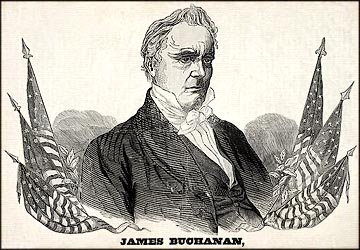
Utah Territory: Message of THE PRESIDENT of the United States, communicating, in compliance with a resolution of the House, copies of correspondence relative to the condition of affairs in the Territory of UTAH [House Exec. Doc. No. 78, 36th Cong., 1st Sess.; Serial 1056] (under construction) |
Back to top of this page
History Vault | Bookshelf | Spalding Library | Mormon Classics | Newspapers
HOME unOFFICIAL JOSEPH SMITH HOME PAGE CHRONOLOGY
last updated: Oct. 8, 2007